
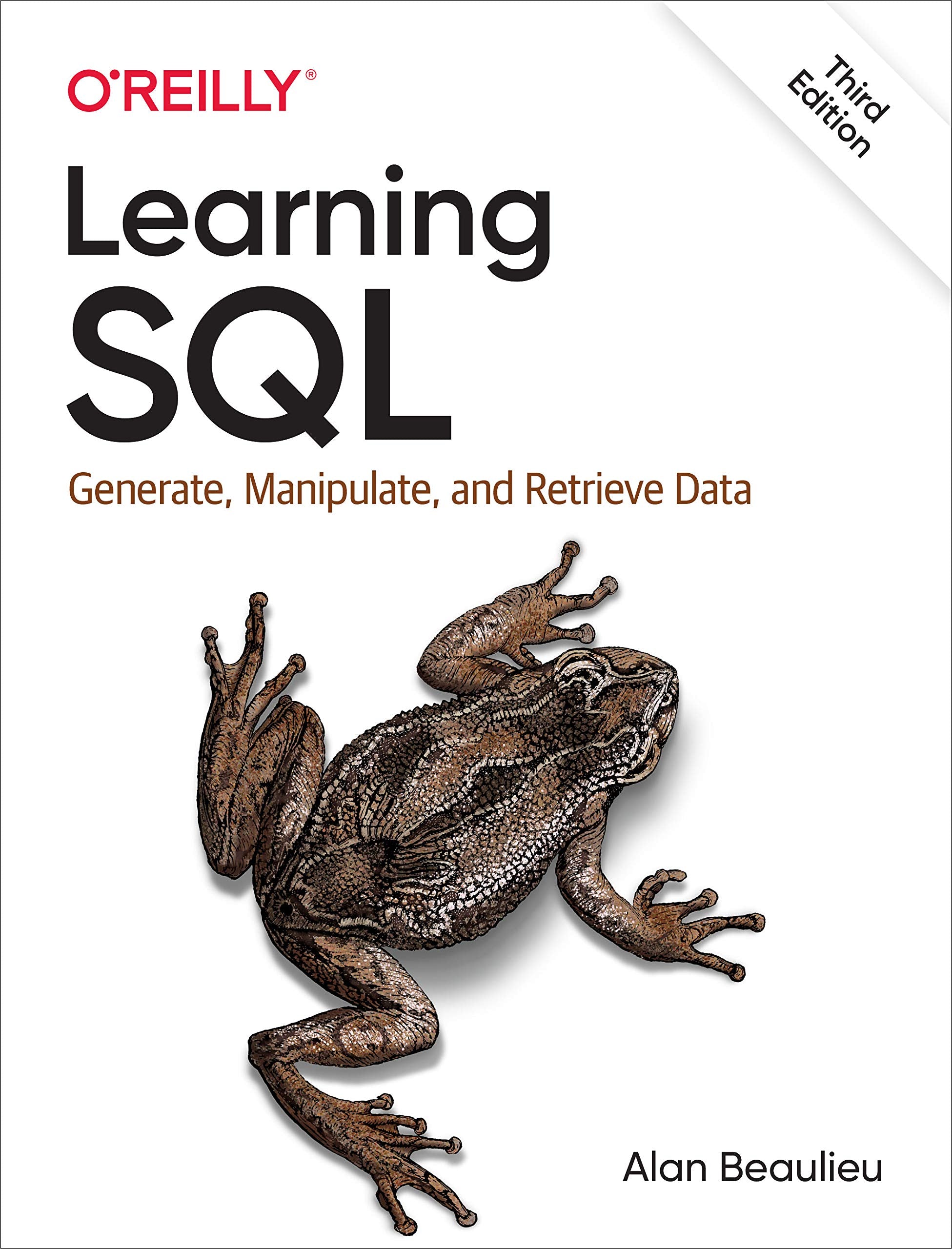
Title
Learning SQL: Generate, Manipulate, and Retrieve Data,New
Sold by Ergodebooks, an authorized reseller.
Returns accepted within 30 days | support@ergodebooks.com
Shipping Information
- Free Standard Shipping — United States only
- Processing Time: 3–5 business days
- Estimated Delivery: 6–10 business days after dispatch
- Double-boxed, fully insured & discreetly packaged
- Tracking number sent via email once dispatched
Returns & Refund
Returns accepted within 30 days of delivery.
Damaged or Defective Item
Free return shipping + replacement or full refund
Wrong Item Received
Free return shipping + replacement or full refund
Change of Mind
Return shipping at customer's expense · 25% restocking fee applies
Payment Option

As data floods into your company, you need to put it to work right awayand SQL is the best tool for the job. With the latest edition of this introductory guide, author Alan Beaulieu helps developers get up to speed with SQL fundamentals for writing database applications, performing administrative tasks, and generating reports. Youll find new chapters on SQL and big data, analytic functions, and working with very large databases.Each chapter presents a selfcontained lesson on a key SQL concept or technique using numerous illustrations and annotated examples. Exercises let you practice the skills you learn. Knowledge of SQL is a must for interacting with data. With Learning SQL, youll quickly discover how to put the power and flexibility of this language to work. Move quickly through SQL basics and several advanced features Use SQL data statements to generate, manipulate, and retrieve data Create database objects, such as tables, indexes, and constraints with SQL schema statements Learn how datasets interact with queries; understand the importance of subqueries Convert and manipulate data with SQLs builtin functions and use conditional logic in data statements
⚠️ WARNING (California Proposition 65):
This product may contain chemicals known to the State of California to cause cancer, birth defects, or other reproductive harm.
For more information, please visit www.P65Warnings.ca.gov.
- Q: What is the main focus of 'Learning SQL: Generate, Manipulate, and Retrieve Data'? A: The book primarily focuses on teaching SQL fundamentals necessary for writing database applications, performing administrative tasks, and generating reports, making it suitable for both beginners and those looking to refresh their skills.
- Q: Who is the author of this book and what is their expertise? A: The author is Alan Beaulieu, who is known for his expertise in database management and SQL, providing insights and practical examples to help readers effectively use SQL.
- Q: What are the key topics covered in the latest edition of this book? A: The latest edition includes new chapters on SQL and big data, analytic functions, and handling very large databases, along with self-contained lessons on key SQL concepts.
- Q: Is this book suitable for beginners? A: Yes, 'Learning SQL' is designed for beginners and offers clear explanations, exercises, and illustrations to help new learners grasp SQL concepts easily.
- Q: How many pages does 'Learning SQL' have? A: The book has 377 pages, providing a comprehensive guide to SQL fundamentals and advanced features.
- Q: What format is this book available in? A: This book is available in paperback format, making it easy to handle and read.
- Q: When was 'Learning SQL' published? A: The book was published on April 21, 2020.
- Q: Does this book include exercises for practice? A: Yes, it includes exercises at the end of each chapter that allow readers to practice the skills they have learned.
- Q: What skills can I expect to learn from this book? A: Readers can expect to learn how to generate, manipulate, and retrieve data using SQL, create database objects, and understand the interactions between datasets and queries.
- Q: Is there any prerequisite knowledge needed to read this book? A: While prior knowledge of databases can be helpful, the book is structured to accommodate those new to SQL, making it accessible for all skill levels.