
Title


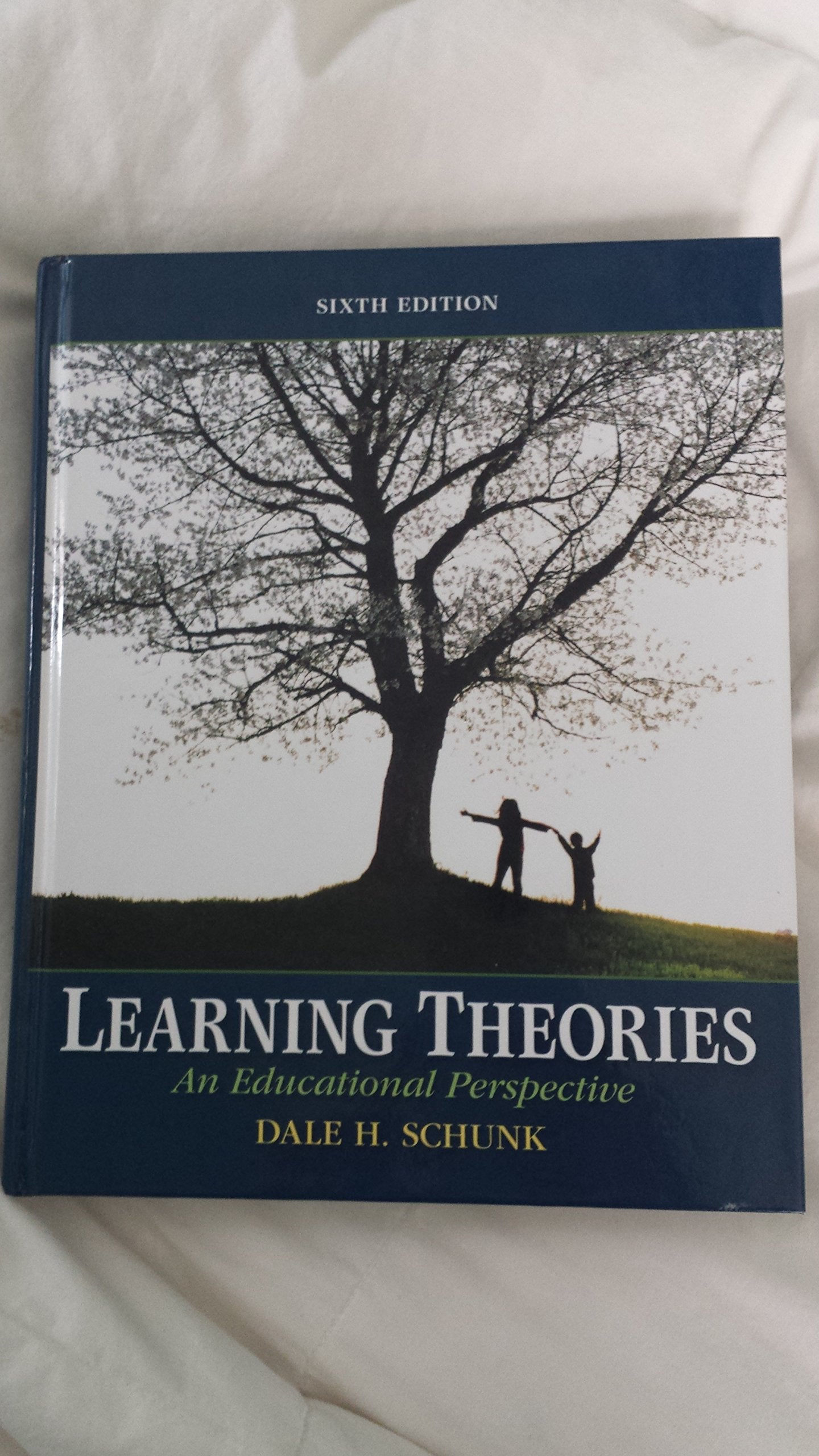
Learning Theories: An Educational Perspective (6th Edition),New
Sold by Ergodebooks, an authorized reseller.
Returns accepted within 30 days | support@ergodebooks.com
Shipping Information
- Free Standard Shipping — United States only
- Processing Time: 3–5 business days
- Estimated Delivery: 6–10 business days after dispatch
- Double-boxed, fully insured & discreetly packaged
- Tracking number sent via email once dispatched
Returns & Refund
Returns accepted within 30 days of delivery.
Damaged or Defective Item
Free return shipping + replacement or full refund
Wrong Item Received
Free return shipping + replacement or full refund
Change of Mind
Return shipping at customer's expense · 25% restocking fee applies
Payment Option

Written to inform students of the main principles, concepts, and research findings of key theories of learningespecially as they relate to educationand to provide applications of principles and concepts in settings where teaching and learning occur, this revised text blends theory, research, and applications throughout, providing its readers with a coherent and unified perspective on learning in educational settings. The primary emphasis is placed on cognitive theories that stress learners constructions of beliefs, skills, strategies, and knowledge, but behavioral theories are also discussed in detail. Chapters have numerous applications of learning principles to applied settings including vignettes at the start of each chapter illustrating some of the principles discussed in the chapter, examples and applications throughout the chapters, and separate sections on instructional applications at the end of each chapter.Key features of this revised text include: a new chapter on SelfRegulation (Chapter 9); core chapters on the neuroscience of learning (Chapter 2), constructivism (Chapter 6), cognitive learning processes (Chapter 7), motivation (Chapter 8), and development (Chapter 10) all related to teaching and learning; updated sections on learning from technology and electronic media and how these advancements effectively promote learning in students (Chapters 7 & 10); detailed information on contentarea learning and models of instruction to form coherence and connection between teaching and learning in different content areas, learning principles, and processes (Chapters 210); and over 140 new references on the latest theoretical ideas, research findings, and applications in the field. An essential resource for understanding key learning theoretical principles, concepts, and research findingsespecially as they relate to educationthis proven text blends theory, research, and applications throughout, providing its readers with a coherent and unified perspective on learning in educational settings.
⚠️ WARNING (California Proposition 65):
This product may contain chemicals known to the State of California to cause cancer, birth defects, or other reproductive harm.
For more information, please visit www.P65Warnings.ca.gov.
- Q: What is the main focus of 'Learning Theories: An Educational Perspective (6th Edition)'? A: The book primarily focuses on cognitive theories of learning, emphasizing how learners construct beliefs, skills, strategies, and knowledge, while also discussing behavioral theories in detail.
- Q: Who is the author of this book? A: The author of 'Learning Theories: An Educational Perspective (6th Edition)' is Dale H. Schunk.
- Q: How many pages does this edition contain? A: This edition contains 576 pages.
- Q: What type of binding does this book have? A: The book is available in hardcover binding.
- Q: When was this edition published? A: This edition was published on January 15, 2011.
- Q: What are some key features of this revised text? A: Key features include a new chapter on Self-Regulation, updated information on learning from technology, and over 140 new references on the latest theoretical ideas and research findings.
- Q: Is this book suitable for understanding educational theories? A: Yes, it serves as an essential resource for understanding key learning theoretical principles, concepts, and research findings related to education.
- Q: Does the book contain practical applications of learning theories? A: Yes, it includes numerous applications of learning principles to applied settings, with vignettes and examples throughout each chapter.
- Q: What is the condition of the book? A: The book is categorized as 'New'.
- Q: Is this book appropriate for students and educators? A: Absolutely, it is designed to inform students and educators about the main principles and concepts of learning theories, making it suitable for both audiences.