
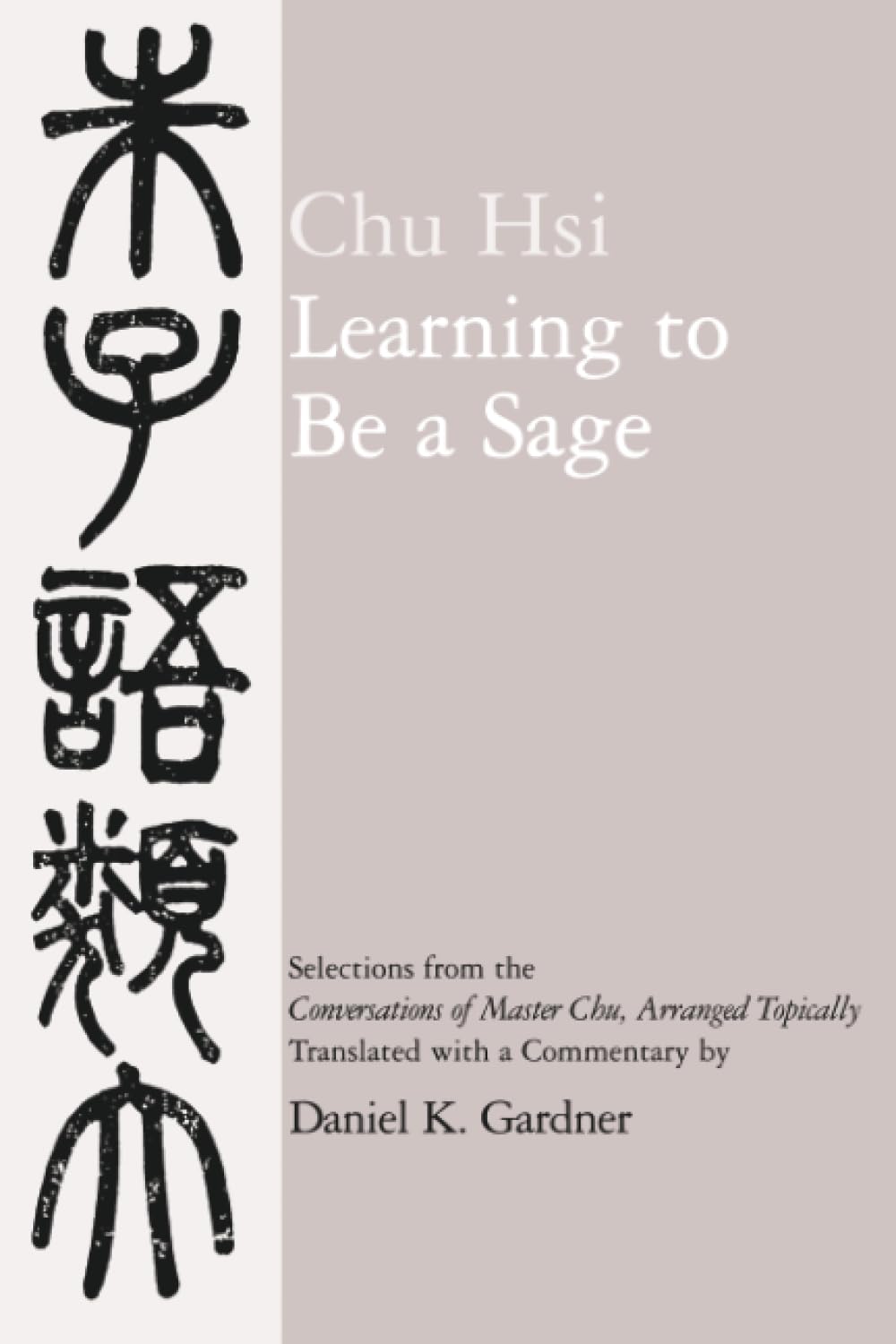
Title
Learning to Be A Sage: Selections from the Conversations of Master Chu, Arranged Topically,New
Sold by Ergodebooks, an authorized reseller.
Returns accepted within 30 days | support@ergodebooks.com
Shipping Information
- Free Standard Shipping — United States only
- Processing Time: 3–5 business days
- Estimated Delivery: 6–10 business days after dispatch
- Double-boxed, fully insured & discreetly packaged
- Tracking number sent via email once dispatched
Returns & Refund
Returns accepted within 30 days of delivery.
Damaged or Defective Item
Free return shipping + replacement or full refund
Wrong Item Received
Free return shipping + replacement or full refund
Change of Mind
Return shipping at customer's expense · 25% restocking fee applies
Payment Option

Students and teachers of Chinese history and philosophy will not want to miss Daniel Gardner's accessible translation of the teachings of Chu Hsi (11301200)a luminary of the Confucian tradition who dominated Chinese intellectual life for centuries. Homing in on a primary concern of our own time, Gardner focuses on Chu Hsi's passionate interest in education and its importance to individual development.For hundreds of years, every literate person in China was familiar with Chu Hsi's teachings. They informed the curricula of private academies and public schools and became the basis of the state's prestigious civil service examinations. Nor was Chu's influence limited to China. In Korea and Japan as well, his teachings defined the terms of scholarly debate and served as the foundation for state ideology.Chu Hsi was convinced that through education anyone could learn to be fully moral and thus travel the road to sagehood. Throughout his life, he struggled with the philosophical questions underlying education: What should people learn? How should they go about learning? What enables them to learn? What are the aims and the effects of learning?Part One of Learning to Be a Sage examines Chu Hsi's views on learning and how he arrived at them. Part Two presents a translation of the chapters devoted to learning in the Conversations of Master Chu.
⚠️ WARNING (California Proposition 65):
This product may contain chemicals known to the State of California to cause cancer, birth defects, or other reproductive harm.
For more information, please visit www.P65Warnings.ca.gov.
- Q: What is the page count of this book? A: The book contains two hundred eighteen pages. This makes it a comprehensive yet manageable read for those interested in Chinese philosophy.
- Q: What are the dimensions of the book? A: The book measures five point nine eight inches in length, zero point five nine inches in width, and nine point zero two inches in height. These dimensions make it easy to handle and store.
- Q: What type of binding does this book have? A: This book is available in paperback binding. This allows for flexibility and durability, making it suitable for both reading and referencing.
- Q: Who is the author of this book? A: The author is Chu Hsi, a prominent figure in Confucian philosophy. His teachings have greatly influenced Chinese education and thought.
- Q: What topics does this book cover? A: The book focuses on educational philosophy and individual moral development. It delves into Chu Hsi's views on learning and sagehood.
- Q: Is this book suitable for beginners in philosophy? A: Yes, this book is accessible for beginners. Daniel Gardner's translation makes the complex teachings of Chu Hsi understandable for all readers.
- Q: How can I use this book for educational purposes? A: You can use this book as a resource for understanding Confucian philosophy and educational practices. It is ideal for students and teachers alike.
- Q: What age group is this book appropriate for? A: This book is suitable for high school students and adults. Its themes are relevant for anyone interested in philosophy and education.
- Q: How should I care for this book? A: To keep the book in good condition, store it in a cool, dry place away from direct sunlight. Avoid bending the cover or pages excessively.
- Q: Can this book be used as a reference for academic work? A: Yes, this book can serve as a valuable reference for academic work. Its insights into education and morality are relevant for various scholarly discussions.
- Q: What if the book arrives damaged? A: If the book arrives damaged, you should contact the seller for a return or replacement. Most sellers have policies in place for such issues.
- Q: Is there a warranty for this book? A: No, books typically do not come with a warranty. However, check with the seller for their specific return policies.
- Q: How can I find more books like this one? A: You can explore related titles by looking into other works on Confucian philosophy or educational theory. Libraries and bookstores often have recommended sections.
- Q: Is this book part of a series? A: No, this book is a standalone title. However, it may complement other works on Chinese philosophy and education.
- Q: What makes this book unique? A: This book offers an accessible translation of Chu Hsi's teachings, focusing on education's role in moral development. It's a rare insight into historical thought.
- Q: What is the publisher of this book? A: The book is published by the University of California Press. They are known for their academic and scholarly publications.