
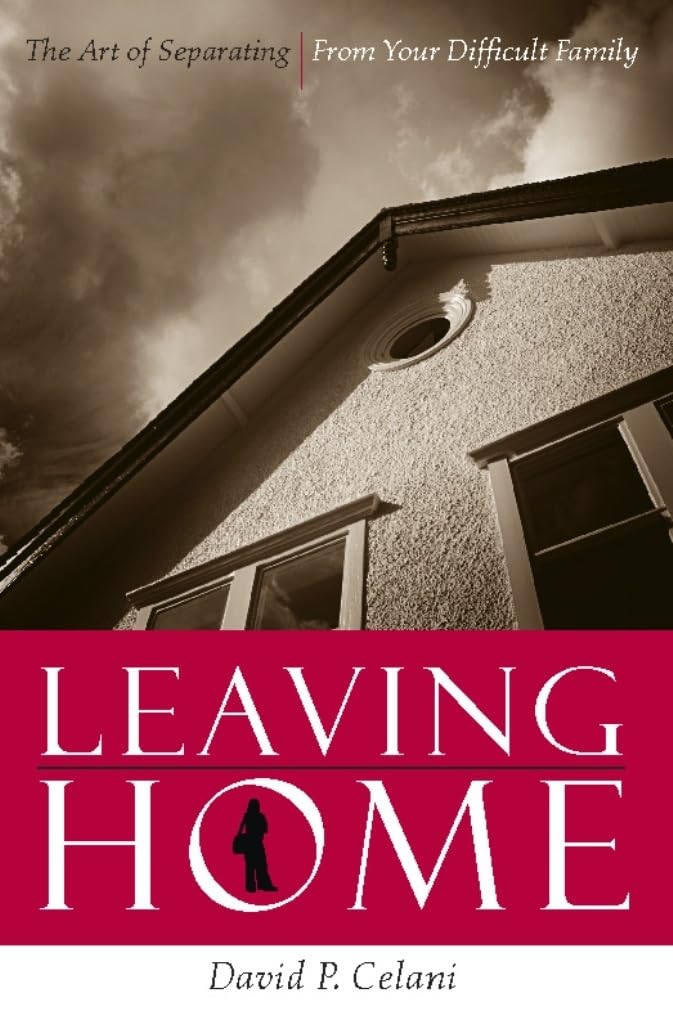
Title
Leaving Home: The Art Of Separating From Your Difficult Family
Sold by Ergodebooks, an authorized reseller.
Returns accepted within 30 days | support@ergodebooks.com
Shipping Information
- Free Standard Shipping — United States only
- Processing Time: 3–5 business days
- Estimated Delivery: 6–10 business days after dispatch
- Double-boxed, fully insured & discreetly packaged
- Tracking number sent via email once dispatched
Returns & Refund
Returns accepted within 30 days of delivery.
Damaged or Defective Item
Free return shipping + replacement or full refund
Wrong Item Received
Free return shipping + replacement or full refund
Change of Mind
Return shipping at customer's expense · 25% restocking fee applies
Payment Option

Why, After A Childhood Of Emotional Neglect And Abuse, Would A Man Move Next Door To The Very Parents Who Caused Him Pain? And How Can A Woman Emerge From Her Mother'S Control In Order To Form Healthy Adult Relationships?Giving Up Family Attachments That Failed To Meet Our Needs As Children, David Celani Argues, Is The Hardest Psychological Task An Adult Can Undertake. Yet The Reality Is That Many Adults Recreate The Most Painful Aspects Of Their Early Relationships With Their Parents In New Relationships With Peers And Romantic Partners, Frustrating Themselves And Discouraging Them From Leaving Their Family Of Origin. Leaving Home Emphasizes The Lifesaving Benefits Of Separating From Destructive Parents And Offers A Viable Program For Personal Emancipation.Celani'S Program Is Based On Objectrelations Theory, A Branch Of Psychoanalysis Developed By Scottish Analyst Ronald Fairbairn. The Human Personality, Fairbairn Argued, Is Not The Result Of Inherited (And Thus Immutable) Instincts. Rather, The Developing Child Builds Internal Relational Templates That Guide His Future Interactions With Others Based On The Conscious And Unconscious Memories He Internalized From His Primary Relationshipthe One He Experienced With His Parents. While A Child'S Attachment To Parents Who Were Neglectful Or Even Abusive Is Not Uncommon, There Is A Way Out. Articulate, Sensitive, And Replete With Examples From Celani'S Twentysix Years Of Clinical Practice, This Book Outlines The Practical Steps To Leaving Home.
⚠️ WARNING (California Proposition 65):
This product may contain chemicals known to the State of California to cause cancer, birth defects, or other reproductive harm.
For more information, please visit www.P65Warnings.ca.gov.
- Q: How many pages does this book have? A: This book has one hundred seventy-six pages. It provides an in-depth exploration of emotional neglect and abuse.
- Q: What is the binding type of this book? A: The binding type is paperback. This makes it lightweight and easy to handle.
- Q: What are the dimensions of the book? A: The book measures five point five one inches in length, zero point six inches in width, and eight point two inches in height.
- Q: How do I read this book? A: You can read this book at your own pace. It is designed for anyone seeking personal emancipation from difficult family relationships.
- Q: Is this book suitable for young adults? A: Yes, this book is suitable for young adults. It addresses themes of emotional neglect and the journey toward independence.
- Q: Can I use this book for a book club discussion? A: Yes, this book is great for book club discussions. It raises important questions about family dynamics and personal growth.
- Q: How should I store this book? A: Store this book in a cool, dry place. Keep it upright on a shelf to prevent bending or damage.
- Q: Is this book safe for sensitive readers? A: Yes, the book is safe for sensitive readers. It discusses emotional topics with care and sensitivity.
- Q: What if I don't like the book? A: If you don't like the book, you can return it within the return policy period. Check with the retailer for specific details.
- Q: What should I do if the book arrives damaged? A: If the book arrives damaged, contact customer support immediately. They will guide you through the return or exchange process.
- Q: Does this book contain any illustrations? A: No, this book does not contain illustrations. It focuses on written content to convey its message.
- Q: Is there a digital version of this book? A: Yes, a digital version of this book is available. Check online retailers for eBook options.
- Q: Who is the author of this book? A: The author of this book is David Celani. He has over twenty-six years of clinical practice experience.
- Q: What is the main theme of the book? A: The main theme of the book is personal emancipation from difficult family relationships. It emphasizes the importance of separating from destructive parents.
- Q: Is this book based on any psychological theories? A: Yes, this book is based on Object-Relations Theory. It explains how early relationships influence adult behavior.