
Title
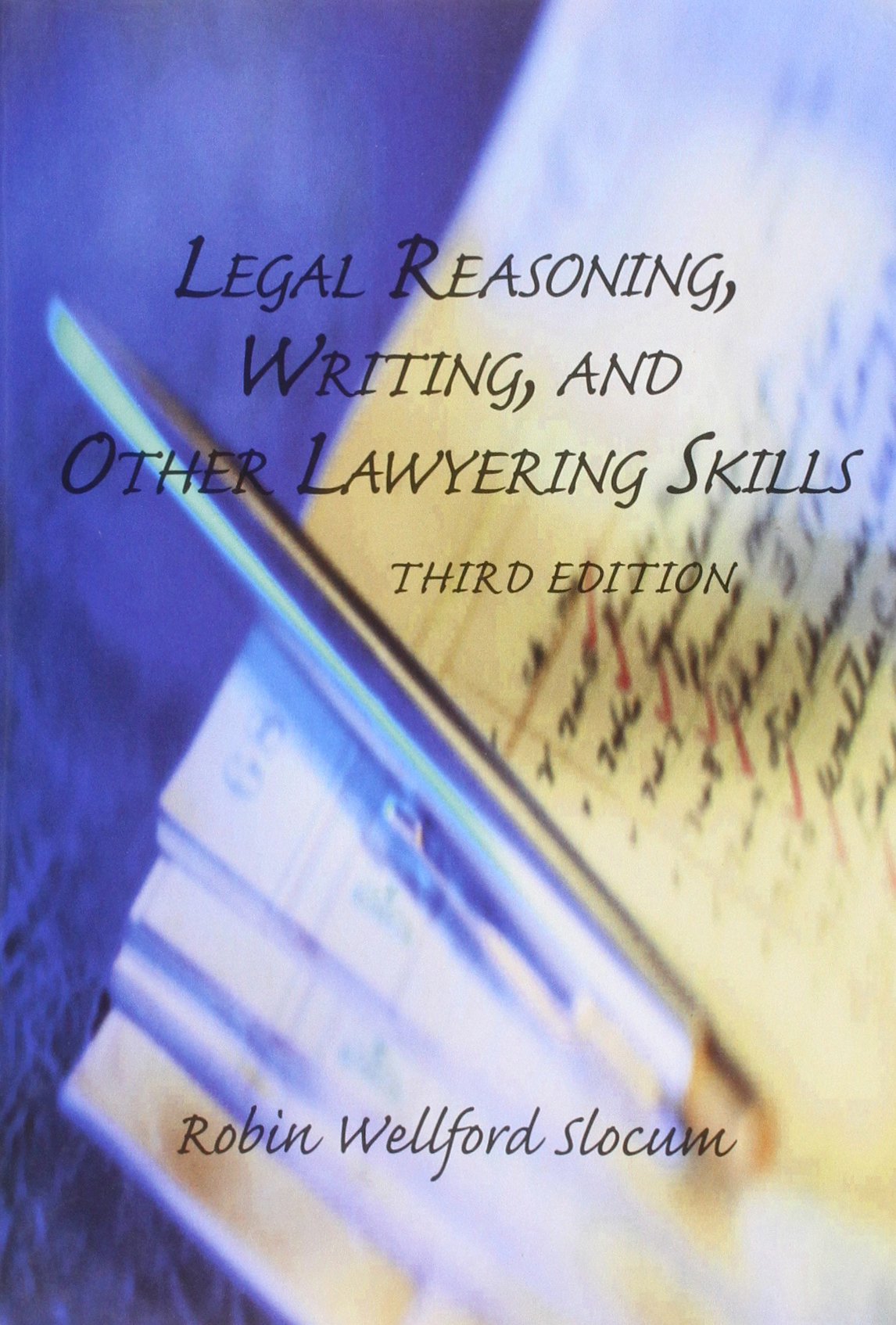
Legal Reasoning, Writing, and Other Lawyering Skills,New
Sold by Ergodebooks, an authorized reseller.
Returns accepted within 30 days | support@ergodebooks.com
Shipping Information
- Free Standard Shipping — United States only
- Processing Time: 3–5 business days
- Estimated Delivery: 6–10 business days after dispatch
- Double-boxed, fully insured & discreetly packaged
- Tracking number sent via email once dispatched
Returns & Refund
Returns accepted within 30 days of delivery.
Damaged or Defective Item
Free return shipping + replacement or full refund
Wrong Item Received
Free return shipping + replacement or full refund
Change of Mind
Return shipping at customer's expense · 25% restocking fee applies
Payment Option

Legal Reasoning, Writing and Other Lawyering Skills, 3rd Edition (formerly known as Legal Reasoning, Writing, and Persuasive Argument), draws on lessons from neuroscience and psychology to deepen students' understanding of self and others, and of the emotional biases and filters that undermine their efforts to 'think like a lawyer.'Legal Reasoning, Writing, and Other Lawyering Skills, 3rd Edition, retains the same core chapters of earlier editions that emphasize and illustrate the 'process' of thinking through, and writing about, a client problem. However, the new edition expands its coverage to include the practicalities of modernday legal practice, and also expands the lawyering skills that are introduced in the book. In this new edition, the book can be used in a typical twosemester legal skills course, as well as more intensive twosemester courses, and three and even foursemester courses.Some of the exciting new coverage of Legal Reasoning, Writing and Other Lawyering Skills includes:Psychological Factors that Impair Thinking: Students often become enmeshed in viewing legal problems through a myopic lens that reflects their limited and often superficial worldviews. They frequently leap to premature (and often faulty) conclusions, and then stubbornly cling to their positions while ignoring evidence suggesting that they are wrong. One reason students struggle is because poor judgment and a myopic perspective cannot be solved through the logic of the analytical mind. Instead, modern neuroscience suggests that such problems stem from the emotional centers of the brain, and that the answer isn't to appeal to 'reason,' but to address the hidden emotional biases and selective perceptions that cause such problems in the first place. This new edition educates students about the 'emotional brain,' helps them recognize the red flags that indicate their judgment is impaired, and teaches students how to 'prosecute' their own thinking (Chapter 4).Short Memos The 'ThinSliced' Analysis: In recent years, short memos have become the norm, while longer, more formal memoranda are used more infrequently. Nonetheless, drafting effective short memos that are both succinct and thorough requires a level of expertise that is often beyond the skill level of a novice writer. The new edition of this book reflects the reality that the formal office memorandum serves as an important foundation for students to learn the fundamental skills they can later transfer to shorter, more succinct memos. Therefore, while retaining the core chapters on formal office memoranda, the new edition also includes a new chapter on short memos (Chapter 19). For purposes of illustration, the new chapter uses the same hypothetical problem illustrated in earlier chapters of the book so that students can compare and contrast the strategies used in drafting more traditional memos with the strategies used in drafting short memos.Professional EMail Communications: Although email communications have become a common means by which lawyers communicate, professional email communications differ from the informal, casual emails with which most students are familiar. The new edition includes a chapter that discusses the core professionalism and confidentiality concerns that arise with professional email communications (Chapter 20).Expanded Coverage of the Lawyer's Roles: Previous editions of the book addressed the lawyers' roles as advisor and advocate, and, within each of these roles, focused exclusively on the skills of legal analysis and writing. Coverage in this edition now includes:Lawyer as Investigator: Students often have difficulty appreciating 'context' in a simulation course; yet understanding the context of a legal problem is invaluable in helping students grasp the roles they are being asked to assume. For those programs in which there is time to accommodate a client interview, the new edition includes a chapter with a stepbystep approach to eliciting t
⚠️ WARNING (California Proposition 65):
This product may contain chemicals known to the State of California to cause cancer, birth defects, or other reproductive harm.
For more information, please visit www.P65Warnings.ca.gov.
- Q: How many pages are in the book? A: This book contains seven hundred sixteen pages. It provides extensive coverage of legal writing and reasoning skills.
- Q: What is the binding type of this book? A: The book is available in paperback binding. This makes it flexible and easy to handle for students.
- Q: What are the dimensions of this book? A: The book measures six point five inches long by one point two six inches wide and nine point seven six inches tall. These dimensions make it portable and suitable for classroom use.
- Q: How do I use this book effectively? A: To use this book effectively, read it alongside your legal writing assignments. It includes practical exercises and examples to enhance your understanding.
- Q: Is this book suitable for beginners in law? A: Yes, this book is suitable for beginners in law. It covers foundational concepts in legal reasoning and writing that are essential for new students.
- Q: Can I use this book for advanced legal writing courses? A: Yes, this book is appropriate for advanced legal writing courses. It includes expanded topics and skills necessary for more intensive studies.
- Q: How should I store this book to keep it in good condition? A: Store this book in a cool, dry place to maintain its condition. Avoid exposing it to direct sunlight or moisture to prevent damage.
- Q: Are there any special care instructions for this book? A: No special care instructions are needed for this book. However, handle it gently to avoid bending pages or damaging the binding.
- Q: What should I do if the book arrives damaged? A: If the book arrives damaged, contact the seller for a return or replacement. Most sellers provide a satisfaction guarantee for their products.
- Q: Is there a warranty on this book? A: No, there is no warranty on this book. However, check with the seller for their return policy regarding damaged or unsatisfactory products.
- Q: What kind of legal skills does this book cover? A: This book covers various legal skills, including legal reasoning, writing, and effective communication in professional settings. It prepares students for real-world legal practice.
- Q: Does this book include examples of professional email communications? A: Yes, the book includes a chapter on professional email communications. It teaches students about professionalism and confidentiality in legal correspondence.
- Q: What is the author's name for this book? A: The author of this book is Robin Slocum. She brings expertise in legal writing and education to the content.
- Q: Does this book discuss psychological factors affecting legal reasoning? A: Yes, the book discusses psychological factors that impair thinking. It educates students about emotional biases that impact legal reasoning.
- Q: Is this book helpful for understanding the lawyer's roles? A: Yes, this book provides expanded coverage of the lawyer's roles, including advisor and investigator. It prepares students for various aspects of legal practice.