If you have any questions, you are always welcome to contact us. We'll get back to you as soon as possible, withing 24 hours on weekdays.
Customer service
All questions about your order, return and delivery must be sent to our customer service team by e-mail at yourstore@yourdomain.com
Sale & Press
If you are interested in selling our products, need more information about our brand or wish to make a collaboration, please contact us at press@yourdomain.com
Help
If you have any questions, you are always welcome to contact us. We'll get back to you as soon as possible, withing 24 hours on weekdays.
Customer service
All questions about your order, return and delivery must be sent to our customer service team by e-mail at yourstore@yourdomain.com
Sale & Press
If you are interested in selling our products, need more information about our brand or wish to make a collaboration, please contact us at press@yourdomain.com
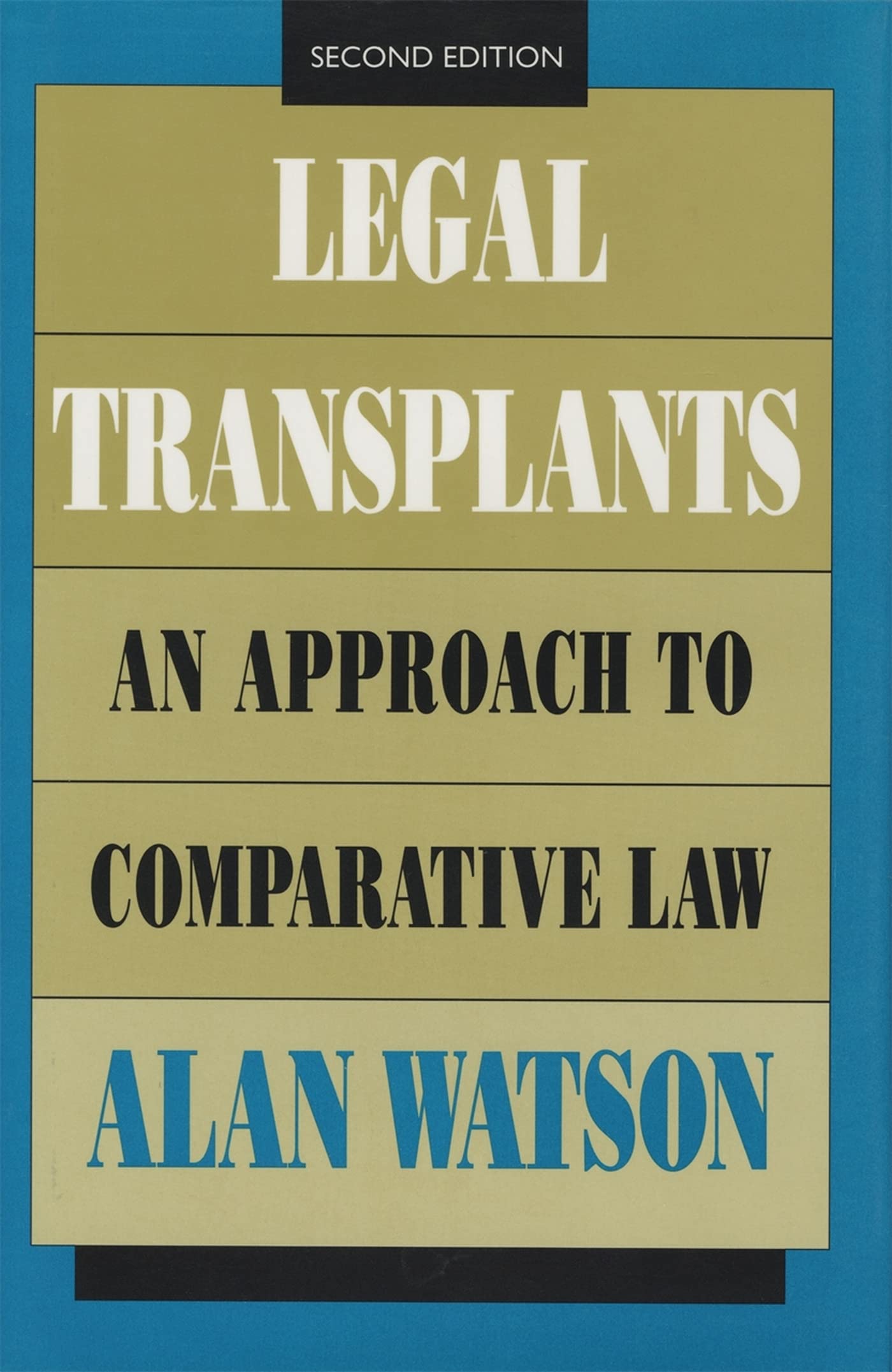
In Legal Transplants, one of the world's foremost authorities on legal history and comparative law puts forth a clear and concise statement of his controversial thesis on the way that law has developed throughout history.When it was first published in 1974, Legal Transplants sparked both praise and outrage. Alan Watson's argument challenges the longprevailing notion that a close connection exists between the law and the society in which it operates. His main thesis is that a society's laws do not usually develop as a logical outgrowth of its own experience. Instead, he contends, the laws of one society are primarily borrowed from other societies; therefore, most law operates in a society very different from the one for which it was originally created. Utilizing a wealth of primary sources, Watson illustrates his argument with examples ranging from the ancient Near East, ancient Rome, early modern Europe, Puritan New England, and modern New Zealand. The resulting picture of the law's surprising longevity and acceptance in foreign conditions carries important implications for legal historians and sociologists. The law cannot be used as a tool to understand society, Watson believes, without a careful consideration of legal transplants.For this edition, Watson has written a new afterword in which he places his original study in the context of more recent scholarship and offers some new reflections on legal borrowings, law, and society.
⚠️ WARNING (California Proposition 65):
This product may contain chemicals known to the State of California to cause cancer,
birth defects, or other reproductive harm.
For MAP (Minimum Advertised Price) violations and Intellectual Property (IP) or Trademark concerns, please contact:
support@ergodebooks.com
⚠️ California Proposition 65 Warning: Some products sold on this website may expose you to chemicals known to the State of California to cause cancer, birth defects, or other reproductive harm. For more information, visit www.P65Warnings.ca.gov.