If you have any questions, you are always welcome to contact us. We'll get back to you as soon as possible, withing 24 hours on weekdays.
Customer service
All questions about your order, return and delivery must be sent to our customer service team by e-mail at yourstore@yourdomain.com
Sale & Press
If you are interested in selling our products, need more information about our brand or wish to make a collaboration, please contact us at press@yourdomain.com
Help
If you have any questions, you are always welcome to contact us. We'll get back to you as soon as possible, withing 24 hours on weekdays.
Customer service
All questions about your order, return and delivery must be sent to our customer service team by e-mail at yourstore@yourdomain.com
Sale & Press
If you are interested in selling our products, need more information about our brand or wish to make a collaboration, please contact us at press@yourdomain.com
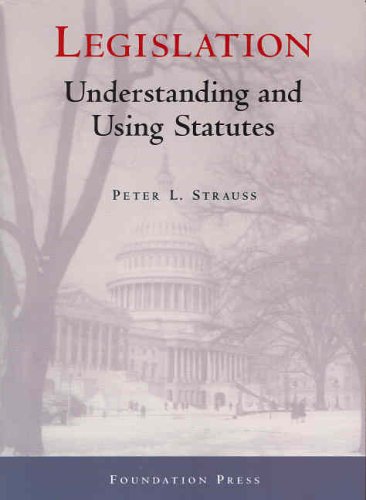
This book's focus makes statutes, and the processes that produce them, the primary consideration. Traditional teaching materials tend to make statutes and the circumstances of their creation secondary; students encounter the legislative process and legislative materials chiefly, sometimes exclusively, through the eyes of judges. In contrast, two of the three principal chapters of this book are organized around the enactment of two particular statutes one late Nineteenth Century, the second late Twentieth Century. These chapters expose students to primary documents reflecting the quite different processes by which these two statutes were enacted, and invite them to reach conclusions about their meaning, in advance of any exposure to judicial interpretations just as lawyers would typically be required to do in practice. The latter of these two chapters also includes extensive selections from the secondary literature to help put the current debates between textualists and purposivists in sharp focus. The intervening chapter deals in a more conventional way with the development and use of the purpose/intentoriented methods of interpretation that characterized midTwentieth Century judicial practice.This chapter, in which judicial decisions predominate, often sets a statutory problem as a prologue to the case highlighting the statutory issue and inviting the student to do her own interpretive analysis before encountering the judges' opinion.For more information visit the companion site.
⚠️ WARNING (California Proposition 65):
This product may contain chemicals known to the State of California to cause cancer,
birth defects, or other reproductive harm.
For MAP (Minimum Advertised Price) violations and Intellectual Property (IP) or Trademark concerns, please contact:
support@ergodebooks.com
⚠️ California Proposition 65 Warning: Some products sold on this website may expose you to chemicals known to the State of California to cause cancer, birth defects, or other reproductive harm. For more information, visit www.P65Warnings.ca.gov.