
Title
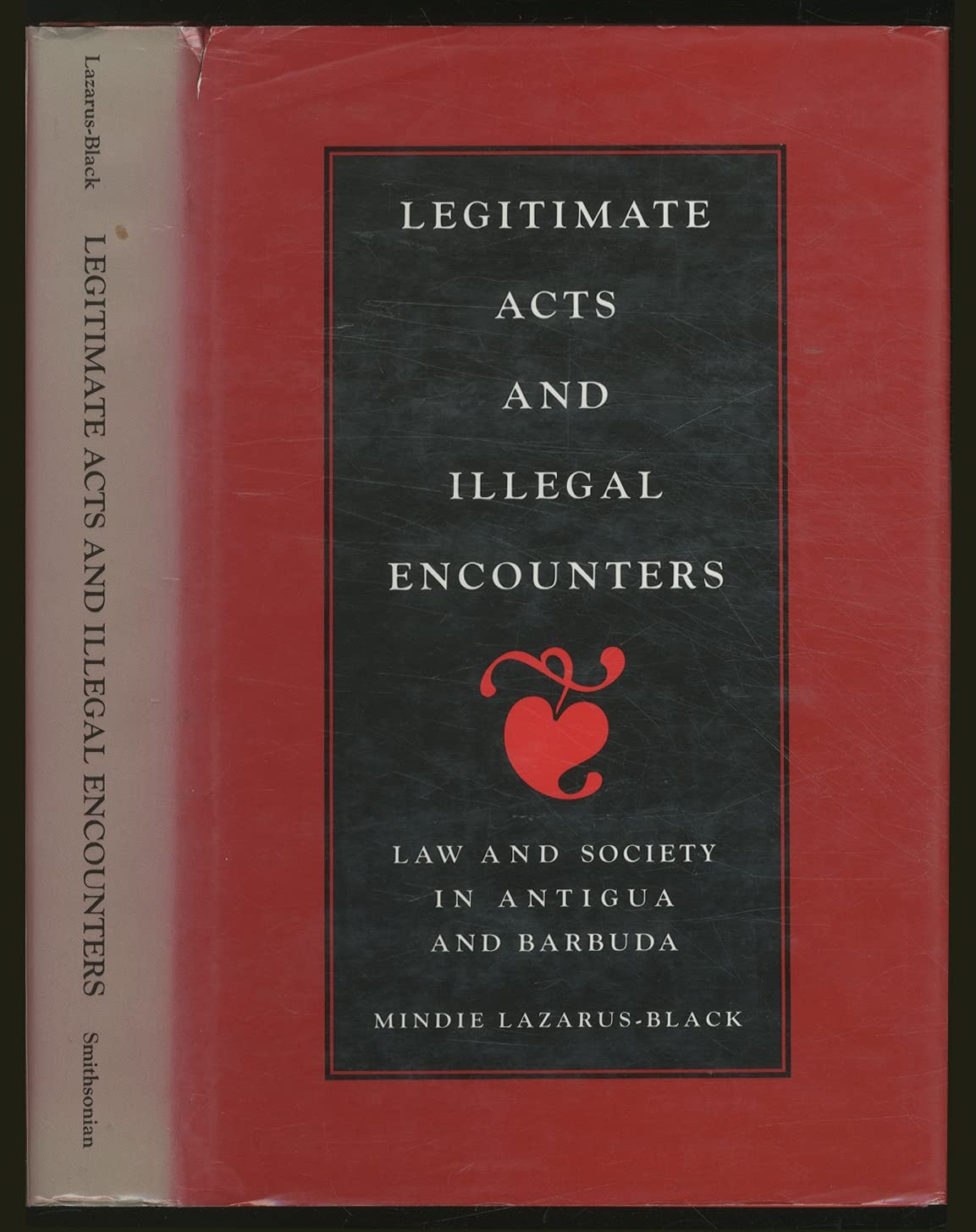
LEGIT ACTS ILLEG ENC (Smithsonian Series in Ethnographic Inquiry),Used
Sold by Ergodebooks, an authorized reseller.
Returns accepted within 30 days | support@ergodebooks.com
Shipping Information
- Free Standard Shipping — United States only
- Processing Time: 3–5 business days
- Estimated Delivery: 6–10 business days after dispatch
- Double-boxed, fully insured & discreetly packaged
- Tracking number sent via email once dispatched
Returns & Refund
Returns accepted within 30 days of delivery.
Damaged or Defective Item
Free return shipping + replacement or full refund
Wrong Item Received
Free return shipping + replacement or full refund
Change of Mind
Return shipping at customer's expense · 25% restocking fee applies
Payment Option

Legitimate Acts and Illegal Encounters examines three hundred years of social life on the Caribbean islands of Antigua and Barbuda to demonstrate the importance of law and the state in the creation of West Indian societies. Moving from the periods of slavery and emancipation under British colonial rule to recent independence, Mindie LazarusBlack argues that the continuing struggle between lawmakers and the nonruling class has shaped the distinctive character of creole kinship, class, and gender.LazarusBlack analyzes historical and social transformation on the islands, using a theoretical framework drawn from Foucault's distinction between "systems of legalities" (the signs, symbols, and rituals of law) and "systems of illegalities" (common breaches of codes or explicit tolerance of illicit behaviors). She documents the differences between local behavior and Antiguan law under slavery; the impact of family, labor, and poor laws on kinship relations in the postemancipation era; and, in contemporary times, how men and women use the law in ways lawmakers never imagined as when women take men to court as a form of ritual shaming. Her research reveals that the same laws used by ruling classes as tools for punitive definitions have served lower classes as instruments of both defense and resistance. Legal strictures, she shows, have been used to keep the master class within its own written limits, to check elites' assumptions about the social world, and to push for a "justice" born of the experiences of the powerless.As this book demonstrates, the investigation of law and judicial processes is as central to the history and the anthropology of the powerless as it is to that of the elites. The author's interdisciplinary analysis of the dynamics of and between domination and resistance in creole society will inform students of anthropology, history, law and society, Caribbean studies, and women's studies.
⚠️ WARNING (California Proposition 65):
This product may contain chemicals known to the State of California to cause cancer, birth defects, or other reproductive harm.
For more information, please visit www.P65Warnings.ca.gov.
- Q: What is the main focus of 'LEGIT ACTS ILLEG ENC'? A: The book examines three hundred years of social life on the Caribbean islands of Antigua and Barbuda, highlighting the role of law and the state in shaping West Indian societies.
- Q: Who is the author of this book? A: The author is Mindie Lazarus-Black.
- Q: What themes are explored in this book? A: The book explores themes such as law, illegal encounters, kinship, class, gender, and the dynamics of domination and resistance in creole society.
- Q: What type of binding does this book have? A: This book is available in hardcover binding.
- Q: When was 'LEGIT ACTS ILLEG ENC' published? A: The book was published on June 17, 1994.
- Q: How many pages does this book contain? A: The book contains 357 pages.
- Q: Is this book in good condition? A: Yes, it is described as a used book in good condition.
- Q: What can I learn from this book? A: Readers can gain insights into the historical and social transformations in Antigua and Barbuda, particularly regarding the interactions between lawmakers and the nonruling class.
- Q: Is this book suitable for academic studies? A: Yes, it is suitable for students of anthropology, history, law and society, Caribbean studies, and women's studies.
- Q: What edition of the book is available? A: This is the first edition of the book.