
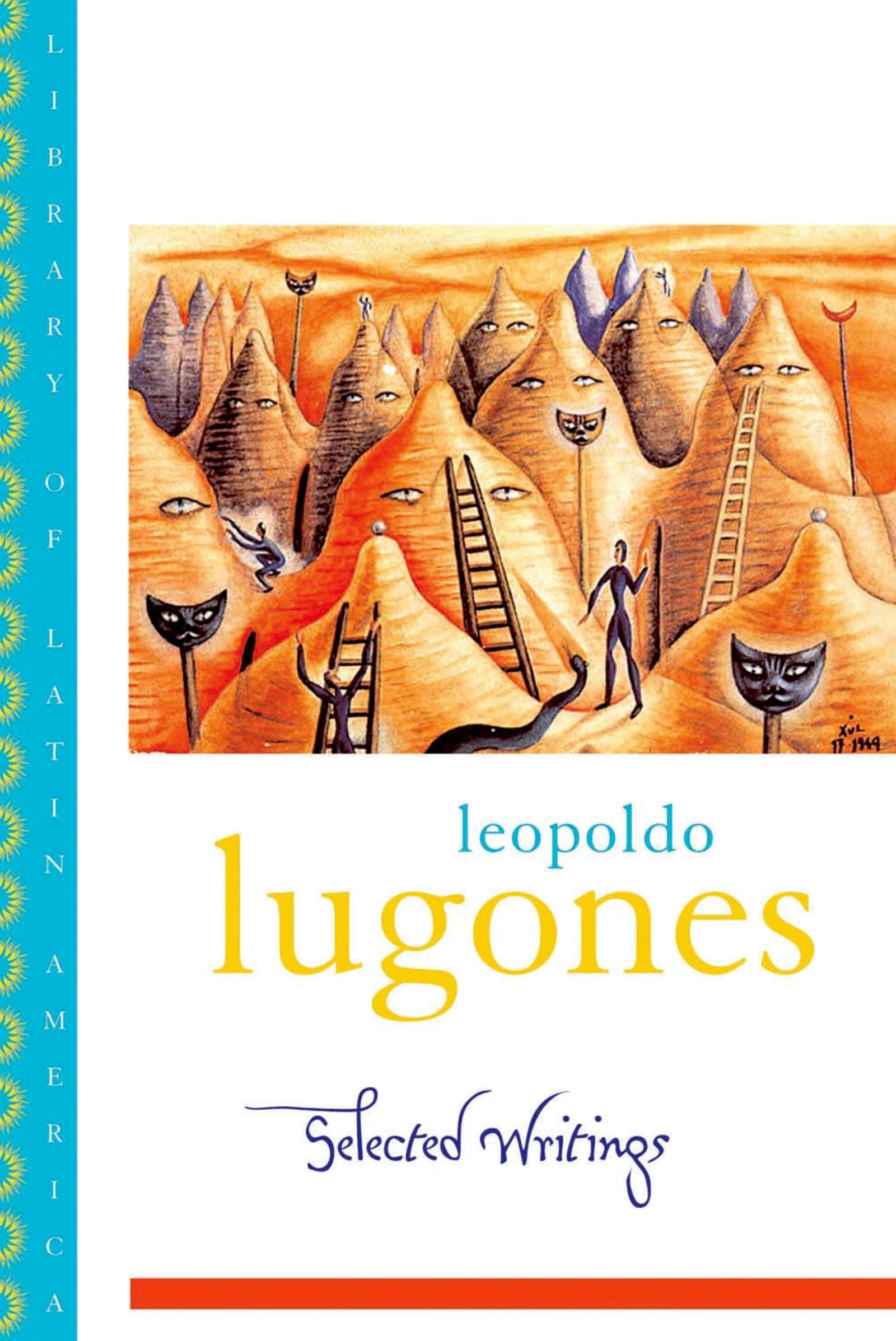
Title
Leopold LugonesSelected Writings (Library of Latin America),New
Sold by Ergodebooks, an authorized reseller.
Returns accepted within 30 days | support@ergodebooks.com
Shipping Information
- Free Standard Shipping — United States only
- Processing Time: 3–5 business days
- Estimated Delivery: 6–10 business days after dispatch
- Double-boxed, fully insured & discreetly packaged
- Tracking number sent via email once dispatched
Returns & Refund
Returns accepted within 30 days of delivery.
Damaged or Defective Item
Free return shipping + replacement or full refund
Wrong Item Received
Free return shipping + replacement or full refund
Change of Mind
Return shipping at customer's expense · 25% restocking fee applies
Payment Option

Argentina's bestknown writer during his lifetime, Leopoldo Lugones's work spans many literary styles and ideological positions. He was influential as a modernist poet, as a precursor of the avantgarde, and also as the poet of Argentine nature. His short stories (Las Fuerzas Extranas: 1906) were early examples of the fantastic in Latin American fiction and influenced Borges, Quiroga, and others They reflect an interest in the uncanny and inspired contemporary interest in animism and occultism because the protagonists of many the stories were scientists and doctors experimenting in the transmutation of thought. His prose works include La Guerra Gaucha (1905) and the essay El Payador (1916) in which he idealized the gaucho as a heroic figure, popular poet, and a symbol of Argentine identity. Lugones altered his political views many times, adopting radical anarchism, and later in life, fascism. He was therefore a controversial figure, both accalimed and scorned by his contemporaries. His adherence to the importance of literary form drew criticism from the new generation of writers, such as Borges, but Borges later stated in 1955 that 'Lugones was and continues to be the greatest Argentine writer.'
⚠️ WARNING (California Proposition 65):
This product may contain chemicals known to the State of California to cause cancer, birth defects, or other reproductive harm.
For more information, please visit www.P65Warnings.ca.gov.
- Q: What is the main theme of Leopold Lugones' writings? A: Leopold Lugones' writings explore various themes, including modernism, the avant-garde, Argentine nature, and the uncanny. His work reflects a diverse range of literary styles and ideological positions.
- Q: How many pages does 'Leopold Lugones--Selected Writings' have? A: The book contains 152 pages.
- Q: What type of binding does this book have? A: This edition of 'Leopold Lugones--Selected Writings' is available in paperback binding.
- Q: Who is the author of 'Leopold Lugones--Selected Writings'? A: The author of the book is Leopoldo Lugones, who is known as Argentina's best-known writer during his lifetime.
- Q: When was 'Leopold Lugones--Selected Writings' published? A: The book was published on March 19, 2008.
- Q: What are some notable works included in this collection? A: The collection includes notable works such as 'Las Fuerzas Extranas' and 'La Guerra Gaucha', showcasing Lugones' range as a writer.
- Q: What literary styles did Leopoldo Lugones influence? A: Lugones influenced modernist poetry and the fantastic genre in Latin American fiction, impacting writers like Borges and Quiroga.
- Q: Is 'Leopold Lugones--Selected Writings' suitable for readers interested in Argentine literature? A: Yes, this book is highly suitable for readers interested in Argentine literature, as it provides insights into the life and works of a pivotal literary figure.
- Q: What is the significance of the gaucho in Lugones' works? A: In his writings, Lugones idealizes the gaucho as a heroic figure and a symbol of Argentine identity, particularly in his essay 'El Payador'.
- Q: Did Leopoldo Lugones have controversial political views? A: Yes, Lugones had controversial political views, having shifted from radical anarchism to fascism throughout his life, which made him a polarizing figure.