If you have any questions, you are always welcome to contact us. We'll get back to you as soon as possible, withing 24 hours on weekdays.
Customer service
All questions about your order, return and delivery must be sent to our customer service team by e-mail at yourstore@yourdomain.com
Sale & Press
If you are interested in selling our products, need more information about our brand or wish to make a collaboration, please contact us at press@yourdomain.com
Help
If you have any questions, you are always welcome to contact us. We'll get back to you as soon as possible, withing 24 hours on weekdays.
Customer service
All questions about your order, return and delivery must be sent to our customer service team by e-mail at yourstore@yourdomain.com
Sale & Press
If you are interested in selling our products, need more information about our brand or wish to make a collaboration, please contact us at press@yourdomain.com
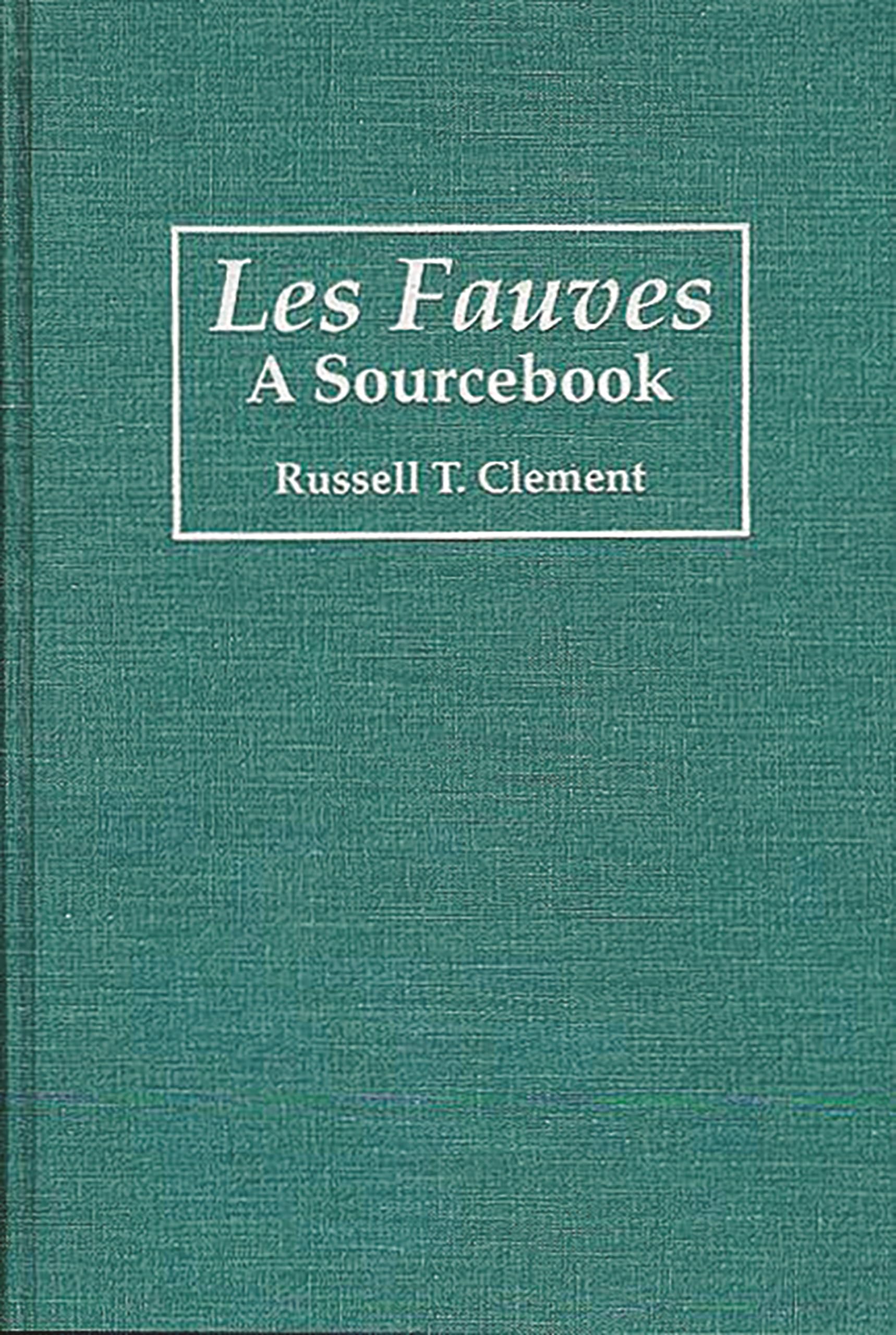
This is the first comprehensive scholarly bibliography/research guide/sourcebook on the major French Fauve painters (Henri Matisse and Georges Braque are treated in separate Greenwood biobibliographies). It includes information on 3,120 books and articles as well as chronologies, biographical sketches, and exhibition lists. Each artist receives a primary and secondary bibliography with many annotated entries. Secondary bibliographies include details about each artists' life and career, relationships with other artists, work in various media, iconography, and more. Designed for art historians, art students, museum and gallery curators, and art lovers alike, this volume organizes the vast literature surrounding this fascinating, revolutionary, 20thcentury art group.Genuinely new art is always challenging, sometimes even shocking to those unprepared for it. In 1905, the paintings of Matisse, Derain, Vlaminck and their friends shocked conservative museumgoers; hence, the eventual popularity of art critic Louis Vauxcelles's tag les fauves, or wild beasts by which these artists became known. Although it lasted only three or four years, Fauvism is recognized as the first artistic revolution of international consequence in the 20th century. It was based on the glorification of pure saturated colors and the free expression of primitivism. It was a dynamic sensualism; an equilibrium of passion and order, fire and austerity that could not last. By the end of 1908, Fauvism collapsed in the face of Cubism, which, moreover, several Fauve artists helped to form.
⚠️ WARNING (California Proposition 65):
This product may contain chemicals known to the State of California to cause cancer,
birth defects, or other reproductive harm.
For MAP (Minimum Advertised Price) violations and Intellectual Property (IP) or Trademark concerns, please contact:
support@ergodebooks.com
⚠️ California Proposition 65 Warning: Some products sold on this website may expose you to chemicals known to the State of California to cause cancer, birth defects, or other reproductive harm. For more information, visit www.P65Warnings.ca.gov.