If you have any questions, you are always welcome to contact us. We'll get back to you as soon as possible, withing 24 hours on weekdays.
Customer service
All questions about your order, return and delivery must be sent to our customer service team by e-mail at yourstore@yourdomain.com
Sale & Press
If you are interested in selling our products, need more information about our brand or wish to make a collaboration, please contact us at press@yourdomain.com
Help
If you have any questions, you are always welcome to contact us. We'll get back to you as soon as possible, withing 24 hours on weekdays.
Customer service
All questions about your order, return and delivery must be sent to our customer service team by e-mail at yourstore@yourdomain.com
Sale & Press
If you are interested in selling our products, need more information about our brand or wish to make a collaboration, please contact us at press@yourdomain.com
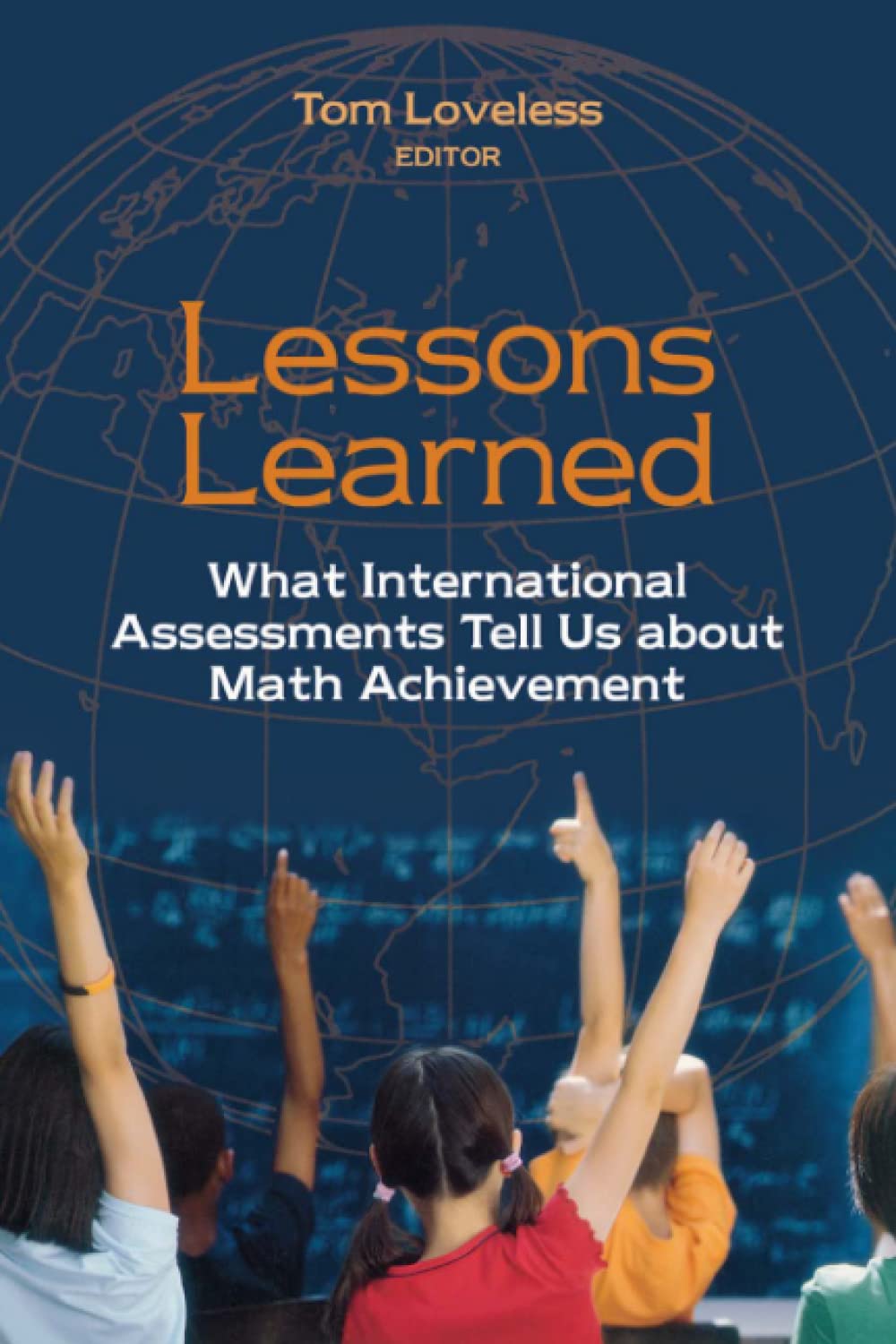
Standards for education achievement are under scrutiny throughout the industrial world. In this technological age, student performance in mathematics is seen as being particularly important. For more than four decades, international assessments conducted by the International Association for Evaluation of Educational Achievement (IEA) have measured how well students are learning mathematics in different countries. The latest round of mathematics testing of the Trends in Mathematics and Science Study (TIMSS) takes place in 2007. Beyond the horse racethe rankings that compare nationswhat have we learned from the wealth of data collected in these assessments? How do US math curriculums compare to those used overseas? Is the effect of technology in the classroom uniform across nations? How do popular math reforms fare abroad? Those are some of the critical issues tackled in this important book. The authors use the database to address several pressing questions about school policy and educational research. For example, Ina Mullis and Michael Martin review the major lessons learned over the history of TIMSS testing. William Schmidt and Richard T. Houang examine whether curricular breadth affects student achievement. Jeremy Kilpatrick, Vilma Mesa, and Finbarr Sloane evaluate American performance in algebra relative to other nations and pinpoint strengths and weaknesses in American students' learning of algebra.'
⚠️ WARNING (California Proposition 65):
This product may contain chemicals known to the State of California to cause cancer,
birth defects, or other reproductive harm.
For MAP (Minimum Advertised Price) violations and Intellectual Property (IP) or Trademark concerns, please contact:
support@ergodebooks.com
⚠️ California Proposition 65 Warning: Some products sold on this website may expose you to chemicals known to the State of California to cause cancer, birth defects, or other reproductive harm. For more information, visit www.P65Warnings.ca.gov.