
Title
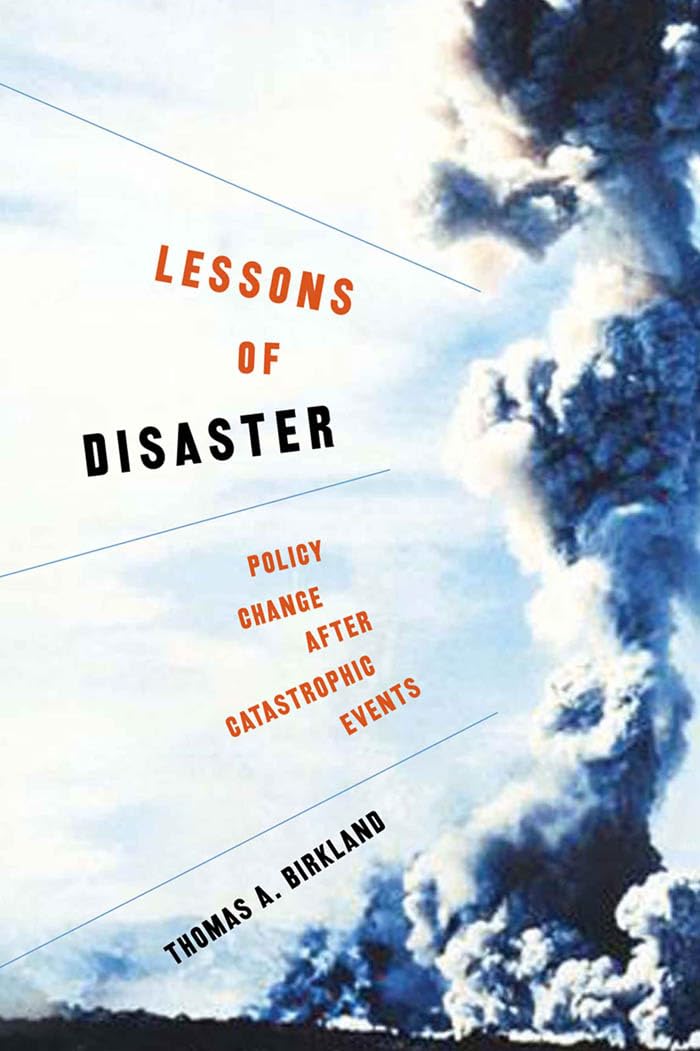
Lessons of Disaster: Policy Change after Catastrophic Events (American Government and Public Policy),New
Sold by Ergodebooks, an authorized reseller.
Returns accepted within 30 days | support@ergodebooks.com
Shipping Information
- Free Standard Shipping — United States only
- Processing Time: 3–5 business days
- Estimated Delivery: 6–10 business days after dispatch
- Double-boxed, fully insured & discreetly packaged
- Tracking number sent via email once dispatched
Returns & Refund
Returns accepted within 30 days of delivery.
Damaged or Defective Item
Free return shipping + replacement or full refund
Wrong Item Received
Free return shipping + replacement or full refund
Change of Mind
Return shipping at customer's expense · 25% restocking fee applies
Payment Option

Even before the wreckage of a disaster is cleared, one question is foremost in the minds of the public: 'What can be done to prevent this from happening again?' Today, news media and policymakers often invoke the 'lessons of September 11' and the 'lessons of Hurricane Katrina.' Certainly, these unexpected events heightened awareness about problems that might have contributed to or worsened the disasters, particularly about gaps in preparation. Inquiries and investigations are made that claim that 'lessons' were 'learned' from a disaster, leading us to assume that we will be more ready the next time a similar threat looms, and that our government will put in place measures to protect us.In Lessons of Disaster, Thomas Birkland takes a critical look at this assumption. We know that disasters play a role in setting policy agendasin getting policymakers to think about problemsbut does our government always take the next step and enact new legislation or regulations? To determine when and how a catastrophic event serves as a catalyst for true policy change, the author examines four categories of disasters: aviation security, homeland security, earthquakes, and hurricanes. He explores lessons learned from each, focusing on three types of policy change: change in the larger social construction of the issues surrounding the disaster; instrumental change, in which laws and regulations are made; and political change, in which alliances are created and shifted.Birkland argues that the type of disaster affects the types of lessons learned from it, and that certain conditions are necessary to translate awareness into new policy, including media attention, salience for a large portion of the public, the existence of advocacy groups for the issue, and the preexistence of policy ideas that can be drawn upon.This timely study concludes with a discussion of the interplay of multiple disasters, focusing on the initial government response to Hurricane Katrina and the negative effect the September 11 catastrophe seems to have had on reaction to that tragedy.
⚠️ WARNING (California Proposition 65):
This product may contain chemicals known to the State of California to cause cancer, birth defects, or other reproductive harm.
For more information, please visit www.P65Warnings.ca.gov.