
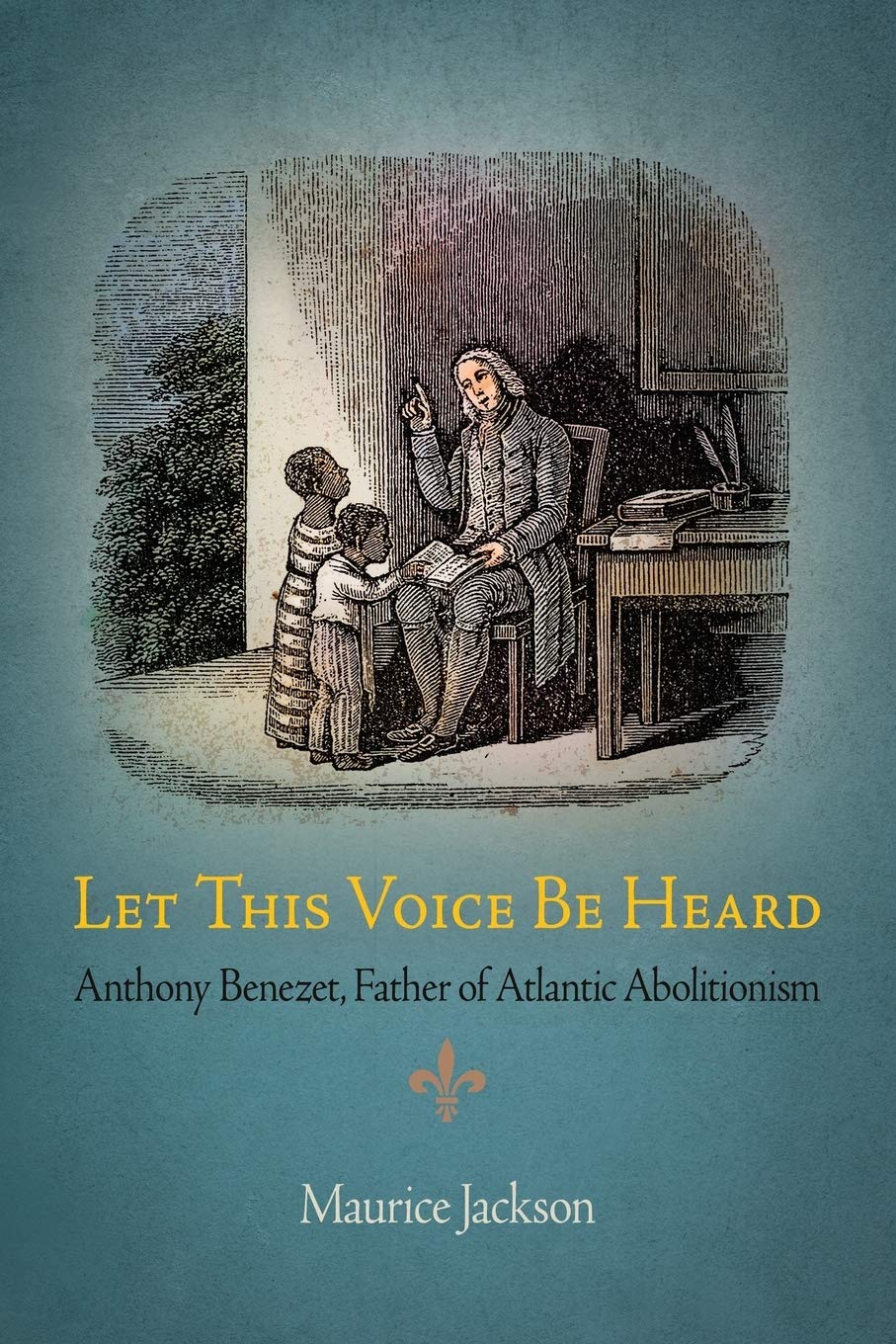
Title
Let This Voice Be Heard: Anthony Benezet, Father Of Atlantic Abolitionism,New
Sold by Ergodebooks, an authorized reseller.
Returns accepted within 30 days | support@ergodebooks.com
Shipping Information
- Free Standard Shipping — United States only
- Processing Time: 3–5 business days
- Estimated Delivery: 6–10 business days after dispatch
- Double-boxed, fully insured & discreetly packaged
- Tracking number sent via email once dispatched
Returns & Refund
Returns accepted within 30 days of delivery.
Damaged or Defective Item
Free return shipping + replacement or full refund
Wrong Item Received
Free return shipping + replacement or full refund
Change of Mind
Return shipping at customer's expense · 25% restocking fee applies
Payment Option

Anthony Benezet (171384), universally recognized by the leaders of the eighteenthcentury antislavery movement as its founder, was born to a Huguenot family in SaintQuentin, France. As a boy, Benezet moved to Holland, England, and, in 1731, Philadelphia, where he rose to prominence in the Quaker antislavery community.In transforming Quaker antislavery sentiment into a broadbased transatlantic movement, Benezet translated ideas from diverse sourcesEnlightenment philosophy, African travel narratives, Quakerism, practical life, and the Bibleinto concrete action. He founded the African Free School in Philadelphia, and such future abolitionist leaders as Absalom Jones and James Forten studied at Benezet's school and spread his ideas to broad social groups. At the same time, Benezet's correspondents, including Benjamin Franklin, Benjamin Rush, Abb Raynal, Granville Sharp, and John Wesley, gave his ideas an audience in the highest intellectual and political circles.In this wideranging intellectual biography, Maurice Jackson demonstrates how Benezet mediated Enlightenment political and social thought, narratives of African life written by slave traders themselves, and the ideas and experiences of ordinary people to create a new antislavery critique. Benezet's use of travel narratives challenged proslavery arguments about an undifferentiated, 'primitive' African society. Benezet's empirical evidence, laid on the intellectual scaffolding provided by the writings of Hutcheson, Wallace, and Montesquieu, had a profound influence, from the highculture writings of the Marquis de Condorcet to the opinions of ordinary citizens. When the great antislavery spokesmen JacquesPierre Brissot in France and William Wilberforce in England rose to demand abolition of the slave trade, they read into the record of the French National Assembly and the British Parliament extensive unattributed quotations from Benezet's writings, a fitting tribute to the influence of his work.
⚠️ WARNING (California Proposition 65):
This product may contain chemicals known to the State of California to cause cancer, birth defects, or other reproductive harm.
For more information, please visit www.P65Warnings.ca.gov.