
Title
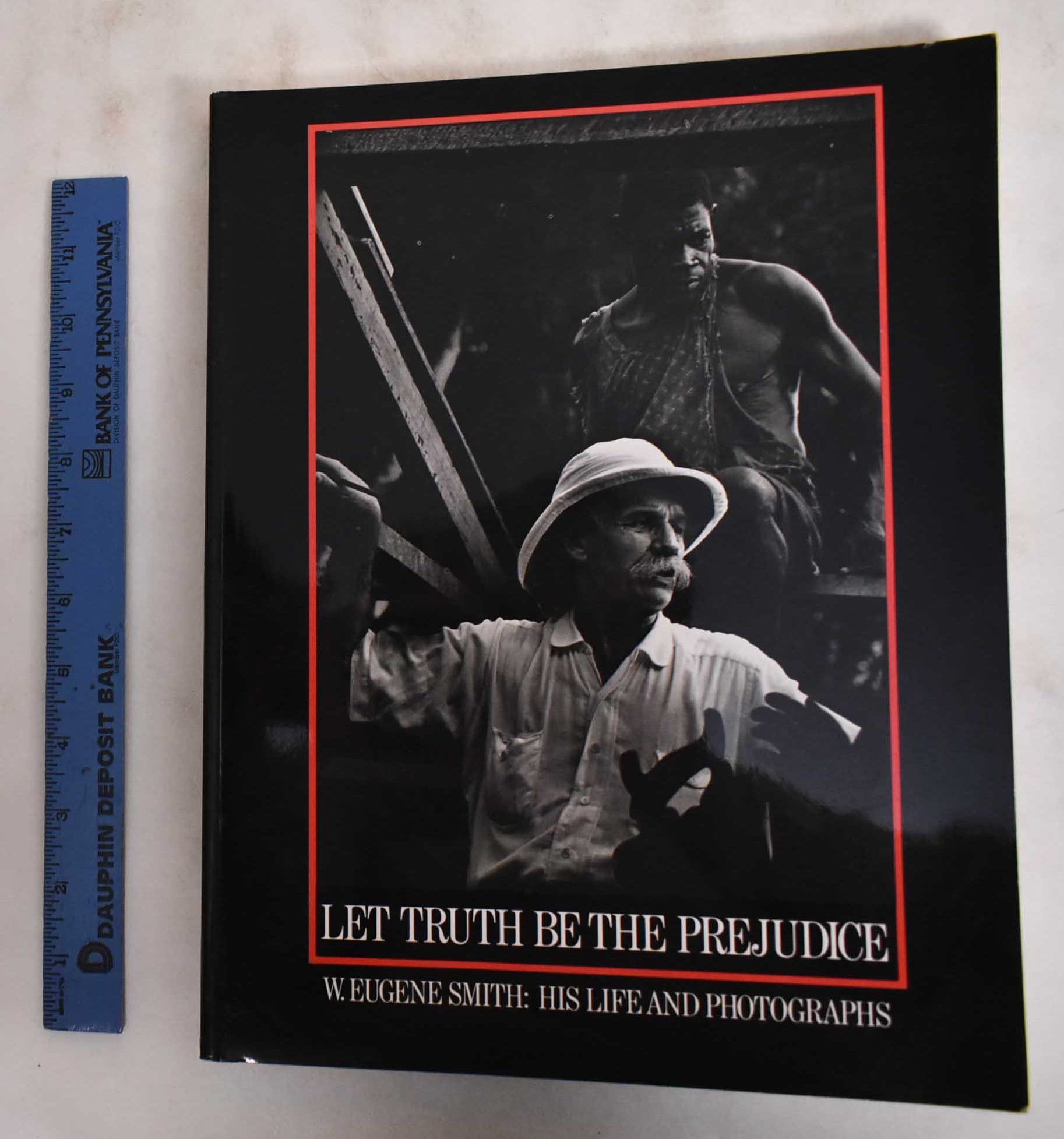
Let Truth Be The Prejudice: W. Eugene Smith: His Life and Photographs,Used
Sold by Ergodebooks, an authorized reseller.
Returns accepted within 30 days | support@ergodebooks.com
Shipping Information
- Free Standard Shipping — United States only
- Processing Time: 3–5 business days
- Estimated Delivery: 6–10 business days after dispatch
- Double-boxed, fully insured & discreetly packaged
- Tracking number sent via email once dispatched
Returns & Refund
Returns accepted within 30 days of delivery.
Damaged or Defective Item
Free return shipping + replacement or full refund
Wrong Item Received
Free return shipping + replacement or full refund
Change of Mind
Return shipping at customer's expense · 25% restocking fee applies
Payment Option

Photographs by W. Eugene SmithIllustrated biography by Ben MaddowAfterword by John G. MorrisLet Truth Be The Prejudice documents the life and work of W. Eugene Smith, a man whose work expanded the range and depth of photography, bringing new aesthetic and moral power to the photo essay. Smith was born in 1918 in Wichita, Kansas, and raised according to traditional American values, believing in the nobility of America and the injustice of war. He began taking pictures with his mother's camera while still a boy and continued this practice throughout his schooling. In 1937 his burning ambition took him to New York City, where his rise as a professional photographer was meteoric.Before he was twentyone, Smith had placed hundreds of photographs in the major picture magazines of the time. Dramatic composition, a hardedged brilliance, and a mastery of lighting were evident even in this early work. But the moment of true groundbreaking would occur during World War II. It was when Smith went ashore with the Marines at Saipan, Guam, and Iwo Jima that his work and his sense of moral responsibility came together. He wrote: 'Each time I pressed the shutter release it was a shouted condemnation hurled with the hope that they might echo through the minds of men in the future causing them caution and remembrance and realization.' Breaking from the concerns of the mass media, his personal priorities were born. Smith's war photographs earned him repeated and justified comparisons to Mathew Brady. His coverage of American prisonerofwar camps helped convince the Japanese that their fears were exaggerated, and stopped the suicide of thousands of terrified citizens upon the advance of American troops. This would not be the last time that Smith's work would change as well as document history.After the war, Smith became a staff photographer at Life magazine, where he created many of his most famous photographs. The essays 'Country Doctor' and 'Nurse Midwife' influenced an entire generation. Smith moved from mine villages in Great Britain to Albert Schweitzer in French Equatorial Africa to a sweeping study of Spanish village life. At a meeting of the Ku Klux Klan he created haunting images of hatred, fear, and bigotry, which beautifully counterpoint the humanity of his great Life0 essays. Smith also showed his skill at portraiture, shooting many of the luminaries of the time.His frustrations with commercial publishing finally led to a split with Life magazine in 1954, a true case of 'artistic differences.' He devoted his remaining twentyfour years to independent projects. It was a period of intense personal suffering and poverty. During these years he pushed one project, 'Pittsburgh,' virtually to the breaking point and along the way created photography's greatest urban landscape.His last great essay, 'Minamata,' depicted both the human suffering caused by mercury poisoning in a Japanese industrial port, and helped put an end to that pollution. A severe beating by factory thugs aggravated his already failing health and on October 15, 1978, he died. Over the span of forty driven years, Smith dreamed on an epic scale and his accomplishments were heroic. He once wrote: 'Never have I found the limits of the photographic potential. Every horizon, upon being reached, reveals another beckoning in the distance. Always, I am on the threshold.'Here is the definitive work on Smith's life and work, containing his major photoessays, the portrait work, and spanning his brilliant career from his days aboard an aircraft carrier, through the breadth of Pittsburgh, to the human suffering explicit in his last great essay in Minamata. All these images have been painstakingly reproduced to insure the greatest quality in testament to Smith's genius.Moral passion and photographic truth were inseparable to Gene Smith. He pursued both and the measure of his greatness is that he compromised neither. His achievements were realized at no small cost to himself and those around him. In the accompanying biography, 'The Wounded Angel,' author Ben Maddow takes the measure of the man and looks unflinchingly at the muses and demons that drove W. Eugene Smith to the fulfillment of his dream of greatness. Maddow's biography is the first published indepth portrayal of Gene Smith's life. It is a dramatic saga made all the more vivid by Maddow's commitment to the facts and his subject.
⚠️ WARNING (California Proposition 65):
This product may contain chemicals known to the State of California to cause cancer, birth defects, or other reproductive harm.
For more information, please visit www.P65Warnings.ca.gov.