
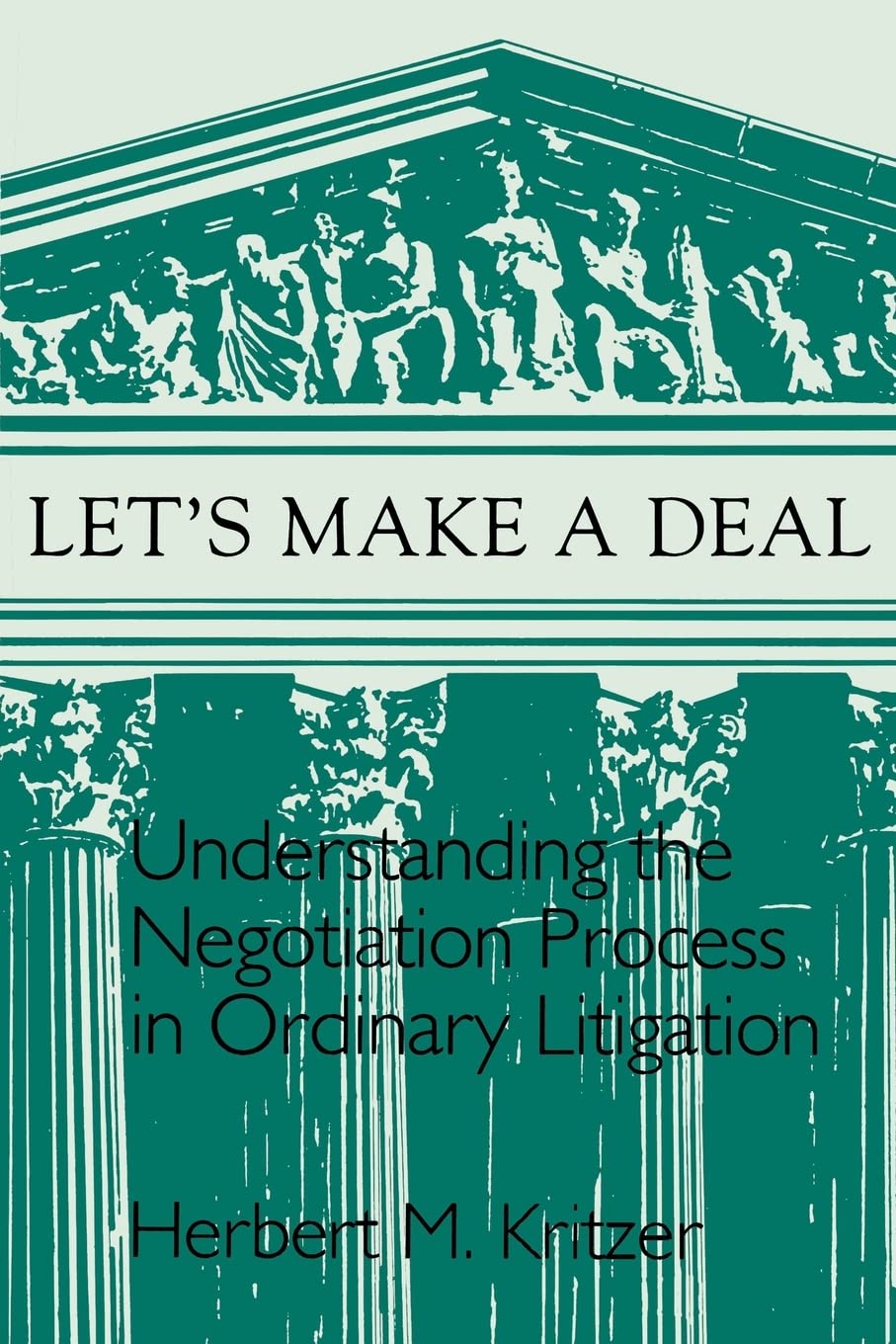
Title
Lets Make A Deal: Understanding The Negotiating Process,New
Sold by Ergodebooks, an authorized reseller.
Returns accepted within 30 days | support@ergodebooks.com
Shipping Information
- Free Standard Shipping — United States only
- Processing Time: 3–5 business days
- Estimated Delivery: 6–10 business days after dispatch
- Double-boxed, fully insured & discreetly packaged
- Tracking number sent via email once dispatched
Returns & Refund
Returns accepted within 30 days of delivery.
Damaged or Defective Item
Free return shipping + replacement or full refund
Wrong Item Received
Free return shipping + replacement or full refund
Change of Mind
Return shipping at customer's expense · 25% restocking fee applies
Payment Option

Americans have a longstanding reputation for relying upon the legal system to deal with all manner of problems and issues; litigiousness is often seen as an American disease. Yet 99% of legal cases started in the courts never even make it through the courthouse door, because formal court action is never initiated. Instead, participants reach an outofcourt settlement. What does this dominance of negotiated settlement over adjudication mean? Has Equal Justice Under Law given way to Lets Make a Deal? So far, most of the evidence from judges and lawyers, policy makers and researchers has been anecdotal, and the public image of complex legal machinations and backroom deals derives from a few spectacular and atypical cases.Based on findings from the Civil Litigation Research Project, begun in 1979 and sponsored by the U.S. Department of Justice, Herbert Kritzer has constructed a coherent picture of the routine of ordinary litigation. He shows, for instance, that the vast bulk of ordinary cases that account for most claims in federal and state courts are rather cutanddried affairs that deal with relatively modest amounts of moneyimportant information for the proponents of litigation reform. He examines the economics of bargaining, for both lawyers and their clients, and the extent to which litigation is governed by monetary concerns. Evaluating the models of negotiation and game theory that are currently in vogue, Kritzer posits a more useful typology for understanding what actually happens when lawyers, plaintiffs, and defendants sit down to make a deal. His illuminating insights into the divergent interests of attorneys and clients correct many of the assumptions of standard economic theories of litigation and bargaining.
⚠️ WARNING (California Proposition 65):
This product may contain chemicals known to the State of California to cause cancer, birth defects, or other reproductive harm.
For more information, please visit www.P65Warnings.ca.gov.