
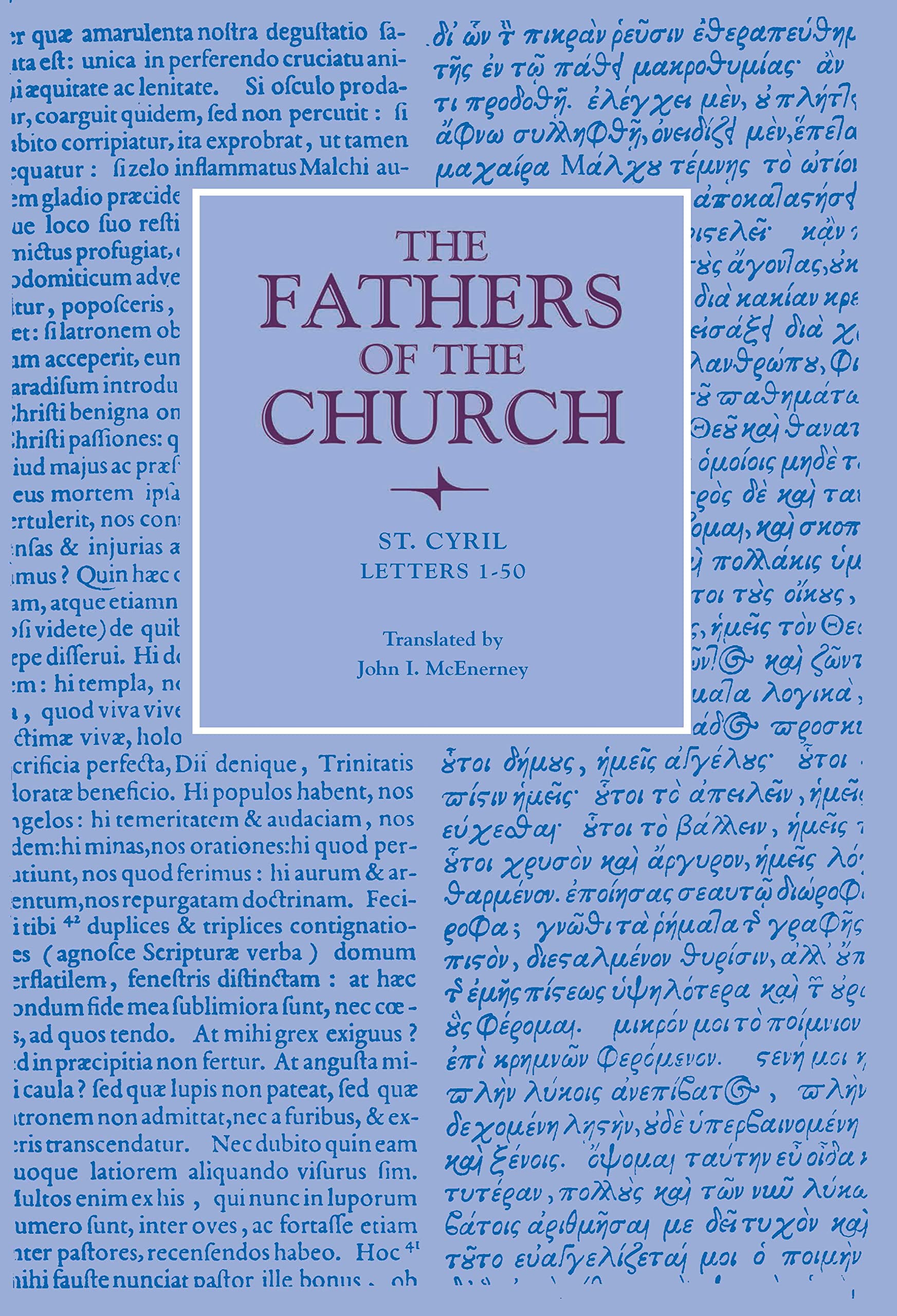
Title
Letters, 150 (Fathers Of The Church Patristic Series),Used
Sold by Ergodebooks, an authorized reseller.
Returns accepted within 30 days | support@ergodebooks.com
Shipping Information
- Free Standard Shipping — United States only
- Processing Time: 3–5 business days
- Estimated Delivery: 6–10 business days after dispatch
- Double-boxed, fully insured & discreetly packaged
- Tracking number sent via email once dispatched
Returns & Refund
Returns accepted within 30 days of delivery.
Damaged or Defective Item
Free return shipping + replacement or full refund
Wrong Item Received
Free return shipping + replacement or full refund
Change of Mind
Return shipping at customer's expense · 25% restocking fee applies
Payment Option

St. Cyril, Patriarch of Alexandria for thirtytwo years in the first half of the fifth century, was a great champion of the faith against heresy; he opposed Novatianism, Neoplatonism, and Judaism. His principal struggle, however, was with Nestorius, Patriarch of Constantinople. Cyril vehemently defended the application of the word Theotokos, which means 'Godbearer', to the Blessed Virgin Mary. Nestorius, representative of the Antiochene theological school, held that the Blessed Virgin was the mother only of the humanity of Christ. This great Christological controversy and the Council of Ephesus that was convened in 431 to resolve it provide the subject matter for the entire collection of letters in this volume. Letter 1 is Cyril's response to a group of monks under his jurisdiction who ask for guidance in the Nestorian debate. His remarks take us straight to the heart of the matter: 'Therefore, I am amazed if some should question at all whether the Holy Virgin should be called the Mother of God.' Through Letter 32 we are involved with the controversy and its development down to and including the Council of Ephesus. Letter 4, addressed to Nestorius, has been called the dogmatic letter, and the Council of Ephesus approved it as maintaining the teaching of Nicaea. Letter 17 is considered an epitome of Cyril's faith. Along with twelve anathemas it condemned Nestorius in the name of the synod convened by Pope Celestine in Rome and later was added to the Acts of the Council of Ephesus Letters 33 to 50 concern the question of John, Bishop of Antioch and a personal friend of Cyril through a longstanding correspondence. When John and his bishops arrived at Ephesus, they set up a rival council and issued a decree of deposition and excommunication against Cyril and Memnon, Bishop of Ephesus. After the Council of Ephesus it was Cyril's task to reconcile the Antiochene bishops who had formed the Conciliabulum with John to restore peace to the Churches in the East. Letter 39 reveals his joy in achieving this reconciliation and in regaining his friendship with John. Together with Letters 4 and 17, Letter 39 has been called ecumenical. Letter 41 is exegetically important for its long discussion of the work 'scapegoat,' and Letter 45, which contains Cyril's famous formula, for it's doctrinal and theological content.
⚠️ WARNING (California Proposition 65):
This product may contain chemicals known to the State of California to cause cancer, birth defects, or other reproductive harm.
For more information, please visit www.P65Warnings.ca.gov.