
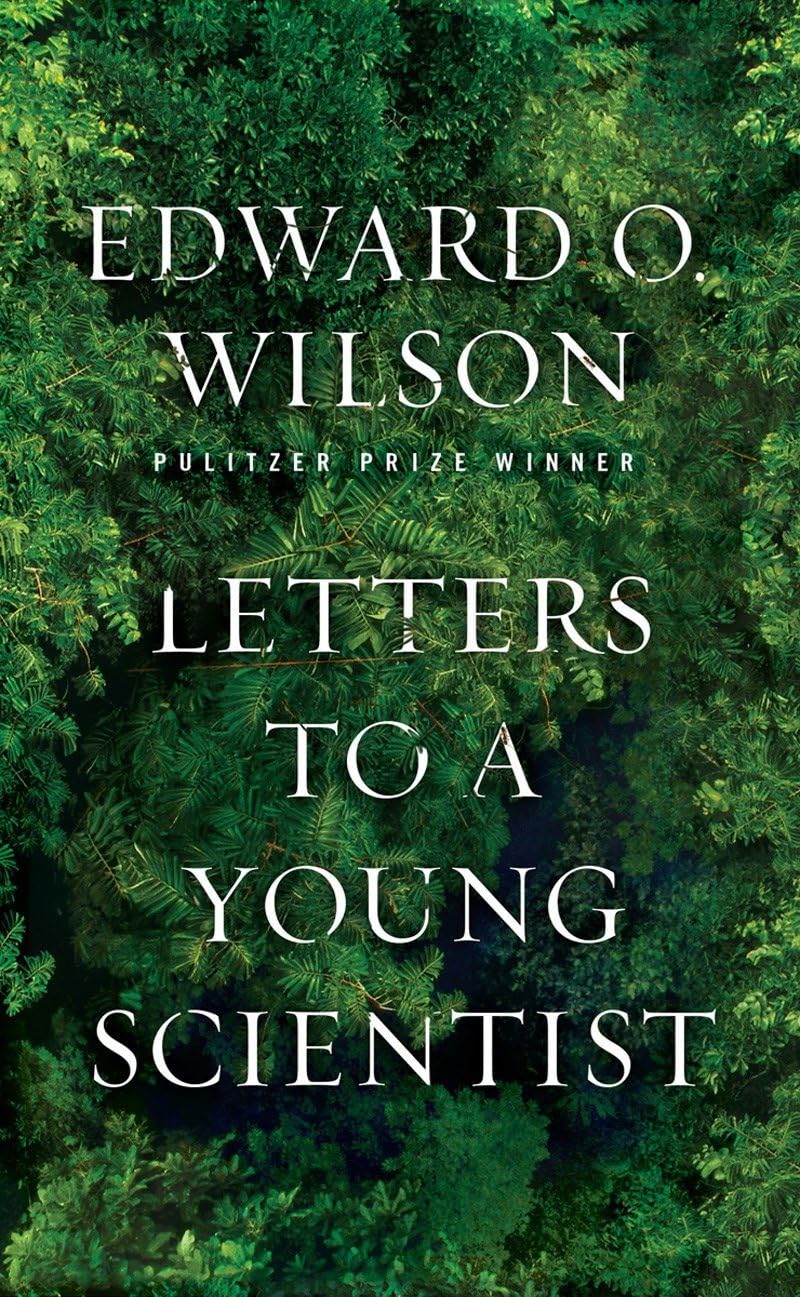
Title
Letters to a Young Scientist,Used
Sold by Ergodebooks, an authorized reseller.
Returns accepted within 30 days | support@ergodebooks.com
Shipping Information
- Free Standard Shipping — United States only
- Processing Time: 3–5 business days
- Estimated Delivery: 6–10 business days after dispatch
- Double-boxed, fully insured & discreetly packaged
- Tracking number sent via email once dispatched
Returns & Refund
Returns accepted within 30 days of delivery.
Damaged or Defective Item
Free return shipping + replacement or full refund
Wrong Item Received
Free return shipping + replacement or full refund
Change of Mind
Return shipping at customer's expense · 25% restocking fee applies
Payment Option

Pulitzer Prizewinning biologist Edward O. Wilson imparts the wisdom of his storied career to the next generation. Edward O. Wilson has distilled sixty years of teaching into a book for students, young and old. Reflecting on his comingofage in the South as a Boy Scout and a lover of ants and butterflies, Wilson threads these twentyone letters, each richly illustrated, with autobiographical anecdotes that illuminate his careerboth his successes and his failuresand his motivations for becoming a biologist. At a time in human history when our survival is more than ever linked to our understanding of science, Wilson insists that success in the sciences does not depend on mathematical skill, but rather a passion for finding a problem and solving it. From the collapse of stars to the exploration of rain forests and the oceans depths, Wilson instills a love of the innate creativity of science and a respect for the human beings modest place in the planets ecosystem in his readers. 21 illustrations
⚠️ WARNING (California Proposition 65):
This product may contain chemicals known to the State of California to cause cancer, birth defects, or other reproductive harm.
For more information, please visit www.P65Warnings.ca.gov.
- Q: What is the main theme of 'Letters to a Young Scientist'? A: The main theme of 'Letters to a Young Scientist' is the importance of passion in scientific endeavors. Edward O. Wilson shares insights from his career, emphasizing that success in science is driven by curiosity and problem-solving rather than just mathematical skill.
- Q: Who is the author of 'Letters to a Young Scientist'? A: The author of 'Letters to a Young Scientist' is Pulitzer Prize-winning biologist Edward O. Wilson, known for his extensive work in biology and conservation.
- Q: How many pages is the book 'Letters to a Young Scientist'? A: 'Letters to a Young Scientist' has 256 pages, providing an engaging read filled with illustrations and personal anecdotes.
- Q: What type of binding does 'Letters to a Young Scientist' have? A: 'Letters to a Young Scientist' is available in hardcover binding, ensuring durability and a quality feel.
- Q: Is 'Letters to a Young Scientist' suitable for all age groups? A: Yes, 'Letters to a Young Scientist' is suitable for both young and old readers, making it a great resource for students and anyone interested in science.
- Q: What illustrations are included in 'Letters to a Young Scientist'? A: 'Letters to a Young Scientist' includes 21 illustrations that complement the text and enhance the reader's understanding of the topics discussed.
- Q: When was 'Letters to a Young Scientist' published? A: 'Letters to a Young Scientist' was published on April 15, 2013.
- Q: What can readers expect to learn from this book? A: Readers can expect to learn about the journey of becoming a biologist, the importance of creativity in science, and insights into the ecological challenges facing humanity today.
- Q: Is there any specific audience for 'Letters to a Young Scientist'? A: 'Letters to a Young Scientist' primarily targets students and aspiring scientists but is also valuable for anyone interested in understanding the role of science in society.
- Q: What is the significance of the autobiographical elements in the book? A: The autobiographical elements in 'Letters to a Young Scientist' provide personal context to Wilson's experiences, illustrating how his life events shaped his scientific career and philosophies.