
Title
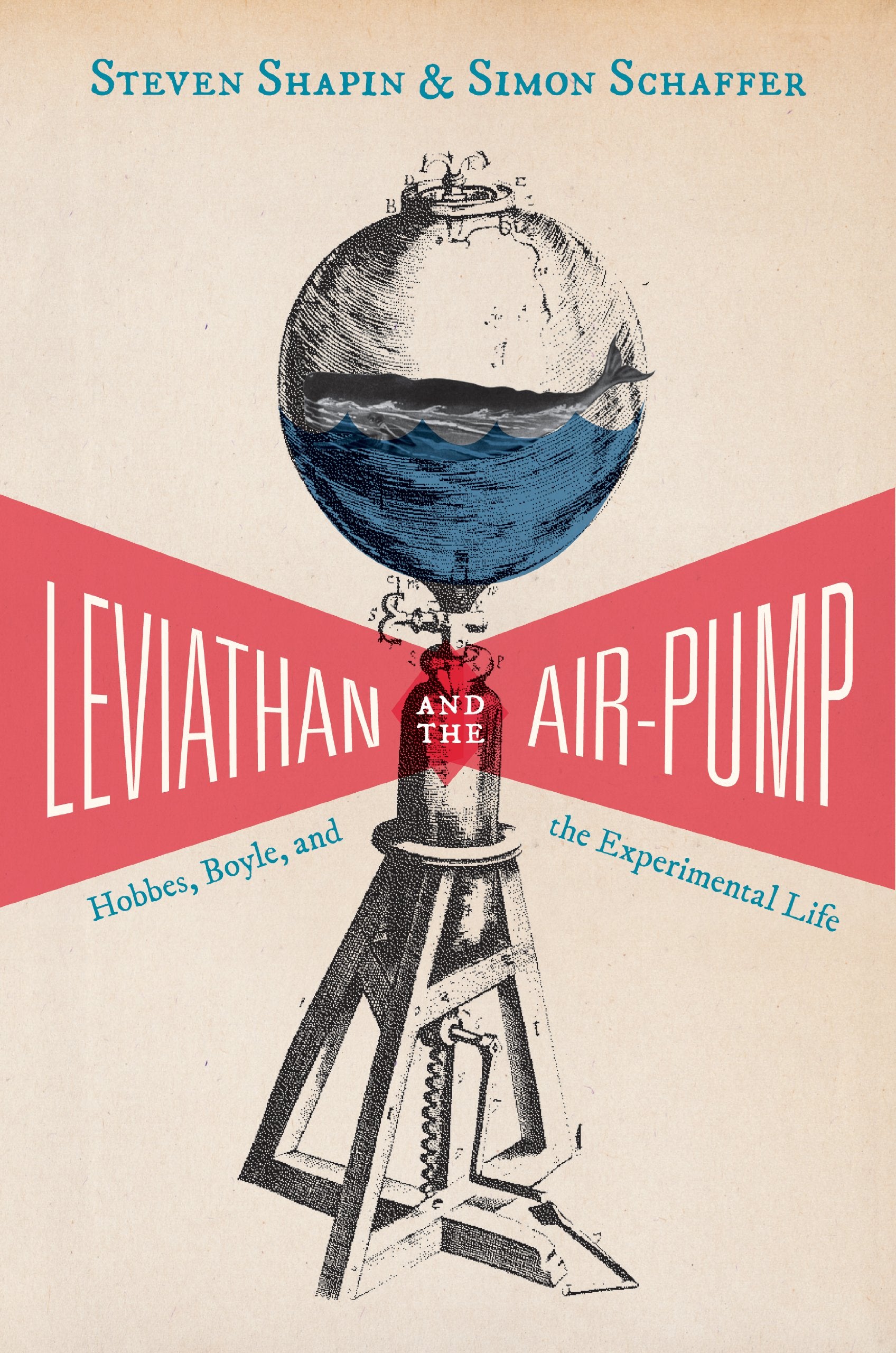
Leviathan And The Airpump: Hobbes, Boyle, And The Experimental Life (Princeton Classics, 32),New
Sold by Ergodebooks, an authorized reseller.
Returns accepted within 30 days | support@ergodebooks.com
Shipping Information
- Free Standard Shipping — United States only
- Processing Time: 1–3 business days
- Estimated Delivery: 3–5 business days after dispatch
- Double-boxed, fully insured & discreetly packaged
- Tracking number sent via email once dispatched
- Orders over $250 require signature upon delivery. Taxes calculated at checkout.
Returns & Refund
Returns accepted within 30 days of delivery.
Damaged or Defective Item
Free return shipping + replacement or full refund
Wrong Item Received
Free return shipping + replacement or full refund
Change of Mind
Return shipping at customer's expense · 25% restocking fee applies
Payment Option

Leviathan And The Airpump Examines The Conflicts Over The Value And Propriety Of Experimental Methods Between Two Major Seventeenthcentury Thinkers: Thomas Hobbes, Author Of The Political Treatise Leviathan And Vehement Critic Of Systematic Experimentation In Natural Philosophy, And Robert Boyle, Mechanical Philosopher And Owner Of The Newly Invented Airpump. The Issues At Stake In Their Disputes Ranged From The Physical Integrity Of The Airpump To The Intellectual Integrity Of The Knowledge It Might Yield. Both Boyle And Hobbes Were Looking For Ways Of Establishing Knowledge That Did Not Decay Into Ad Hominem Attacks And Political Division. Boyle Proposed The Experiment As Cure. He Argued That Facts Should Be Manufactured By Machines Like The Airpump So That Gentlemen Could Witness The Experiments And Produce Knowledge That Everyone Agreed On. Hobbes, By Contrast, Looked For Natural Law And Viewed Experiments As The Artificial, Unreliable Products Of An Exclusive Guild.The New Approaches Taken In Leviathan And The Airpump Have Been Enormously Influential On Historical Studies Of Science. Shapin And Schaffer Found A Moment Of Scientific Revolution And Showed How Key Scientific Givensfacts, Interpretations, Experiment, Truthwere Fundamental To A New Political Order. Shapin And Schaffer Were Also Innovative In Their Ethnographic Approach. Attempting To Understand The Work Habits, Rituals, And Social Structures Of A Remote, Unfamiliar Group, They Argued That Politics Were Tied Up In What Scientists Did, Rather Than What They Said. Steven Shapin And Simon Schaffer Use The Confrontation Between Hobbes And Boyle As A Way Of Understanding What Was At Stake In The Early History Of Scientific Experimentation. They Describe The Protagonists' Divergent Views Of Natural Knowledge, And Situate The Hobbesboyle Disputes Within Contemporary Debates Over The Role Of Intellectuals In Public Life And The Problems Of Social Order And Assent In Restoration England. In A New Introduction, The Authors Describe How Science And Its Social Context Were Understood When This Book Was First Published, And How The Study Of The History Of Science Has Changed Since Then.
⚠️ WARNING (California Proposition 65):
This product may contain chemicals known to the State of California to cause cancer, birth defects, or other reproductive harm.
For more information, please visit www.P65Warnings.ca.gov.
- Q: How many pages does the book have? A: The book has four hundred forty-eight pages. This length allows for an in-depth exploration of the themes and arguments presented.
- Q: What is the binding style of this book? A: The book is paperback bound. This makes it more flexible and lightweight for easy handling and reading.
- Q: What are the dimensions of the book? A: The book measures six point two six inches in length, one point two six inches in width, and nine point two five inches in height. These dimensions make it a standard size for easy storage and reading.
- Q: Who is the author of 'Leviathan and the Air-Pump'? A: The author is Steven Shapin. He is known for his scholarly work in the history of science and philosophy.
- Q: What genre does this book fall under? A: This book is classified as historical and philosophical literature. It delves into the conflicts between scientific methods and political philosophy.
- Q: Is this book suitable for beginners in philosophy? A: Yes, the book is accessible to beginners. It provides a clear examination of complex ideas regarding science and politics.
- Q: What themes are explored in this book? A: The book explores themes of experimental methods, political philosophy, and the nature of scientific knowledge. These themes are critical for understanding early modern science.
- Q: How should I care for this paperback book? A: To care for the book, keep it in a dry place and avoid direct sunlight. This will help preserve its condition over time.
- Q: Can the book be stored on a bookshelf? A: Yes, the book can comfortably fit on a standard bookshelf. Its dimensions make it easy to store alongside other books.
- Q: Is this book safe for young readers? A: Yes, the book is suitable for young adult readers. It engages with important historical ideas in a thoughtful manner.
- Q: What is the main argument of the book? A: The main argument contrasts the views of Thomas Hobbes and Robert Boyle on the nature of knowledge and experimentation. It highlights their differing philosophies on science.
- Q: Is there a new introduction in this edition? A: Yes, the book includes a new introduction by the authors. It discusses the evolution of the study of the history of science since its original publication.
- Q: What if the book arrives damaged? A: If the book arrives damaged, you should contact the seller for a return or replacement. Most sellers have policies in place for damaged items.
- Q: Can this book be used for academic purposes? A: Yes, the book is suitable for academic study. It provides valuable insights into the history and philosophy of science.
- Q: Is there an index or bibliography in the book? A: Yes, the book includes an index and bibliography. These sections are helpful for further research and reference.