
Title


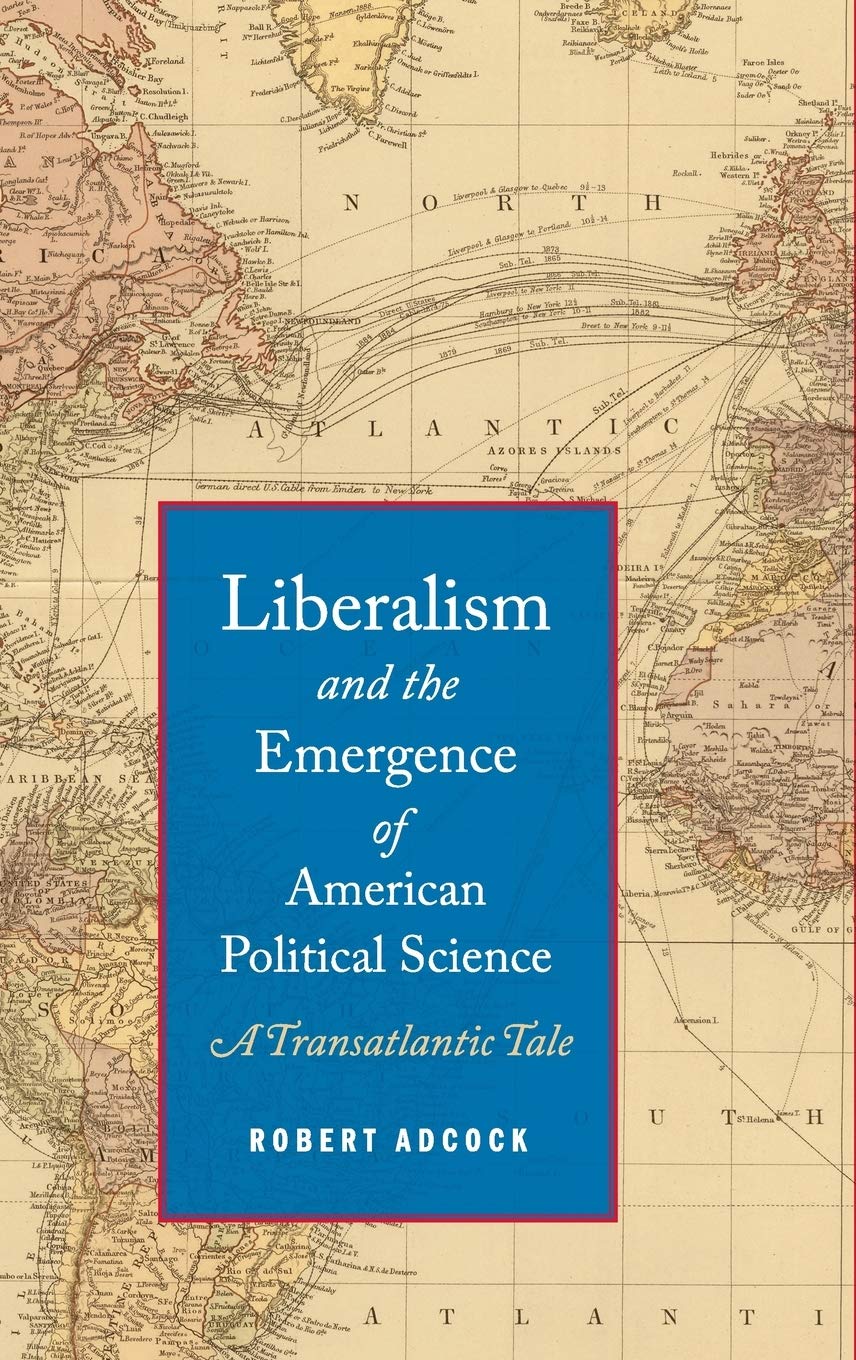
Liberalism and the Emergence of American Political Science: A Transatlantic Tale,Used
Sold by Ergodebooks, an authorized reseller.
Returns accepted within 30 days | support@ergodebooks.com
Shipping Information
- Free Standard Shipping — United States only
- Processing Time: 3–5 business days
- Estimated Delivery: 6–10 business days after dispatch
- Double-boxed, fully insured & discreetly packaged
- Tracking number sent via email once dispatched
Returns & Refund
Returns accepted within 30 days of delivery.
Damaged or Defective Item
Free return shipping + replacement or full refund
Wrong Item Received
Free return shipping + replacement or full refund
Change of Mind
Return shipping at customer's expense · 25% restocking fee applies
Payment Option

Winner of the 2015 Award for Concept Analysis in Political ScienceAmerican political science has been widely but loosely identified as a liberal science. Robert Adcock clarifies the place of American political science within the liberal tradition by situating its origins in relation to the transatlantic history of liberalism. The pioneers of American political science participated in transatlantic networks of intellectual and political elites that connected them directly to the evolution of liberalism in Europe. This book shows how these figures adapted multiple European liberal arguments to speak to particular challenges of mass democratic politics and largescale industry as they developed in America. Political science's pioneers in the American academy were thus active agents of the Americanization of liberalism.In charting the emergence of American political science, Adcock shows how a distinct current of midnineteenthcentury European liberalism was transformed into two alternative twentiethcentury American liberalisms. When political science first secured a niche in America's antebellum academy, it advanced a democratized classical liberal vision that overlapped with the contemporary European liberalism of Tocqueville and John Stuart Mill. As political science expanded during the dramatic growth of universities in the Gilded Age, controversy and cleavage within liberalism came to the fore in the area of political economy. During the latenineteenth century, this cleavage was fleshed out into the alternative analyses of democracy and the administrative state advanced by two divergent liberal political visions: progressive liberalism and disenchanted classical liberalism. Both visions found expression among the early leaders of the new American Political Science Association, founded in 1903; and in turn, within the fierce contest over the meaning of "liberalism" as this term entered American political discourse from the mid1910s on. The history of American political science allows us to see how a distinct current of midnineteenthcentury European liberalism was transformed into alternative twentiethcentury American liberalisms.
⚠️ WARNING (California Proposition 65):
This product may contain chemicals known to the State of California to cause cancer, birth defects, or other reproductive harm.
For more information, please visit www.P65Warnings.ca.gov.