
Title
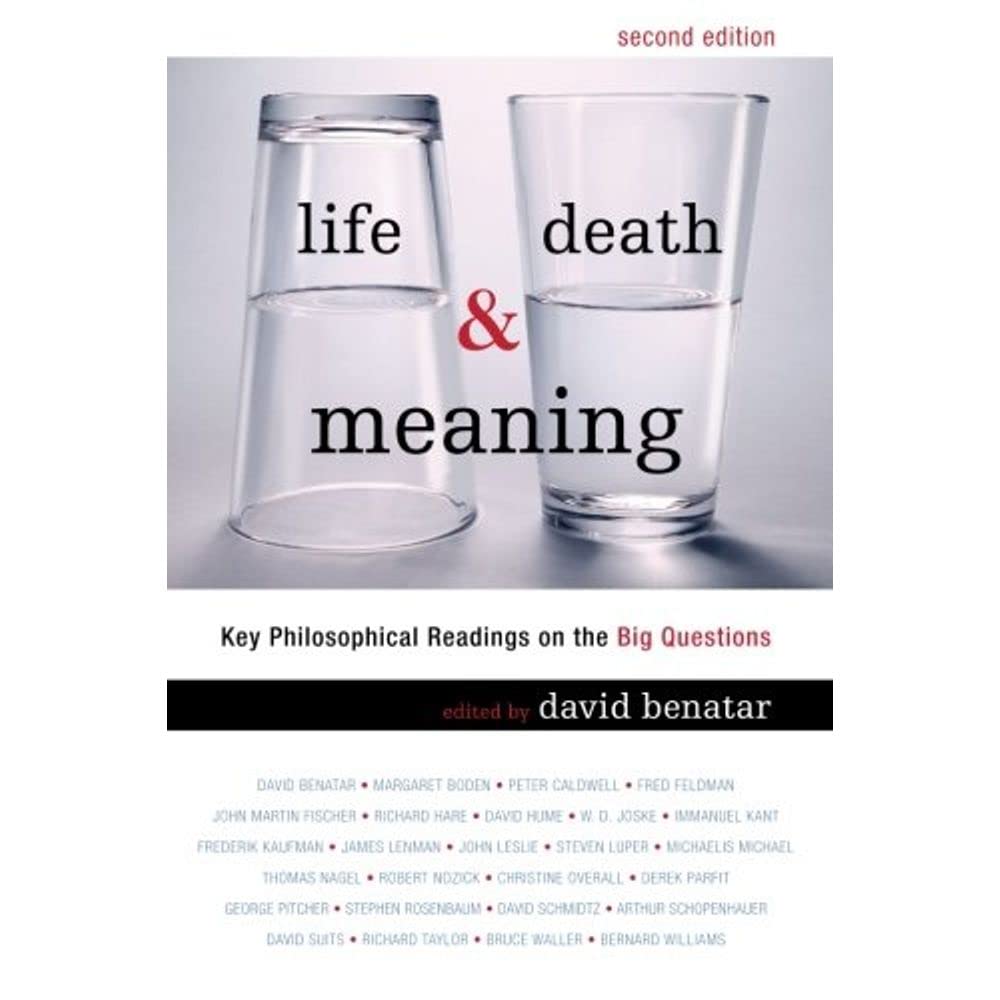
Life, Death, And Meaning: Key Philosophical Readings On The Big Questions
Sold by Ergodebooks, an authorized reseller.
Returns accepted within 30 days | support@ergodebooks.com
Shipping Information
- Free Standard Shipping — United States only
- Processing Time: 3–5 business days
- Estimated Delivery: 6–10 business days after dispatch
- Double-boxed, fully insured & discreetly packaged
- Tracking number sent via email once dispatched
Returns & Refund
Returns accepted within 30 days of delivery.
Damaged or Defective Item
Free return shipping + replacement or full refund
Wrong Item Received
Free return shipping + replacement or full refund
Change of Mind
Return shipping at customer's expense · 25% restocking fee applies
Payment Option

Do Our Lives Have Meaning? Should We Create More People? Is Death Bad? Should We Commit Suicide? Would It Be Better To Be Immortal? Should We Be Optimistic Or Pessimistic? Since Life, Death, And Meaning: Key Philosophical Readings On The Big Questions First Appeared, David Benatar'S Distinctive Anthology Designed To Introduce Students To The Key Existential Questions Of Philosophy Has Won A Devoted Following Among Users In A Variety Of Upperlevel And Even Introductory Courses. While Many Philosophers In The 'Continental Tradition'_Those Known As 'Existentialists'_Have Engaged These Issues At Length And Often With Great Popular Appeal, Englishspeaking Philosophers Have Had Relatively Little To Say On These Important Questions. Yet, The Methodology They Bring To Philosophical Questions Can, And Occasionally Has, Been Applied Usefully To 'Existential' Questions. This Volume Draws Together A Representative Sample Of Primarily Englishspeaking Philosophers' Reflections On Life'S Big Questions, Divided Into Six Sections, Covering (1) The Meaning Of Life, (2) Creating People, (3) Death, (4) Suicide, (5) Immortality, And (6) Optimism And Pessimism. These Key Readings Are Supplemented With Helpful Introductions, Study Questions, And Suggestions For Further Reading, Making The Material Accessible And Interesting For Students. In Short, The Book Provides A Singular Introduction To The Way That Philosophy Has Dealt With The Big Questions Of Life That We Are All Tempted To Ask.
⚠️ WARNING (California Proposition 65):
This product may contain chemicals known to the State of California to cause cancer, birth defects, or other reproductive harm.
For more information, please visit www.P65Warnings.ca.gov.
- Q: What is the page count of this book? A: This book has four hundred seventy-two pages. It provides a comprehensive exploration of philosophical questions.
- Q: What are the dimensions of this book? A: The book measures six point zero six inches in length, one point one inches in width, and nine point zero nine inches in height.
- Q: What binding type does this book have? A: This book is available in paperback binding. This makes it lightweight and easy to handle.
- Q: Who is the author of this book? A: The author of this book is David Benatar. He is known for his work in philosophy, particularly in existential questions.
- Q: What philosophical topics are covered in this book? A: This book covers key questions like the meaning of life, death, and suicide. It is divided into six sections for clarity.
- Q: What is the target audience for this book? A: This book is suitable for students in both upper-level and introductory philosophy courses. It aims to engage a wide range of readers.
- Q: How can I use this book effectively? A: You can use this book as a study guide for philosophical discussions or as a companion for academic coursework. It includes study questions and suggestions for further reading.
- Q: Is this book appropriate for beginners in philosophy? A: Yes, this book is appropriate for beginners. It offers accessible introductions to complex philosophical concepts.
- Q: Can I read this book for self-study? A: Yes, you can read this book for self-study. It includes helpful tools like study questions to enhance understanding.
- Q: How should I care for this book? A: To care for this book, keep it in a dry place and avoid exposure to direct sunlight. This will preserve its condition.
- Q: Is this book safe to read for young adults? A: Yes, this book is safe for young adults. It discusses philosophical themes that are suitable for mature readers.
- Q: What if my book arrives damaged? A: If your book arrives damaged, you should contact the seller for return or exchange options. Most retailers have policies in place for such issues.
- Q: Can I return this book if I don’t like it? A: Yes, you can often return this book if you don’t like it. Check the retailer’s return policy for specific details.
- Q: What makes this book different from other philosophy books? A: This book stands out due to its focus on key existential questions and the diverse perspectives of primarily English-speaking philosophers.
- Q: Is this book suitable for group discussions? A: Yes, this book is ideal for group discussions. Its structured sections and study questions facilitate engaging conversations.
- Q: What philosophical tradition does this book focus on? A: This book primarily focuses on the continental tradition of philosophy, particularly existentialism. It contrasts this with English-speaking philosophical thought.