If you have any questions, you are always welcome to contact us. We'll get back to you as soon as possible, withing 24 hours on weekdays.
Customer service
All questions about your order, return and delivery must be sent to our customer service team by e-mail at yourstore@yourdomain.com
Sale & Press
If you are interested in selling our products, need more information about our brand or wish to make a collaboration, please contact us at press@yourdomain.com
Help
If you have any questions, you are always welcome to contact us. We'll get back to you as soon as possible, withing 24 hours on weekdays.
Customer service
All questions about your order, return and delivery must be sent to our customer service team by e-mail at yourstore@yourdomain.com
Sale & Press
If you are interested in selling our products, need more information about our brand or wish to make a collaboration, please contact us at press@yourdomain.com
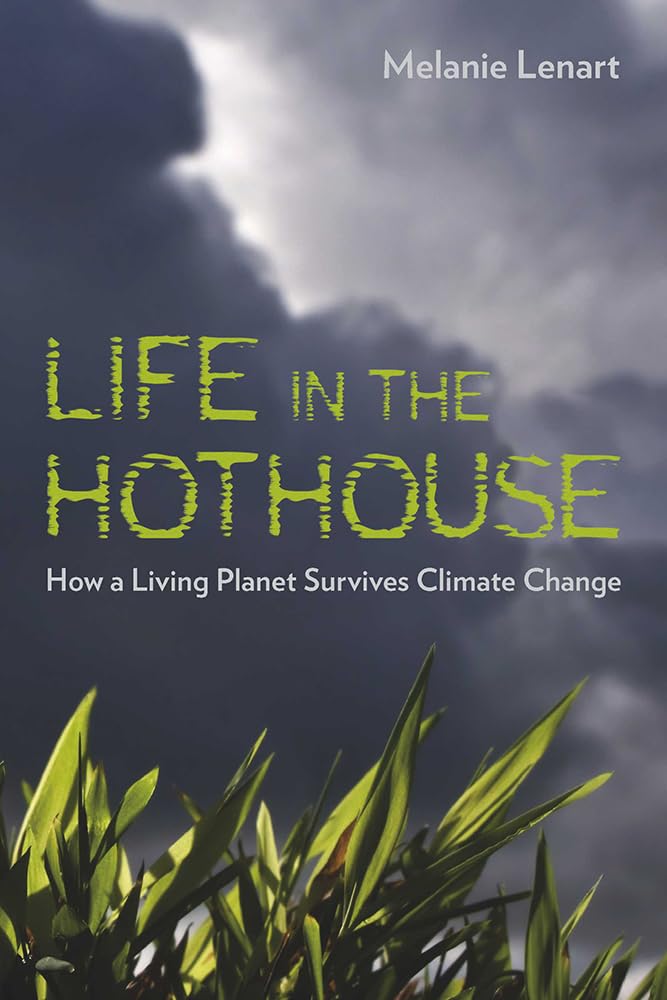
In this insightful, compelling, and highly readable work, Melanie Lenart, an awardwinning journalist and science writer who holds a PhD in Natural Resources and Global Change, examines global warming with the trained eye of a professional scientist. And she presents the science in a clear, straightforward manner. Why does the planets warming produce stronger hurricanes, rising seas, and larger floods? Simple, says Lenart. The Earth is just doing what comes naturally. Just as humans produce sweat to cool off on a hot day, the planet produces hurricanes, floods, wetlands, and forests to cool itself off.Life in the Hothouse incorporates Lenarts extensive knowledge of climate scienceincluding the latest research in climate changeand the most current scientific theories, including Gaia theory, which holds that the Earth has some degree of climate control built in. As Lenart points out, scientists have been documenting stronger hurricanes and larger floods for many years. There is a good reason for this, she notes. Hurricanes help cool the ocean surface and clear the air of carbon dioxide, the main greenhouse gas responsible for global warming. From the perspective of Gaia theory, these responses are helping to slow the ongoing global warming and Lenart expounds upon this in a clear and understandable fashion.There is hope, Lenart writes. If we help sustain Earth's natural defense systems, including wetlands and forests, perhaps Mother Earth will no longer need to rely as much on the cooling effects of what we call 'natural disasters'many of which carry a human fingerprint. At a minimum, she argues, these systems can help us survive the heat.
⚠️ WARNING (California Proposition 65):
This product may contain chemicals known to the State of California to cause cancer,
birth defects, or other reproductive harm.
For MAP (Minimum Advertised Price) violations and Intellectual Property (IP) or Trademark concerns, please contact:
support@ergodebooks.com
⚠️ California Proposition 65 Warning: Some products sold on this website may expose you to chemicals known to the State of California to cause cancer, birth defects, or other reproductive harm. For more information, visit www.P65Warnings.ca.gov.