
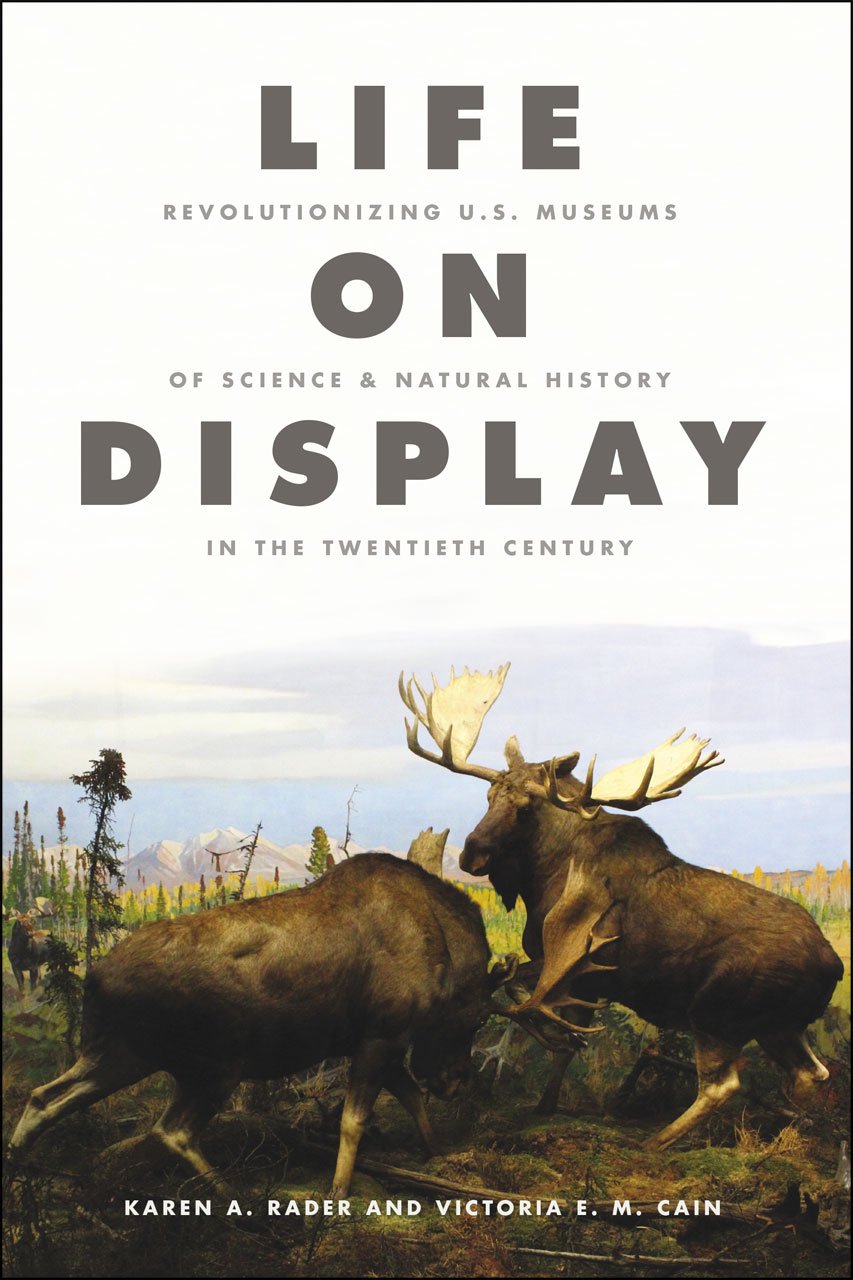
Title
Life on Display: Revolutionizing U.S. Museums of Science and Natural History in the Twentieth Century,Used
Sold by Ergodebooks, an authorized reseller.
Returns accepted within 30 days | support@ergodebooks.com
Shipping Information
- Free Standard Shipping — United States only
- Processing Time: 3–5 business days
- Estimated Delivery: 6–10 business days after dispatch
- Double-boxed, fully insured & discreetly packaged
- Tracking number sent via email once dispatched
Returns & Refund
Returns accepted within 30 days of delivery.
Damaged or Defective Item
Free return shipping + replacement or full refund
Wrong Item Received
Free return shipping + replacement or full refund
Change of Mind
Return shipping at customer's expense · 25% restocking fee applies
Payment Option

Rich with archival detail and compelling characters, Life on Display uses the history of biological exhibitions to analyze museums shifting roles in twentiethcentury American science and society. Karen A. Rader and Victoria E. M. Cain chronicle profound changes in these exhibitionsand the institutions that housed thembetween 1910 and 1990, ultimately offering new perspectives on the history of museums, science, and science education.Rader and Cain explain why science and natural history museums began to welcome new audiences between the 1900s and the 1920s and chronicle the turmoil that resulted from the introduction of new kinds of biological displays. They describe how these displays of life changed dramatically once again in the 1930s and 1940s, as museums negotiated changing, often conflicting interests of scientists, educators, and visitors. The authors then reveal how museum staffs, facing intense public and scientific scrutiny, experimented with wildly different definitions of life science and life science education from the 1950s through the 1980s. The book concludes with a discussion of the influence that corporate sponsorship and blockbuster economics wielded over science and natural history museums in the centurys last decades.A vivid, entertaining study of the ways science and natural history museums shaped and were shaped by understandings of science and public education in the twentiethcentury United States, Life on Display will appeal to historians, sociologists, and ethnographers of American science and culture, as well as museum practitioners and general readers.
⚠️ WARNING (California Proposition 65):
This product may contain chemicals known to the State of California to cause cancer, birth defects, or other reproductive harm.
For more information, please visit www.P65Warnings.ca.gov.
- Q: How many pages does this book have? A: This book has four hundred fifty-six pages. It offers a comprehensive exploration of museums in the twentieth century.
- Q: What is the binding type of this book? A: The binding type of this book is hardcover. This ensures durability and a premium feel for readers.
- Q: What are the dimensions of the book? A: The book measures six point five inches in length, one point six one inches in width, and nine point two five inches in height. These dimensions make it easy to handle and store.
- Q: Who are the authors of this book? A: The authors of this book are Karen A. Rader and Victoria E. M. Cain. They are well-regarded scholars in the field of museum studies.
- Q: What genre does this book belong to? A: This book belongs to the genre of non-fiction, specifically focusing on museum studies and the history of science. It provides an academic perspective on its subject matter.
- Q: Is this book suitable for all age groups? A: Yes, this book is suitable for adult readers and advanced students. It addresses complex themes in museum history and science.
- Q: How can I apply the insights from this book? A: You can apply the insights from this book by exploring its themes in museum education and public engagement. It offers valuable perspectives for museum practitioners and educators.
- Q: Can this book help me understand museum changes over time? A: Yes, this book provides a historical analysis of changes in museums from 1910 to 1990. It chronicles the evolution of exhibitions and institutional roles.
- Q: What themes are explored in this book? A: The book explores themes such as biological exhibitions, audience engagement, and the influence of corporate sponsorship. It provides a detailed look at the intersections of science and society.
- Q: How should I store this book to keep it in good condition? A: Store this book upright in a cool, dry place to maintain its condition. Avoid exposure to direct sunlight and moisture.
- Q: How can I clean the book if it gets dirty? A: To clean the book, gently wipe the cover with a soft, dry cloth. Avoid using water or cleaning products, as they may damage the binding.
- Q: What if the book arrives damaged? A: If the book arrives damaged, you should contact the seller for a return or exchange. Keep the packaging for potential return shipping.
- Q: Is there a warranty on this book? A: No, there is typically no warranty on books. However, you can check with the retailer about their return policy.
- Q: Can I find this book in libraries? A: Yes, this book may be available in public or university libraries. Check your local library catalog for availability.
- Q: Does this book have any illustrations or images? A: No, this book does not mention any illustrations in the description. It focuses primarily on text-based analysis.
- Q: How does this book compare to other museum studies books? A: This book is distinctive because it combines archival research with compelling narratives about museums. It offers a unique perspective compared to typical museum studies literature.