
Title
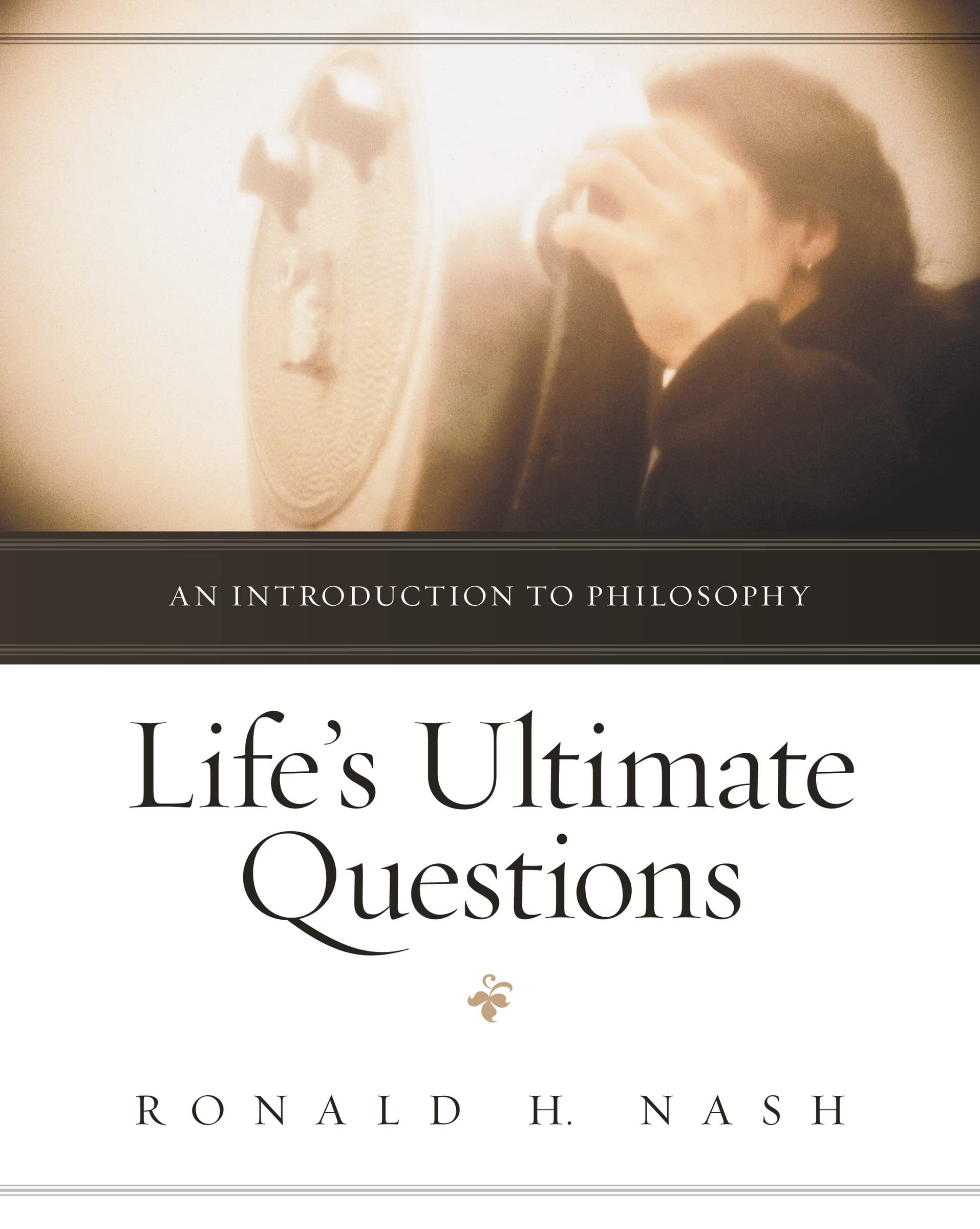
Life'S Ultimate Questions: An Introduction To Philosophy,New
Sold by Ergodebooks, an authorized reseller.
Returns accepted within 30 days | support@ergodebooks.com
Shipping Information
- Free Standard Shipping — United States only
- Processing Time: 3–5 business days
- Estimated Delivery: 6–10 business days after dispatch
- Double-boxed, fully insured & discreetly packaged
- Tracking number sent via email once dispatched
Returns & Refund
Returns accepted within 30 days of delivery.
Damaged or Defective Item
Free return shipping + replacement or full refund
Wrong Item Received
Free return shipping + replacement or full refund
Change of Mind
Return shipping at customer's expense · 25% restocking fee applies
Payment Option

Life'S Ultimate Questions Is Unique Among Introductory Philosophy Textbooks. By Synthesizing Three Distinct Approachestopical, Historical, And Worldview/Conceptual Systemsit Affords Students A Breadth And Depth Of Perspective Previously Unavailable In Standard Introductory Texts.Part One, Six Conceptual Systems, Explores The Philosophies Of: Naturalism, Plato, Aristotle, Plotinus, Augustine, And Aquinas.Part Two, Important Problems In Philosophy, Sheds Light On: The Law Of Noncontradiction, Possible Words, Epistemology I: Whatever Happened To Truth?, Epistemology Ii: A Tale Of Two Systems, Epistemology Iii: Reformed Epistemology, God I: The Existence Of God, God Ii: The Nature Of God, Metaphysics: Some Questions About Indeterminism, Ethics I: The Downward Path, Ethics Ii: The Upward Path, Human Nature: The Mindbody Problem And Survival After Death.
⚠️ WARNING (California Proposition 65):
This product may contain chemicals known to the State of California to cause cancer, birth defects, or other reproductive harm.
For more information, please visit www.P65Warnings.ca.gov.
- Q: How many pages does this book have? A: This book has four hundred pages. It provides a comprehensive introduction to philosophy, covering various topics and systems.
- Q: What is the binding type of this book? A: This book is paperback bound. This makes it more flexible and lightweight for easy handling.
- Q: What are the dimensions of this book? A: The dimensions of this book are seven point three four inches in length, one point zero seven inches in width, and nine point one seven inches in height.
- Q: Is this book suitable for beginners in philosophy? A: Yes, this book is suitable for beginners. It presents philosophical concepts in an accessible manner, making it ideal for those new to the subject.
- Q: What topics are covered in this philosophy book? A: This book covers various topics including naturalism, epistemology, ethics, and the existence of God. It provides a broad overview of philosophical thought.
- Q: Who is the author of this book? A: The author of this book is Ronald H. Nash. He is known for his contributions to philosophy and theology.
- Q: What is the best way to store this book? A: To keep this book in good condition, store it upright in a cool, dry place. Avoid exposure to direct sunlight to prevent fading.
- Q: Can this book be used as a textbook for a course? A: Yes, this book is an excellent choice as a textbook. It is specifically designed for introductory philosophy courses.
- Q: How should I clean this book if it gets dirty? A: If the book gets dirty, gently wipe the cover with a damp cloth. Avoid using harsh chemicals that could damage the material.
- Q: Is this book appropriate for high school students? A: Yes, this book is appropriate for high school students. It presents philosophical ideas in a way that is engaging and understandable.
- Q: What makes this book unique among philosophy textbooks? A: This book is unique because it synthesizes topical, historical, and worldview approaches. It offers a depth of perspective not found in standard texts.
- Q: What themes are explored in the book's content? A: The book explores themes such as ethics, metaphysics, and the nature of God. It delves into significant philosophical problems and questions.
- Q: Is there a glossary or index in this book? A: Yes, this book includes an index. This helps readers easily locate specific topics or terms within the text.
- Q: What age group is this book intended for? A: This book is intended for readers aged sixteen and older. It is suitable for anyone interested in exploring philosophical questions.
- Q: Are there illustrations or diagrams in this book? A: No, this book does not include illustrations or diagrams. It focuses primarily on textual content and philosophical discourse.
- Q: Can I find this book in libraries? A: Yes, this book is likely available in libraries. Many academic institutions include it in their philosophy collections.