If you have any questions, you are always welcome to contact us. We'll get back to you as soon as possible, withing 24 hours on weekdays.
Customer service
All questions about your order, return and delivery must be sent to our customer service team by e-mail at yourstore@yourdomain.com
Sale & Press
If you are interested in selling our products, need more information about our brand or wish to make a collaboration, please contact us at press@yourdomain.com
Help
If you have any questions, you are always welcome to contact us. We'll get back to you as soon as possible, withing 24 hours on weekdays.
Customer service
All questions about your order, return and delivery must be sent to our customer service team by e-mail at yourstore@yourdomain.com
Sale & Press
If you are interested in selling our products, need more information about our brand or wish to make a collaboration, please contact us at press@yourdomain.com
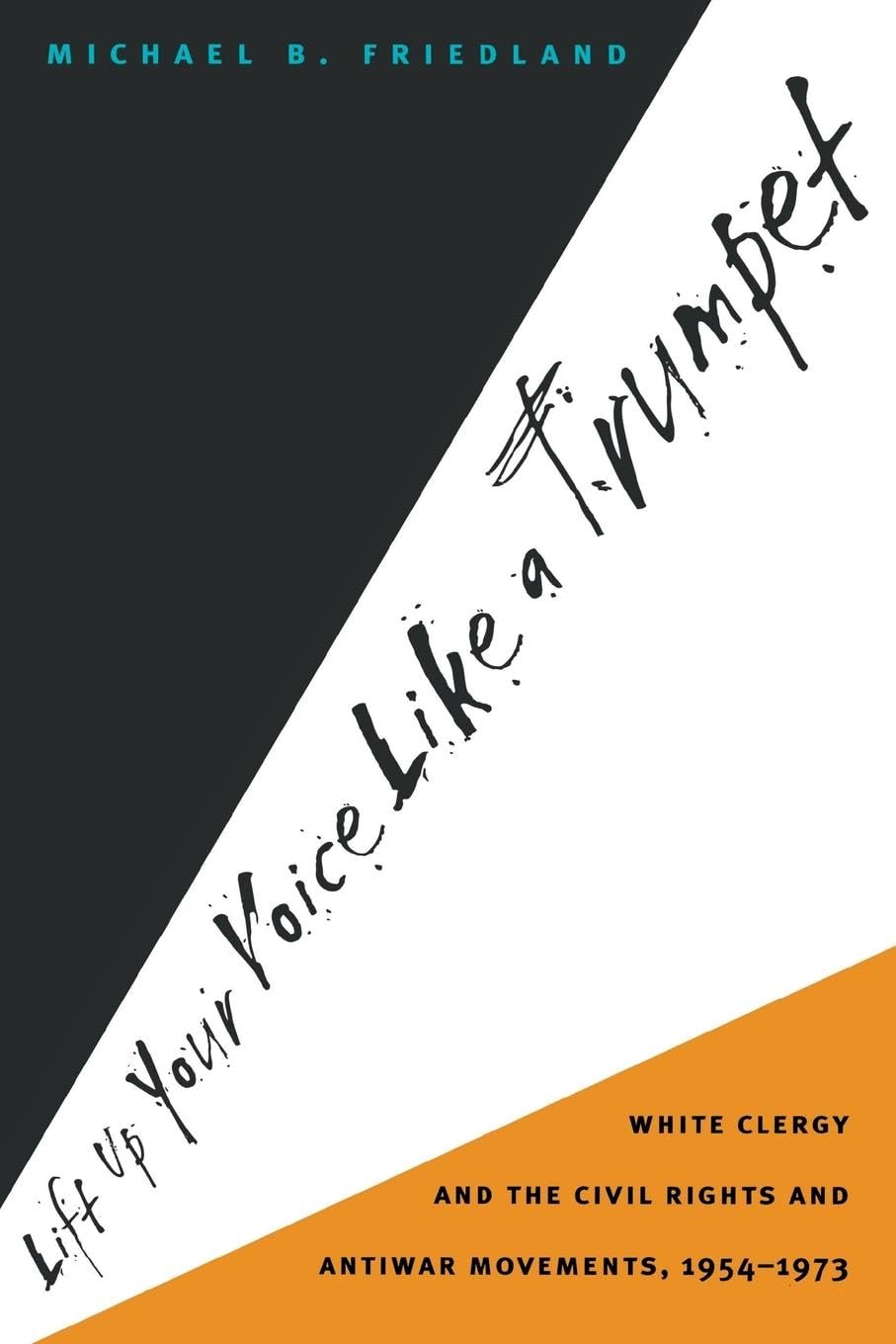
When the Supreme Court declared in 1954 that segregated publicschools were unconstitutional, the highest echelons ofProtestant, Catholic, and Jewish religious organizationsenthusiastically supported the ruling, and black civil rightsworkers expected and actively sought the cooperation of theirwhite religious cohorts. Many white southern clergy, however,were outspoken in their defense of segregation, and even thosewho supported integration were wary of risking their positions byurging parishioners to act on their avowed religious beliefs in acommon humanity. Those who did so found themselves abandoned by friends, attacked by white supremacists, and often driven fromtheir communities.Michael Friedland here offers a collective biography of severalsouthern and nationally known white religious leaders who didstep forward to join the major social protest movements of themidtwentieth century, lending their support first to the civilrights movement and later to protests over American involvementin Vietnam. Profiling such activists as William Sloane CoffinJr., Daniel and Philip Berrigan, Abraham Joshua Heschel, EugeneCarson Blake, Robert McAfee Brown, and Will D. Campbell, hereveals the passions and commitment behind their involvement in these protests and places their actions in the context of a burgeoning ecumenical movement.
⚠️ WARNING (California Proposition 65):
This product may contain chemicals known to the State of California to cause cancer,
birth defects, or other reproductive harm.
For MAP (Minimum Advertised Price) violations and Intellectual Property (IP) or Trademark concerns, please contact:
support@ergodebooks.com
⚠️ California Proposition 65 Warning: Some products sold on this website may expose you to chemicals known to the State of California to cause cancer, birth defects, or other reproductive harm. For more information, visit www.P65Warnings.ca.gov.