
Title
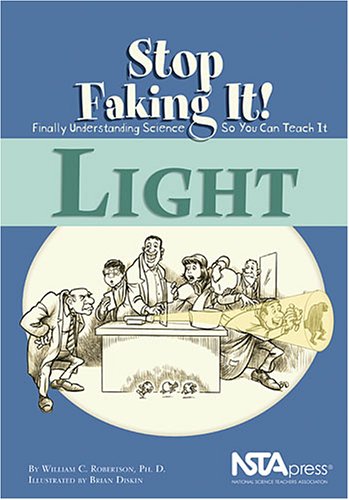
Light (Stop Faking It! Finally Understanding Science So You Can Teach It Series),New
Sold by Ergodebooks, an authorized reseller.
Returns accepted within 30 days | support@ergodebooks.com
Shipping Information
- Free Standard Shipping — United States only
- Processing Time: 3–5 business days
- Estimated Delivery: 6–10 business days after dispatch
- Double-boxed, fully insured & discreetly packaged
- Tracking number sent via email once dispatched
Returns & Refund
Returns accepted within 30 days of delivery.
Damaged or Defective Item
Free return shipping + replacement or full refund
Wrong Item Received
Free return shipping + replacement or full refund
Change of Mind
Return shipping at customer's expense · 25% restocking fee applies
Payment Option

Why Is Left Right And Right Left In The Mirror? Baffled By The Basics Of Reflection And Refraction? Wondering Just How The Eye Works? If You Have Trouble Teaching Concepts About Light That You Don T Fully Grasp Yourself, Get Help From A Book That S Both Scientifically Accurate And Entertaining With Light. By Combining Clear Explanations, Clever Drawings, And Activities That Use Easytofind Materials, This Book Covers What Science Teachers And Parents Need To Know To Teach About Light With Confidence. It Uses Ray, Wave, And Particle Models Of Light To Explain The Basics Of Reflection And Refraction, Optical Instruments, Polarization Of Light, And Interference And Diffraction. There S Also An Entire Chapter On How The Eye Works. Each Chapter Ends With A Summary And Applications Section That Reinforces Concepts With Everyday Examples. Whether You Need A Deeper Understanding Of How Light Bends Or A Good Explanation Of Why The Sky Is Blue, You Ll Find Light More Illuminating And Accessible Than A College Textbook And Certainly More Fun.
⚠️ WARNING (California Proposition 65):
This product may contain chemicals known to the State of California to cause cancer, birth defects, or other reproductive harm.
For more information, please visit www.P65Warnings.ca.gov.
- Q: How many pages does this book have? A: This book has one hundred six pages. It provides a comprehensive overview of light and its principles.
- Q: What is the binding type of this book? A: This book is paperback bound. This makes it lightweight and flexible for easy reading.
- Q: What are the dimensions of this book? A: This book measures seven point zero one inches in length, zero point two five inches in width, and nine point seven six inches in height. These dimensions make it convenient for handling.
- Q: Is this book suitable for all ages? A: Yes, this book is suitable for a wide range of ages. It is designed for both science teachers and parents to help explain concepts to children.
- Q: Can this book help with teaching light concepts? A: Yes, this book is specifically designed to help teach concepts about light. It includes clear explanations, drawings, and activities.
- Q: Are there activities included in this book? A: Yes, the book includes activities that use easy-to-find materials. These activities are designed to reinforce learning about light.
- Q: How can I reinforce the concepts learned from this book? A: You can reinforce concepts by reviewing the Summary and Applications sections at the end of each chapter. These sections provide everyday examples.
- Q: Is this book entertaining as well as educational? A: Yes, the book is both scientifically accurate and entertaining. It aims to engage readers while teaching complex concepts.
- Q: Does this book cover how the eye works? A: Yes, there is an entire chapter dedicated to explaining how the eye works. This chapter helps demystify this complex organ.
- Q: What models of light are discussed in this book? A: The book discusses ray, wave, and particle models of light. Each model helps to explain different phenomena related to light.
- Q: Is this book a good resource for parents? A: Yes, this book is an excellent resource for parents. It equips them with the knowledge to explain light concepts to their children.
- Q: Does this book provide scientific accuracy? A: Yes, the book ensures scientific accuracy in its explanations. It is a reliable source for learning about light.
- Q: Who is the author of this book? A: The author of this book is William C. Robertson. He has expertise in explaining scientific concepts.
- Q: What publisher released this book? A: This book is published by NSTA Press. The National Science Teachers Association is known for quality educational resources.
- Q: Is this book in good condition? A: Yes, it is noted as a used book in good condition. This means it's suitable for reading and learning.
- Q: What category does this book fall into? A: This book falls into the Engineering category. It addresses scientific principles related to light.