If you have any questions, you are always welcome to contact us. We'll get back to you as soon as possible, withing 24 hours on weekdays.
Customer service
All questions about your order, return and delivery must be sent to our customer service team by e-mail at yourstore@yourdomain.com
Sale & Press
If you are interested in selling our products, need more information about our brand or wish to make a collaboration, please contact us at press@yourdomain.com
Help
If you have any questions, you are always welcome to contact us. We'll get back to you as soon as possible, withing 24 hours on weekdays.
Customer service
All questions about your order, return and delivery must be sent to our customer service team by e-mail at yourstore@yourdomain.com
Sale & Press
If you are interested in selling our products, need more information about our brand or wish to make a collaboration, please contact us at press@yourdomain.com
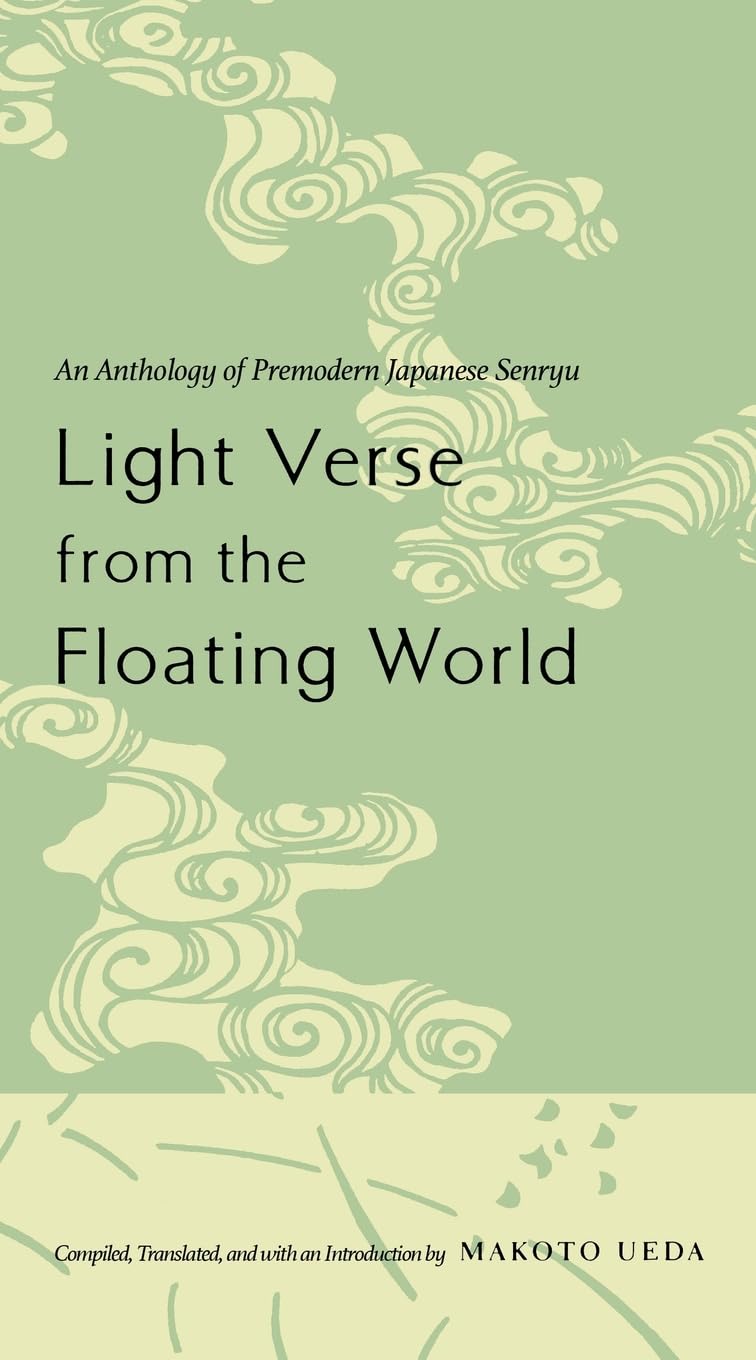
Similar in form to the wellknown, more serious haiku, the satiricaland often humorouspoems known as senryu have received little scholarly attention because most were written by anonymous amateur poets and were therefore considered popular literature unworthy of serious study. Senryu are interesting, however, precisely because they reflect the thoughts and feelings of ordinary townspeople in a way that other more orthodox types of Japanese literature do not. In his introduction on the nature and historical background of the form, Makoto Ueda explores the elements of humor and satire contained in senryu, highlighting the mores that lie behind the laughter the poems evince.Collecting 400 eighteenth and nineteenthcentury poemswith the romanized Japanese verse presented at the bottom of each pageLight Verse from the Floating World is divided into thematic sections, each preceded by a short introduction: satirical senryu, aimed at people of the ruling warrior class and civilians of various professions; senryu on human relationshipsbetween young lovers, husband and wife, parent and child, or family members of different generations; poems on townspeople enjoying themselves in the 'amusement' district; ridicule of wellknown historical figures; and poems on the poets' general outlook on life.Replete with keen observations on the human world rather than the natural one, this first comprehensive anthology in English translation of this major genre of Japanese literature will appeal to scholars and students of Japanese culture, as well as general readers of poetry.
⚠️ WARNING (California Proposition 65):
This product may contain chemicals known to the State of California to cause cancer,
birth defects, or other reproductive harm.
For MAP (Minimum Advertised Price) violations and Intellectual Property (IP) or Trademark concerns, please contact:
support@ergodebooks.com
⚠️ California Proposition 65 Warning: Some products sold on this website may expose you to chemicals known to the State of California to cause cancer, birth defects, or other reproductive harm. For more information, visit www.P65Warnings.ca.gov.