
Title
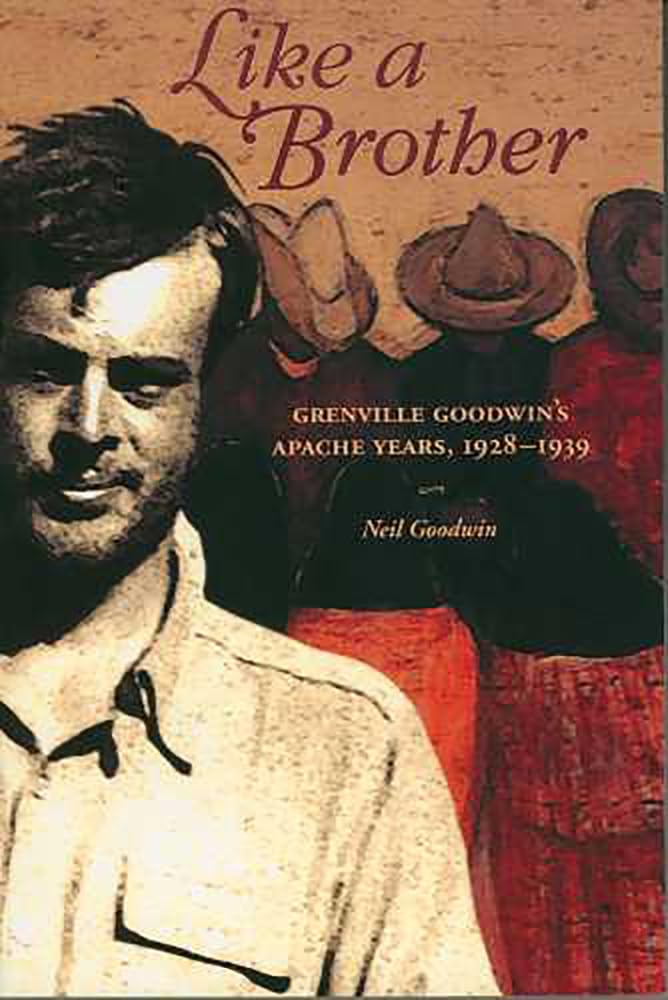
Like A Brother: Grenville Goodwins Apache Years, 19281939 (Southwest Center Series),Used
Sold by Ergodebooks, an authorized reseller.
Returns accepted within 30 days | support@ergodebooks.com
Shipping Information
- Free Standard Shipping — United States only
- Processing Time: 3–5 business days
- Estimated Delivery: 6–10 business days after dispatch
- Double-boxed, fully insured & discreetly packaged
- Tracking number sent via email once dispatched
Returns & Refund
Returns accepted within 30 days of delivery.
Damaged or Defective Item
Free return shipping + replacement or full refund
Wrong Item Received
Free return shipping + replacement or full refund
Change of Mind
Return shipping at customer's expense · 25% restocking fee applies
Payment Option

When the anthropologist Grenville Goodwin died in 1940 at the age of 32, he had published several papers and one book, Myths and Tales of the White Mountain Apache, and had already achieved a stature that has only continued to grow. His posthumous landmark monograph, The Social Organization of the Western Apache, was hailed by anthropologist Edward Spicer as 'one of the most detailed and bestdocumented studies of Indian social organization'. Yet, although he was highly regarded by colleagues within the profession, Goodwin himself was largely selftaught, with neither formal training nor academic degrees. This volume is the latest in series of books derived from his unpublished papers. It helps broaden our understanding of Goodwin's life and work. It includes selections from his field notes, diaries, and letters, along with those of his wife Jan and other family members. Assembled by Goodwin's son Neil, who never knew his father, these writings are gathered in thematic chapters that extend Neil Goodwin's earlier work, The Apache Diaries, and shed light on Grenville Goodwin's deepening understanding of the Apache people and their culture, and of the wrenching problems which reservation life forced on them. In two of the chapters Neil tells how he retraced his father's search for the Sierra Madre Apache, rediscovering abandoned Apache campsites and conveying even more personally than his father's diaries what was for both father and son the adventure of a lifetime. Other chapters trace Goodwin's interest in children of the Sierra Madre Apaches who were captured in Mexican raids on these camps during the early decades of the twentieth century. The full stories of the lives of three of these children are for the first time pieced together from newly gathered research. Grenville was quiet, selfeffacing and rarely revealed his inner life, but one chapter affords a closer look: a portrait of his marriage to Neil's mother, Jan. Her diary entries, juxtaposed with her vivid poetry and her paintings and drawings, illuminate her relationship with Grenville and throw his elusive personality into deeper relief than his own writings do. Here too are letters from Goodwin's Apache friends that paint a powerful and poignant portrait of their daily lives and of their relationship with him. Goodwin's daily diary excerpts relate his own experiences on the San Carlos Apache reservation from 1928 to 1936: what was happening at the store, how the cattle were doing, who was in jail, and thousands of other details that give readers a sharp sense of what the reservation was like in the 1930s. As these writings also show, Goodwin was powerfully drawn to Apache spirituality and became steeped in their sacred knowledge. His simple description of a day in the life of an Apache family captures the expression of this spirituality in the rhythms of everyday life, whether greeting the rising sun, curing an injury, plowing the earth, or simply being good to one's family. More than half a century after his death, Grenville Goodwin continues to be regarded as one of the most enigmatic and romantic figures in American anthropology. Like a Brother gives us a fuller understanding of the man and his work as it broadens our knowledge of Apache history and culture.
⚠️ WARNING (California Proposition 65):
This product may contain chemicals known to the State of California to cause cancer, birth defects, or other reproductive harm.
For more information, please visit www.P65Warnings.ca.gov.
- Q: How many pages does the book have? A: The book has two hundred seventy-nine pages. This length allows for an in-depth exploration of Grenville Goodwin's life and work.
- Q: What is the binding type of this book? A: The book is paperback bound. This makes it lightweight and easy to handle for reading.
- Q: What are the dimensions of the book? A: The book measures six inches in length, one inch in width, and nine point zero two inches in height. These dimensions make it a standard size for easy shelving.
- Q: Who is the author of this book? A: The author is Neil Goodwin, Grenville Goodwin's son. He compiles his father's writings to provide deeper insights into Apache culture.
- Q: What category does this book belong to? A: The book falls under the Native American category. It focuses specifically on the experiences of the Apache people.
- Q: What is the main theme of the book? A: The main theme is Grenville Goodwin's anthropological work with the Apache people. It explores his relationships and observations of their culture.
- Q: Can this book be read by children? A: Yes, the book is suitable for mature children and young adults. It provides valuable historical and cultural insights.
- Q: Is this book appropriate for academic study? A: Yes, this book is appropriate for academic study. It presents detailed anthropological research and personal narratives.
- Q: How do I use this book for research? A: You can use this book as a primary source for understanding Apache culture and anthropology. It includes field notes and personal writings.
- Q: How should I store this book? A: Store the book in a cool, dry place, away from direct sunlight. This will help preserve the quality of the pages and binding.
- Q: Can I clean the book if it gets dirty? A: No, do not attempt to clean the book with liquids. Use a soft, dry cloth to gently remove dust from the cover.
- Q: What if the book arrives damaged? A: If the book arrives damaged, you can return it for a replacement or refund. Make sure to contact customer support promptly.
- Q: Is there a warranty for this book? A: No, this book does not come with a warranty. However, most retailers offer return policies for damaged copies.
- Q: How can I compare this book to others in the series? A: You can compare this book to others in the Southwest Center Series by examining themes and focus areas. This book specifically highlights Grenville Goodwin's work.
- Q: Is this book suitable for beginners in anthropology? A: Yes, this book is suitable for beginners in anthropology. It provides foundational insights into Apache culture through personal narratives.