If you have any questions, you are always welcome to contact us. We'll get back to you as soon as possible, withing 24 hours on weekdays.
Customer service
All questions about your order, return and delivery must be sent to our customer service team by e-mail at yourstore@yourdomain.com
Sale & Press
If you are interested in selling our products, need more information about our brand or wish to make a collaboration, please contact us at press@yourdomain.com
Help
If you have any questions, you are always welcome to contact us. We'll get back to you as soon as possible, withing 24 hours on weekdays.
Customer service
All questions about your order, return and delivery must be sent to our customer service team by e-mail at yourstore@yourdomain.com
Sale & Press
If you are interested in selling our products, need more information about our brand or wish to make a collaboration, please contact us at press@yourdomain.com
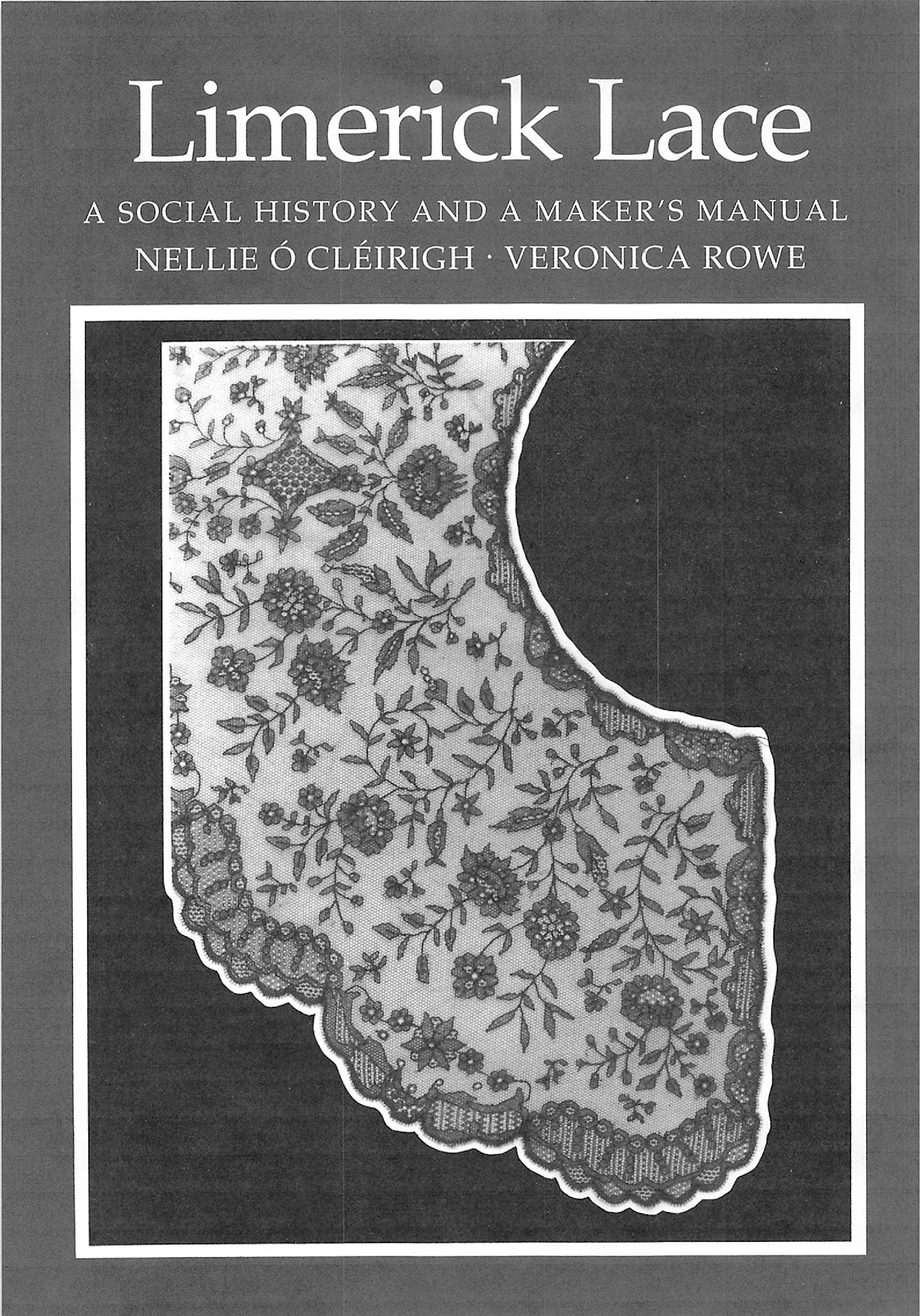
Limerick is probably the most famous of all Irish laces. When President Kennedy came to Limerick in 1963 the Lord Mayor presented him with a Christening robe of the lace, and other important visitors have been delighted to receive gifts of this prestigious material. The making of this form of lace became possible when machinemade net became readily available, as it is a form of embroidery on net, being either chainstitch (tambour) or darned net (also called runlace), or a combination of both techniques. This volume is produced in the same format as Carrickmacross Lace and Mountmellick Work, and is in three sections. The first deals with the invention of Limerick lace and its history, the second with Mrs Florence Vere O'Brien and her contribution to Limerick and its laceworkers, while the third deals with the techniques used in making Limerick Lace, the materials and designs, preparation and sewing, and filling and embroidery stitches.The book contains many illustrations of fine piece of lacework from the authors' collections, as well as pictures of prizewinning examples from photos in the possession of the Royal Dublin Society.
⚠️ WARNING (California Proposition 65):
This product may contain chemicals known to the State of California to cause cancer,
birth defects, or other reproductive harm.
For MAP (Minimum Advertised Price) violations and Intellectual Property (IP) or Trademark concerns, please contact:
support@ergodebooks.com
⚠️ California Proposition 65 Warning: Some products sold on this website may expose you to chemicals known to the State of California to cause cancer, birth defects, or other reproductive harm. For more information, visit www.P65Warnings.ca.gov.