
Title

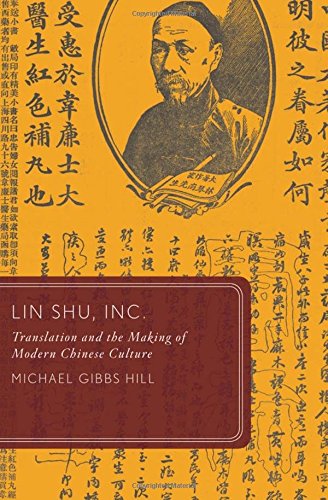
Lin Shu, Inc.: Translation and the Making of Modern Chinese Culture (Global Asias),Used
Sold by Ergodebooks, an authorized reseller.
Returns accepted within 30 days | support@ergodebooks.com
Shipping Information
- Free Standard Shipping — United States only
- Processing Time: 3–5 business days
- Estimated Delivery: 6–10 business days after dispatch
- Double-boxed, fully insured & discreetly packaged
- Tracking number sent via email once dispatched
Returns & Refund
Returns accepted within 30 days of delivery.
Damaged or Defective Item
Free return shipping + replacement or full refund
Wrong Item Received
Free return shipping + replacement or full refund
Change of Mind
Return shipping at customer's expense · 25% restocking fee applies
Payment Option

How could a writer who knew no foreign languages call himself a translator? How, too, did he become a major commercial success, churning out nearly two hundred translations over twenty years?Lin Shu, Inc. crosses the fields of literary studies, intellectual history, and print culture, offering new ways to understand the stakes of translation in China and beyond. With rich detail and lively prose, Michael Gibbs Hill shows how Lin Shu (18521924) rose from obscurity to become China's leading translator of Western fiction at the beginning of the twentieth century. Well before Ezra Pound's and Bertolt Brecht's "inventions" of China revolutionized poetry and theater, Lin Shu and his assistantswho did, in fact, know languages like English and Frenchhad already given many Chinese readers their first taste of fiction from the United States, France, and England. After passing through Lin Shu's "factory of writing," classic novels like Uncle Tom's Cabin and Oliver Twist spoke with new meaning for audiences concerned with the tumultuous social and political change facing China.Leveraging his success as a translator of foreign books, Lin Shu quickly became an authority on traditional Chinese culture who upheld the classical language as a cornerstone of Chinese national identity. Eventually, younger intellectualswho had grown up reading his translationsturned on Lin Shu and tarred him as a symbol of backward conservatism. Ultimately, Lin's defeat and downfall became just as significant as his rise to fame in defining the work of the intellectual in modern China.
⚠️ WARNING (California Proposition 65):
This product may contain chemicals known to the State of California to cause cancer, birth defects, or other reproductive harm.
For more information, please visit www.P65Warnings.ca.gov.