
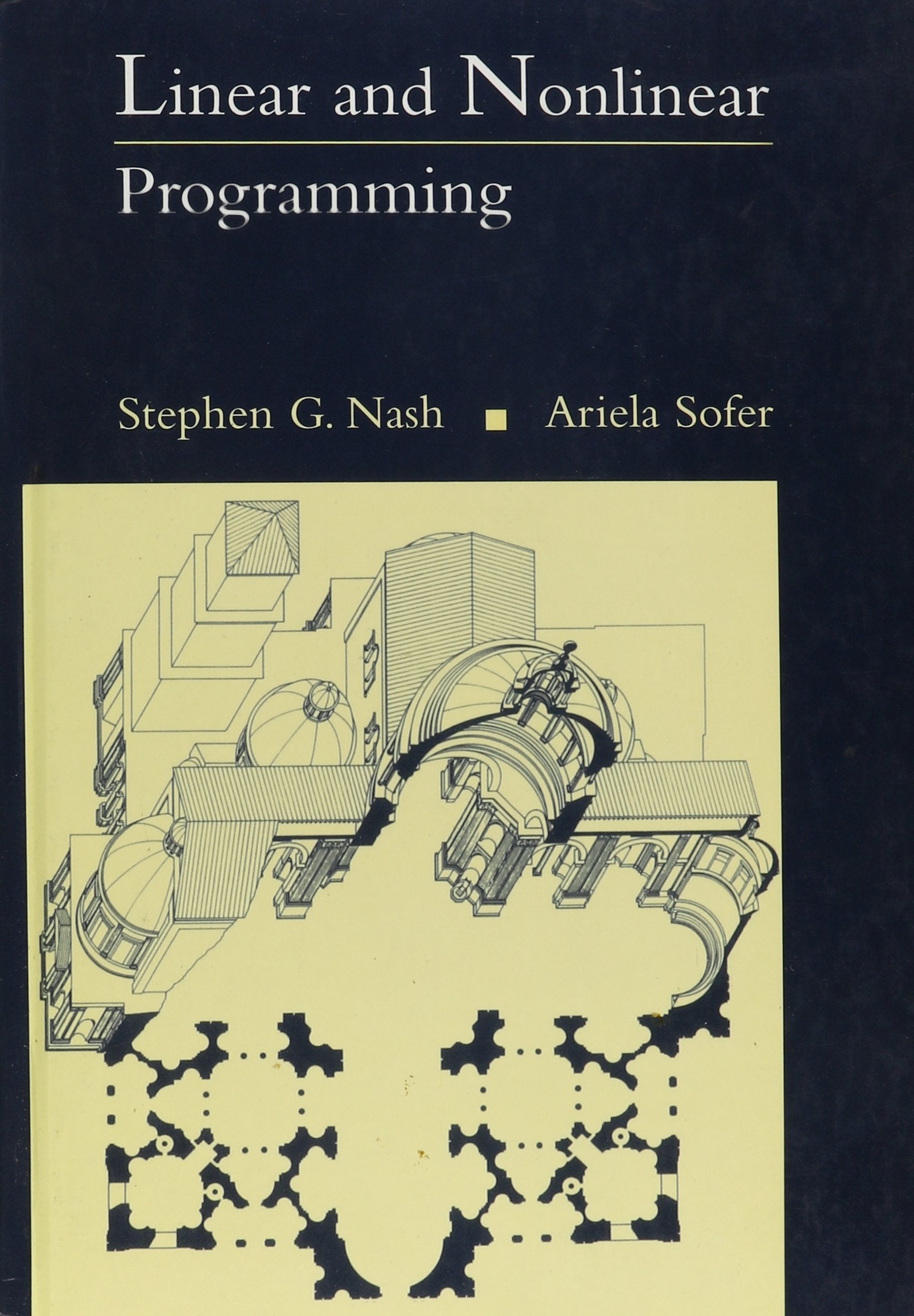
Title
Linear and Nonlinear Programming,Used
Sold by Ergodebooks, an authorized reseller.
Returns accepted within 30 days | support@ergodebooks.com
Shipping Information
- Free Standard Shipping — United States only
- Processing Time: 3–5 business days
- Estimated Delivery: 6–10 business days after dispatch
- Double-boxed, fully insured & discreetly packaged
- Tracking number sent via email once dispatched
Returns & Refund
Returns accepted within 30 days of delivery.
Damaged or Defective Item
Free return shipping + replacement or full refund
Wrong Item Received
Free return shipping + replacement or full refund
Change of Mind
Return shipping at customer's expense · 25% restocking fee applies
Payment Option

This text presents linear and nonlinear programming in an integrated setting and serves as a complete and unified introduction to applications, theory, and algorithms.
⚠️ WARNING (California Proposition 65):
This product may contain chemicals known to the State of California to cause cancer, birth defects, or other reproductive harm.
For more information, please visit www.P65Warnings.ca.gov.
- Q: What is the binding type of this book? A: The binding type is hardcover. This ensures durability and a professional appearance, making it suitable for academic and professional use.
- Q: How many pages does this book have? A: This book has six hundred ninety-two pages. This extensive content covers a wide range of linear and nonlinear programming topics.
- Q: What are the dimensions of this book? A: The dimensions are six point five inches by one inch by nine point five inches. These measurements make it a manageable size for reading and reference.
- Q: What topics does this book cover? A: This book covers linear and nonlinear programming. It integrates applications, theory, and algorithms, making it comprehensive for learners and professionals.
- Q: Who is the author of this book? A: The author is Stephen G. Nash. He is known for his expertise in operations research and optimization.
- Q: Is this book suitable for beginners? A: Yes, this book is suitable for beginners. It serves as a unified introduction to both linear and nonlinear programming concepts.
- Q: What is the target audience for this book? A: The target audience includes students and professionals in production, operation, and management fields. It’s also beneficial for anyone interested in programming applications.
- Q: Can this book be used for advanced studies? A: Yes, it can be used for advanced studies. The depth of content and integration of theory and algorithms make it a valuable resource.
- Q: How do I approach learning from this book? A: Approach learning by starting with the foundational concepts in linear programming before progressing to nonlinear programming. Utilize the examples and exercises provided.
- Q: What is the best way to utilize this book for academic purposes? A: The best way is to use it as a primary textbook for coursework or as a supplementary resource for research projects in operations management.
- Q: How should I store this hardcover book? A: Store the book upright on a shelf in a cool, dry place. This helps prevent damage and prolongs the book's lifespan.
- Q: Can this book be cleaned if it gets dirty? A: Yes, it can be cleaned. Use a soft, dry cloth to gently wipe the surface and avoid using water or cleaning solutions.
- Q: Is this book safe for handling by children? A: Yes, it is safe for handling by children. However, parental guidance is recommended to ensure understanding of the content.
- Q: What if I receive a damaged copy of the book? A: If you receive a damaged copy, contact the seller for a return or replacement. Most sellers provide clear return policies for damaged items.
- Q: Is there a warranty for this book? A: No, there is typically no warranty for books. However, check the seller's policies for specific return and exchange options.
- Q: How can I find additional resources related to this book? A: You can find additional resources by checking academic databases, libraries, or online platforms that offer supplementary materials on programming.