If you have any questions, you are always welcome to contact us. We'll get back to you as soon as possible, withing 24 hours on weekdays.
Customer service
All questions about your order, return and delivery must be sent to our customer service team by e-mail at yourstore@yourdomain.com
Sale & Press
If you are interested in selling our products, need more information about our brand or wish to make a collaboration, please contact us at press@yourdomain.com
Help
If you have any questions, you are always welcome to contact us. We'll get back to you as soon as possible, withing 24 hours on weekdays.
Customer service
All questions about your order, return and delivery must be sent to our customer service team by e-mail at yourstore@yourdomain.com
Sale & Press
If you are interested in selling our products, need more information about our brand or wish to make a collaboration, please contact us at press@yourdomain.com
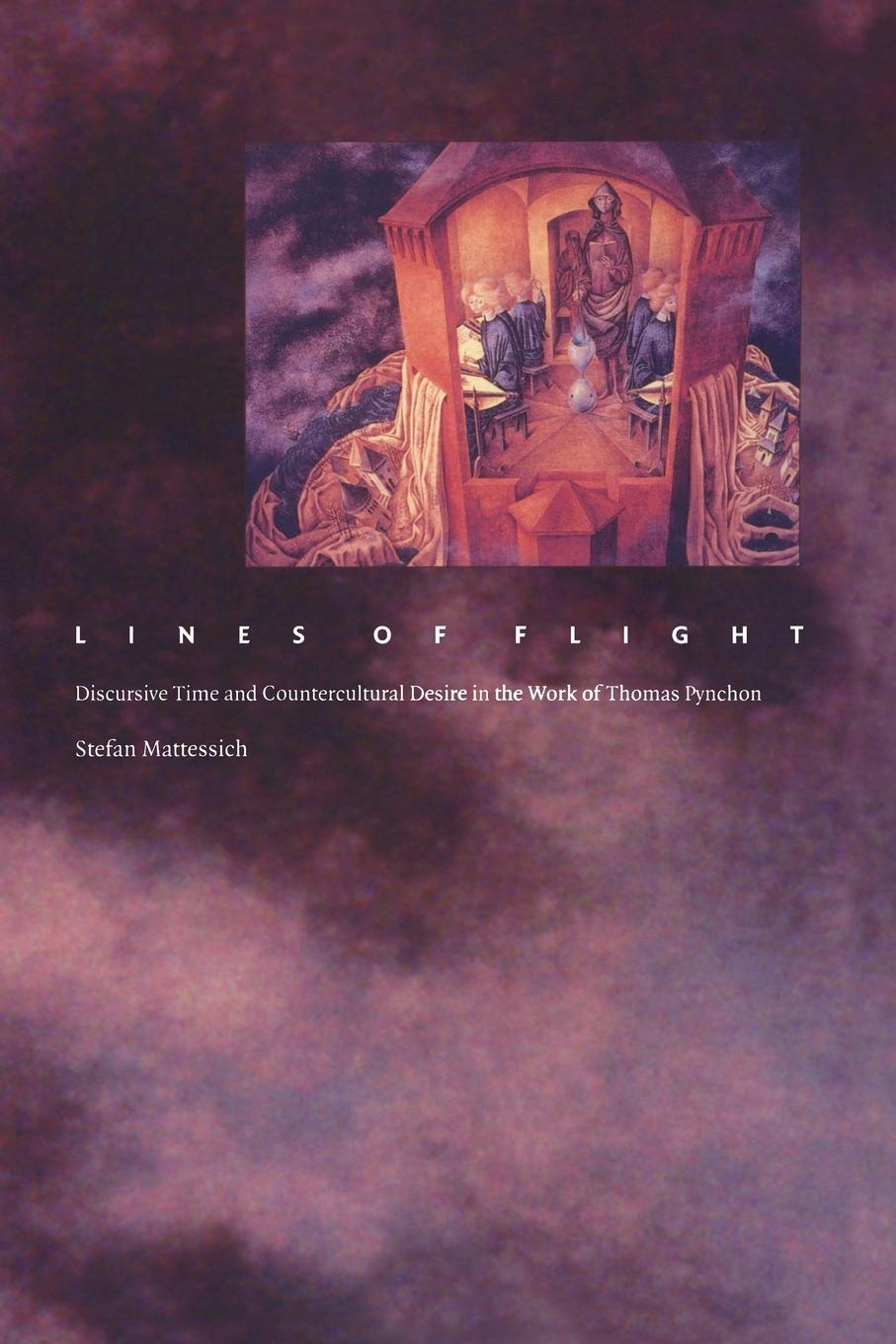
For Thomas Pynchon, the characteristic features of late capitalismthe rise of the militaryindustrial complex, consumerism, bureaucratization and specialization in the workplace, standardization at all levels of social life, and the growing influence of the mass mediaall point to a transformation in the way human beings experience time and duration. Focusing on Pynchons novels as representative artifacts of the postwar period, Stefan Mattessich analyzes this temporal transformation in relation not only to Pynchons work but also to its literary, cultural, and theoretical contexts.Mattessich theorizes a new kind of timesubjective displacementdramatized in the parody, satire, and farce deployed through Pynchons oeuvre. In particular, he is interested in showing how this sense of time relates to the counterculture of the 1960s and 1970s. Examining this movement as an instance of flight or escape and exposing the beliefs behind it, Mattessich argues that the countercultures rejection of the dominant culture ultimately became an act of selfcancellation, a rebellion in which the counterculture found itself defined by the very order it sought to escape. He points to parallels in Pynchons attempts to dramatize and enact a similar experience of time in the doublingback, crisscrossing, and erasure of his writing. Mattessich lays out a theory of cultural production centered on the ethical necessity of grasping ones own susceptibility to discursive forms of determination.
⚠️ WARNING (California Proposition 65):
This product may contain chemicals known to the State of California to cause cancer,
birth defects, or other reproductive harm.
For MAP (Minimum Advertised Price) violations and Intellectual Property (IP) or Trademark concerns, please contact:
support@ergodebooks.com
⚠️ California Proposition 65 Warning: Some products sold on this website may expose you to chemicals known to the State of California to cause cancer, birth defects, or other reproductive harm. For more information, visit www.P65Warnings.ca.gov.