
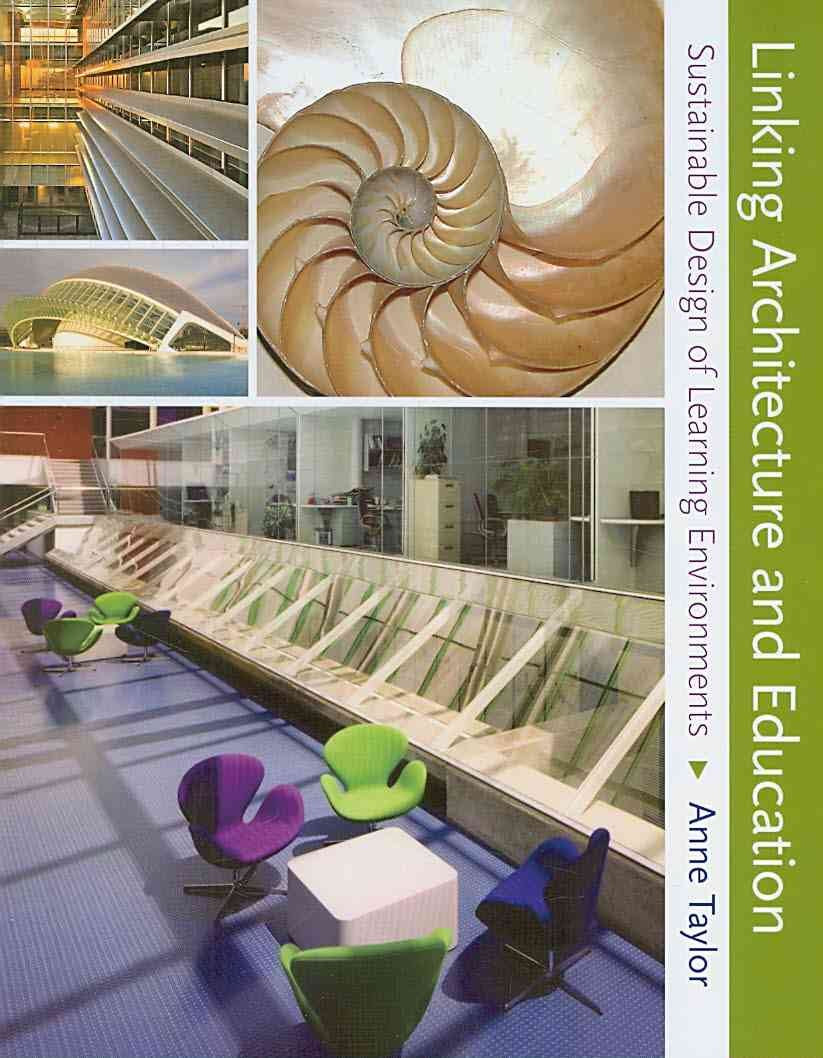
Title
Linking Architecture and Education: Sustainable Design of Learning Environments,Used
Sold by Ergodebooks, an authorized reseller.
Returns accepted within 30 days | support@ergodebooks.com
Shipping Information
- Free Standard Shipping — United States only
- Processing Time: 3–5 business days
- Estimated Delivery: 6–10 business days after dispatch
- Double-boxed, fully insured & discreetly packaged
- Tracking number sent via email once dispatched
Returns & Refund
Returns accepted within 30 days of delivery.
Damaged or Defective Item
Free return shipping + replacement or full refund
Wrong Item Received
Free return shipping + replacement or full refund
Change of Mind
Return shipping at customer's expense · 25% restocking fee applies
Payment Option

For the past forty years Anne Taylor has studied how schools, classrooms, playgrounds, homes, museums, and parks affect children and how they learn. As a result, she has developed a holistic, sustainable philosophy of learning environment design. She argues persuasively that architects must integrate their design knowledge with an understanding of the developmental needs of learners, while at the same time educators, parents, and students must broaden their awareness of the built, natural, and cultural environment to maximize the learning experience. In other words, schools and other environments can themselves become "threedimensional textbooks." When architects are cognizant of newer models of education and educators view the environment as more than a box in which to teach prescribed lessons, the result is an informed architecture that enables children to discover the power of their own learning.The book presents numerous examples of dynamic designs that are the result of interdisciplinary understanding of place. Taylor includes designer perspectives, forums derived from commentary by outside contributors involved in school planning, and a wealth of photographs of thoughtful and effective solutions to create learning environments from comprehensive design criteria.Because the concept of "school" is enlarged to a community campus, the book also spawns a new model of teaching and learning. This book is essential reading for educators, architects, and community members who are anxious to transform education in America and elsewhere."Anne Taylor is the most outstanding educator, leading proponent, and practitioner in the threedimensional textbook field. Her work is the finest resource available for connecting students (young and old) to their learning environments, and visa versa."Edward E. Kirkbride, NCARB, REFP"Before Western man divided the universe into discrete subject matter areas, the order in the universe was (and still is) both interdisciplinary and holistic. The branching of trees, spiraling of shells, meandering of streams, and the radial designs of flowers, for example, represent an analogy of mathematics, biology, and art. The current artificial separation of subject matter is in contrast to the way the world is constructed and the way children perceive it. Architecture and the study of the built, natural, and cultural environment synthesize the world of material things and the world of ideas. Further more, it helps us to realize that we are a part of not apart from the environment. This book is a tool and a gift to designers, educators, and students everywhere to assist them in seeing the meaning behind all that we view and use for living on earth. To know our precious relationship to our surroundings is the intent of this book. In this way, life is a work of art and each of us is an artist."Anne Taylor
⚠️ WARNING (California Proposition 65):
This product may contain chemicals known to the State of California to cause cancer, birth defects, or other reproductive harm.
For more information, please visit www.P65Warnings.ca.gov.
- Q: How many pages does the book have? A: This book has four hundred seventy-one pages. It provides a comprehensive exploration of the relationship between architecture and education.
- Q: What is the binding type of this book? A: The book is hardcover. This durable binding is designed to withstand frequent use and is ideal for libraries or personal collections.
- Q: What are the dimensions of this book? A: The book measures eight point eight two inches in length, one point five inches in width, and ten point nine one inches in height. These dimensions make it a substantial volume for reading.
- Q: Who is the author of this book? A: The author is Anne Taylor. She is recognized for her extensive research and contributions to the field of educational architecture.
- Q: What is the main focus of the book? A: The main focus is on the sustainable design of learning environments. The book examines how architecture can enhance the educational experience for children.
- Q: Is this book suitable for educators? A: Yes, this book is highly suitable for educators. It offers insights into transforming educational spaces to better meet the needs of learners.
- Q: Can architects benefit from this book? A: Yes, architects can benefit greatly from this book. It provides a holistic approach to designing environments that support educational development.
- Q: What themes are explored in this book? A: The book explores themes of interdisciplinary design, community campuses, and the relationship between the built environment and learning. These themes are essential for modern educational practices.
- Q: How does the book suggest improving learning environments? A: The book suggests integrating design knowledge with an understanding of children's developmental needs. This approach aims to create spaces that enhance the learning experience.
- Q: What kind of illustrations does the book contain? A: The book contains numerous photographs and illustrations. These visuals showcase effective design solutions for learning environments.
- Q: Is this book intended for community members? A: Yes, the book is intended for community members as well. It encourages collaboration among architects, educators, and parents to improve educational settings.
- Q: Does this book discuss the concept of a community campus? A: Yes, the book discusses the concept of a community campus. It expands the traditional notion of schools to encompass broader community engagement.
- Q: What is the target audience for this book? A: The target audience includes educators, architects, and community planners. It aims to inspire those involved in transforming educational spaces.
- Q: How does the book define a 'three-dimensional textbook'? A: The book defines a 'three-dimensional textbook' as an environment that serves as a learning tool. It emphasizes the importance of physical spaces in the learning process.
- Q: What is the publisher of this book? A: The publisher is the University of New Mexico Press. They are known for their commitment to educational literature.
- Q: Are there any external contributors mentioned in the book? A: Yes, the book includes forums and commentary from external contributors involved in school planning. This adds diverse perspectives on educational design.