
Title
Linking SocioEconomic, Landuse and Vegetation for Rhino Conservation: A Case from Patihani, Buffer Zone Village Development Com,Used
Sold by Ergodebooks, an authorized reseller.
Returns accepted within 30 days | support@ergodebooks.com
Shipping Information
- Free Standard Shipping — United States only
- Processing Time: 3–5 business days
- Estimated Delivery: 6–10 business days after dispatch
- Double-boxed, fully insured & discreetly packaged
- Tracking number sent via email once dispatched
Returns & Refund
Returns accepted within 30 days of delivery.
Damaged or Defective Item
Free return shipping + replacement or full refund
Wrong Item Received
Free return shipping + replacement or full refund
Change of Mind
Return shipping at customer's expense · 25% restocking fee applies
Payment Option

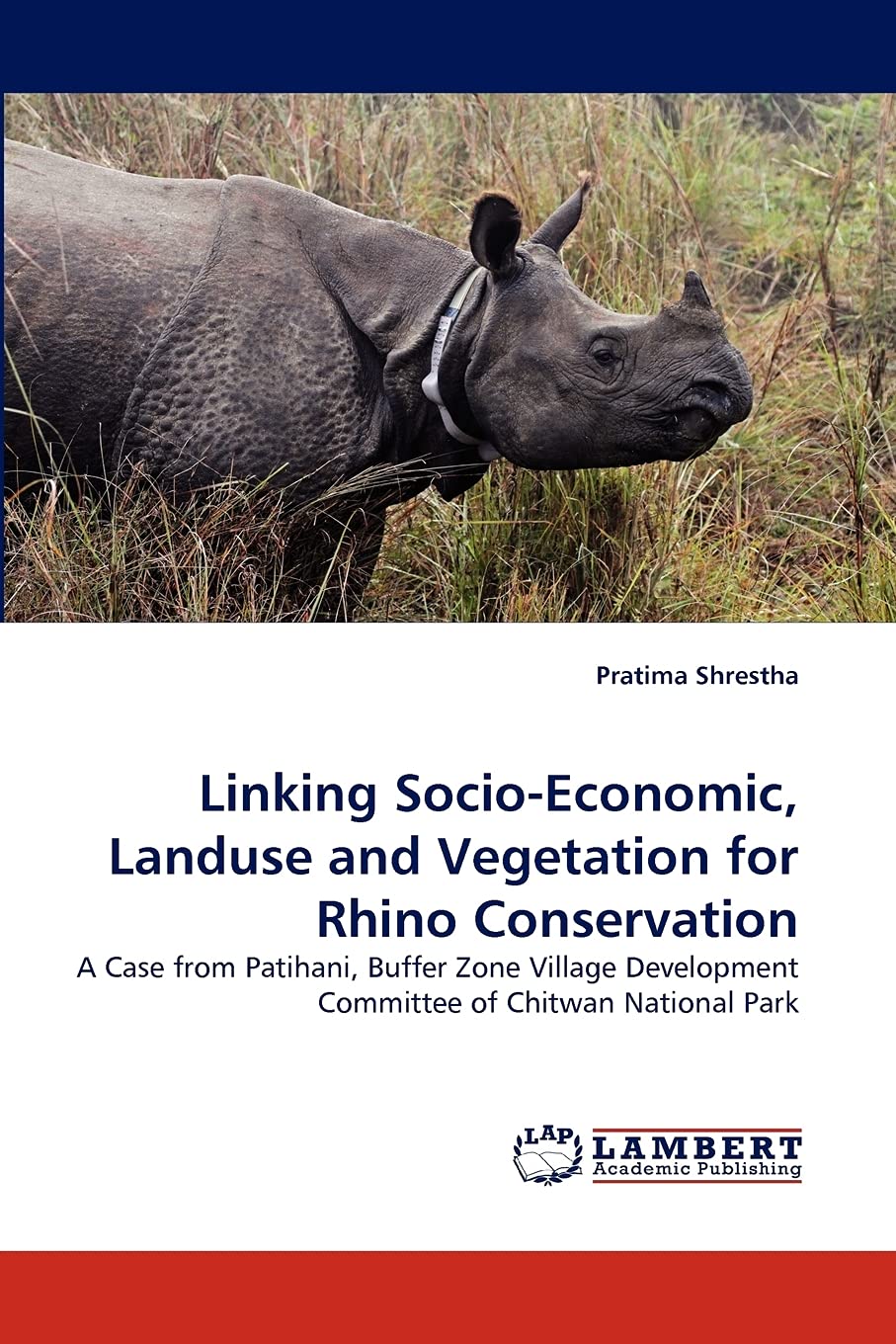
The need for awareness of and commitment to conservation of biodiversity has never been more crucial than now. Knowing the need for integration of social, ecological and economical factors interrelation between them was studied Patihani Buffer Zone Village Development Committee (VDC) of Chitwan National Park. Household survey, focus group discussions, key informants interview, vegetation plotting in random points, GIS, and secondary data were used to gather quantitative information on socioeconomic, ecological factors, vegetation and rhino conservation. Socioeconomic condition of more than half population in Patihani VDC was considered doable. Dependency on the park resources was higher comparing to community forest. The implementation of buffer zone in the VDC benefited with the development (of infrastructure like road, irrigation, biogas plant, users groups cooperatives), and conservation of natural resources (through the awareness, prohibiting the use of park resources, controlling poaching, compensation to crop loss). This study was supported by Resources Himalaya Foundation (RHF), Nepal.
⚠️ WARNING (California Proposition 65):
This product may contain chemicals known to the State of California to cause cancer, birth defects, or other reproductive harm.
For more information, please visit www.P65Warnings.ca.gov.