
Title
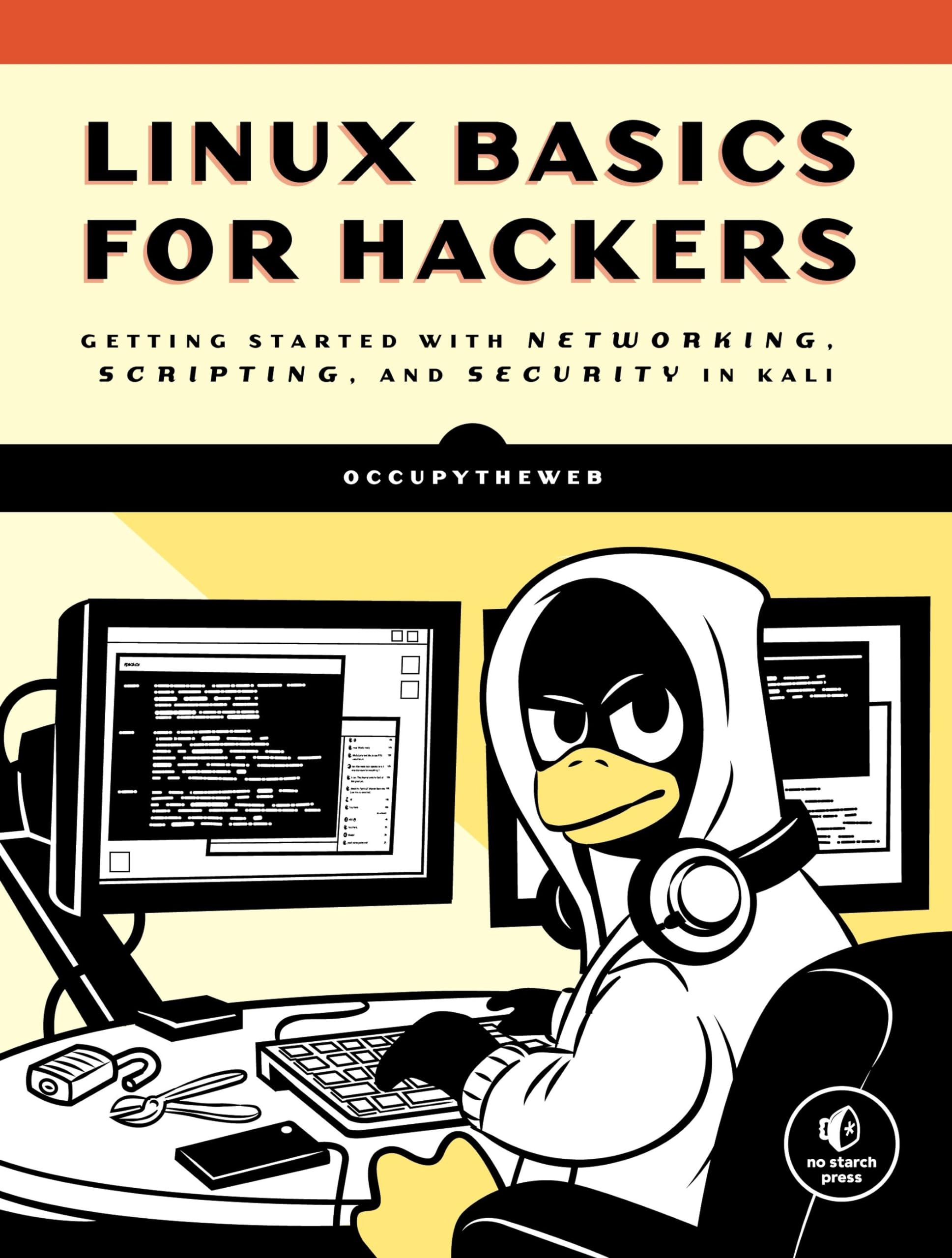
Linux Basics for Hackers: Getting Started with Networking, Scripting, and Security in Kali,New
Sold by Ergodebooks, an authorized reseller.
Returns accepted within 30 days | support@ergodebooks.com
Shipping Information
- Free Standard Shipping — United States only
- Processing Time: 3–5 business days
- Estimated Delivery: 6–10 business days after dispatch
- Double-boxed, fully insured & discreetly packaged
- Tracking number sent via email once dispatched
Returns & Refund
Returns accepted within 30 days of delivery.
Damaged or Defective Item
Free return shipping + replacement or full refund
Wrong Item Received
Free return shipping + replacement or full refund
Change of Mind
Return shipping at customer's expense · 25% restocking fee applies
Payment Option

This practical, tutorialstyle book uses the Kali Linux distribution to teach Linux basics with a focus on how hackers would use them. Topics include Linux command line basics, filesystems, networking, BASH basics, package management, logging, and the Linux kernel and drivers.If you're getting started along the exciting path of hacking, cybersecurity, and pentesting, Linux Basics for Hackers is an excellent first step. Using Kali Linux, an advanced penetration testing distribution of Linux, you'll learn the basics of using the Linux operating system and acquire the tools and techniques you'll need to take control of a Linux environment.First, you'll learn how to install Kali on a virtual machine and get an introduction to basic Linux concepts. Next, you'll tackle broader Linux topics like manipulating text, controlling file and directory permissions, and managing user environment variables. You'll then focus in on foundational hacking concepts like security and anonymity and learn scripting skills with bash and Python. Practical tutorials and exercises throughout will reinforce and test your skills as you learn how to: Cover your tracks by changing your network information and manipulating the rsyslog logging utility Write a tool to scan for network connections, and connect and listen to wireless networks Keep your internet activity stealthy using Tor, proxy servers, VPNs, and encrypted email Write a bash script to scan open ports for potential targets Use and abuse services like MySQL, Apache web server, and OpenSSH Build your own hacking tools, such as a remote video spy camera and a password crackerHacking is complex, and there is no single way in. Why not start at the beginning with Linux Basics for Hackers?
⚠️ WARNING (California Proposition 65):
This product may contain chemicals known to the State of California to cause cancer, birth defects, or other reproductive harm.
For more information, please visit www.P65Warnings.ca.gov.
- Q: What topics are covered in 'Linux Basics for Hackers'? A: 'Linux Basics for Hackers' covers a range of topics including Linux command line basics, filesystems, networking, BASH basics, package management, logging, and the Linux kernel and drivers.
- Q: Is this book suitable for beginners? A: Yes, this book is designed for beginners who are interested in hacking, cybersecurity, and pentesting, making it an excellent first step in learning Linux.
- Q: What is the focus of the book? A: The focus of the book is on teaching Linux basics specifically from a hacker's perspective, utilizing the Kali Linux distribution.
- Q: How many pages does the book have? A: 'Linux Basics for Hackers' contains 248 pages.
- Q: What is the binding type of the book? A: The book is available in paperback binding.
- Q: Who is the author of this book? A: The author of 'Linux Basics for Hackers' is OccupyTheWeb.
- Q: When was this book published? A: 'Linux Basics for Hackers' was published on December 4, 2018.
- Q: Does the book include practical exercises? A: Yes, the book includes practical tutorials and exercises to reinforce and test your skills as you learn Linux.
- Q: What skills will I learn from this book? A: You will learn skills such as manipulating text, controlling file and directory permissions, writing bash scripts, and building your own hacking tools.
- Q: Is this book specific to Kali Linux? A: Yes, the book uses the Kali Linux distribution as a primary tool to teach Linux basics.