
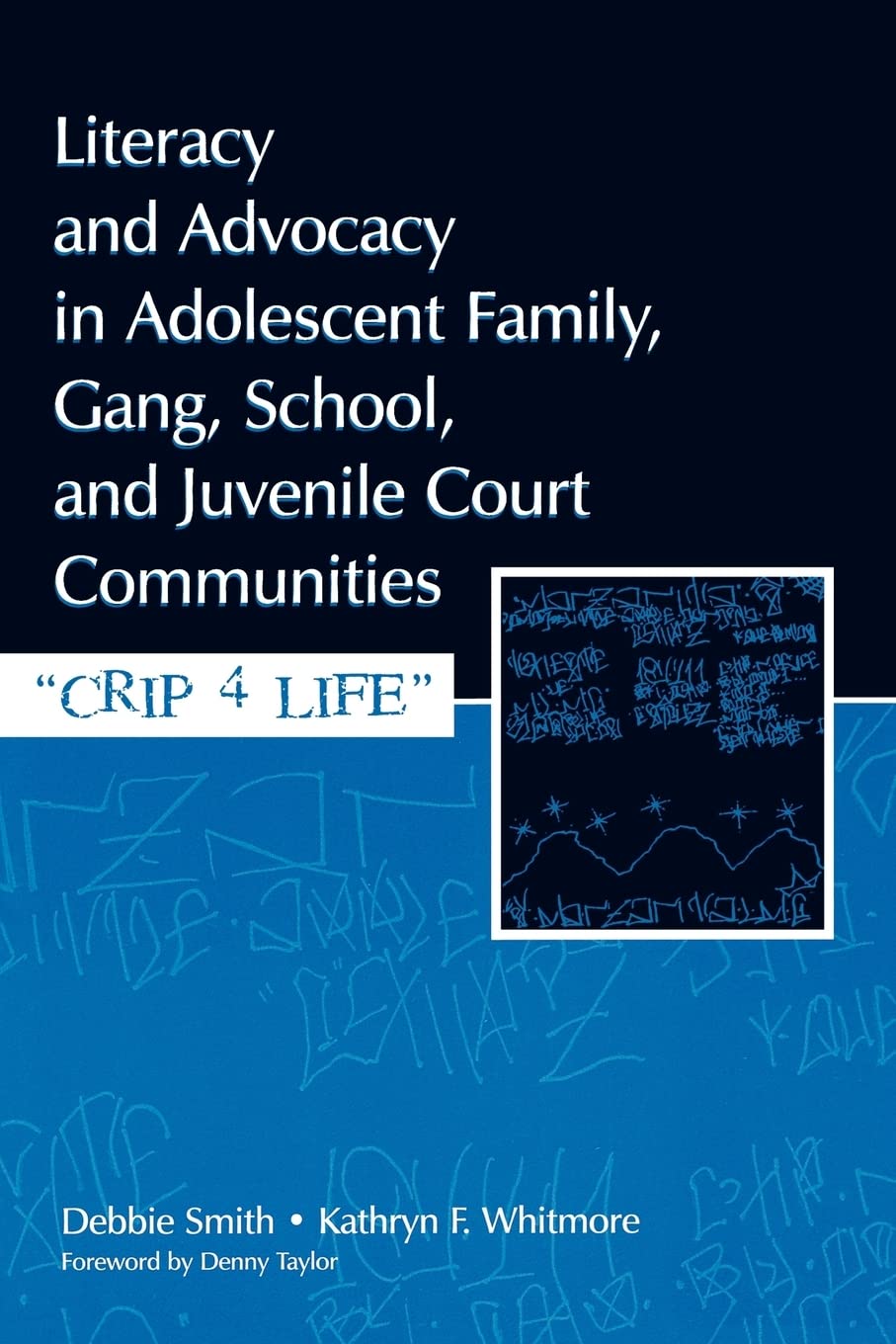
Title
Literacy And Advocacy In Adolescent Family, Gang, School, And Juvenile Court Communities: Crip 4 Life,New
Sold by Ergodebooks, an authorized reseller.
Returns accepted within 30 days | support@ergodebooks.com
Shipping Information
- Free Standard Shipping — United States only
- Processing Time: 3–5 business days
- Estimated Delivery: 6–10 business days after dispatch
- Double-boxed, fully insured & discreetly packaged
- Tracking number sent via email once dispatched
Returns & Refund
Returns accepted within 30 days of delivery.
Damaged or Defective Item
Free return shipping + replacement or full refund
Wrong Item Received
Free return shipping + replacement or full refund
Change of Mind
Return shipping at customer's expense · 25% restocking fee applies
Payment Option

The Goal Of This Book Is To Encourage Educators And Researchers To Understand The Complexities Of Adolescent Gang Members' Lives In Order To Rethink Their Assumptions About These Students In School. The Particular Objective Is To Situate Four Gang Members As Literate, Caring Students From Loving Families Whose Identities And Literacy Keep Them On The Margins Of School. The Research Described In This Book Suggests That Advocacy Is A Particularly Effective Form Of Critical Ethnography. Smith And Whitmore Argue That Until Schools, As Communities Of Practice, Enable Children And Adolescents To Retain Identities From The Communities In Which They Are Full Community Members, Frightening Numbers Of Students Are Destined To Fail.The Stories Of Four Mexican American Male Adolescents, Who Were Active Members Of A Gang And Smith'S Students In An Alternative High School Program, Portray The Complicated, Multiple Worlds In Which These Boys Live. As Sons And Teenage Parents They Live In A Family Community; As Crip Members They Live In A Gang Community; As 'At Risk' Students, Dropouts, And Graduates They Live In A School Community, And As A Result Of Their Illegal Activities They Live In The Juvenile Court Community. The Authors Theorize About The Boys' Literacy In Each Of Their Communities. Literacy Is Viewed As Ideological, Related To Power, And Embedded In A Sociocultural Context. Vivid Examples Of Conversation, Art, Tagging, Rap, Poetry, And Other Language And Literacy Events Bring The Narratives To Life In Figures And Photographs In All The Chapters. Readers Will Find This Book Engaging And Readable, Yet Thought Provoking And Challenging.Audiences For Literacy And Advocacy In Adolescent Family, Gang, School, And Juvenile Court Communities Include Education Researchers, Professionals, And Students In The Areas Of Middle/High School Education, Atrisk Adolescent Psychology, And Alternative Community Programsspecifically Those Interested In Literacy Education, Sociocultural Theory, And Popular Culture.
⚠️ WARNING (California Proposition 65):
This product may contain chemicals known to the State of California to cause cancer, birth defects, or other reproductive harm.
For more information, please visit www.P65Warnings.ca.gov.