
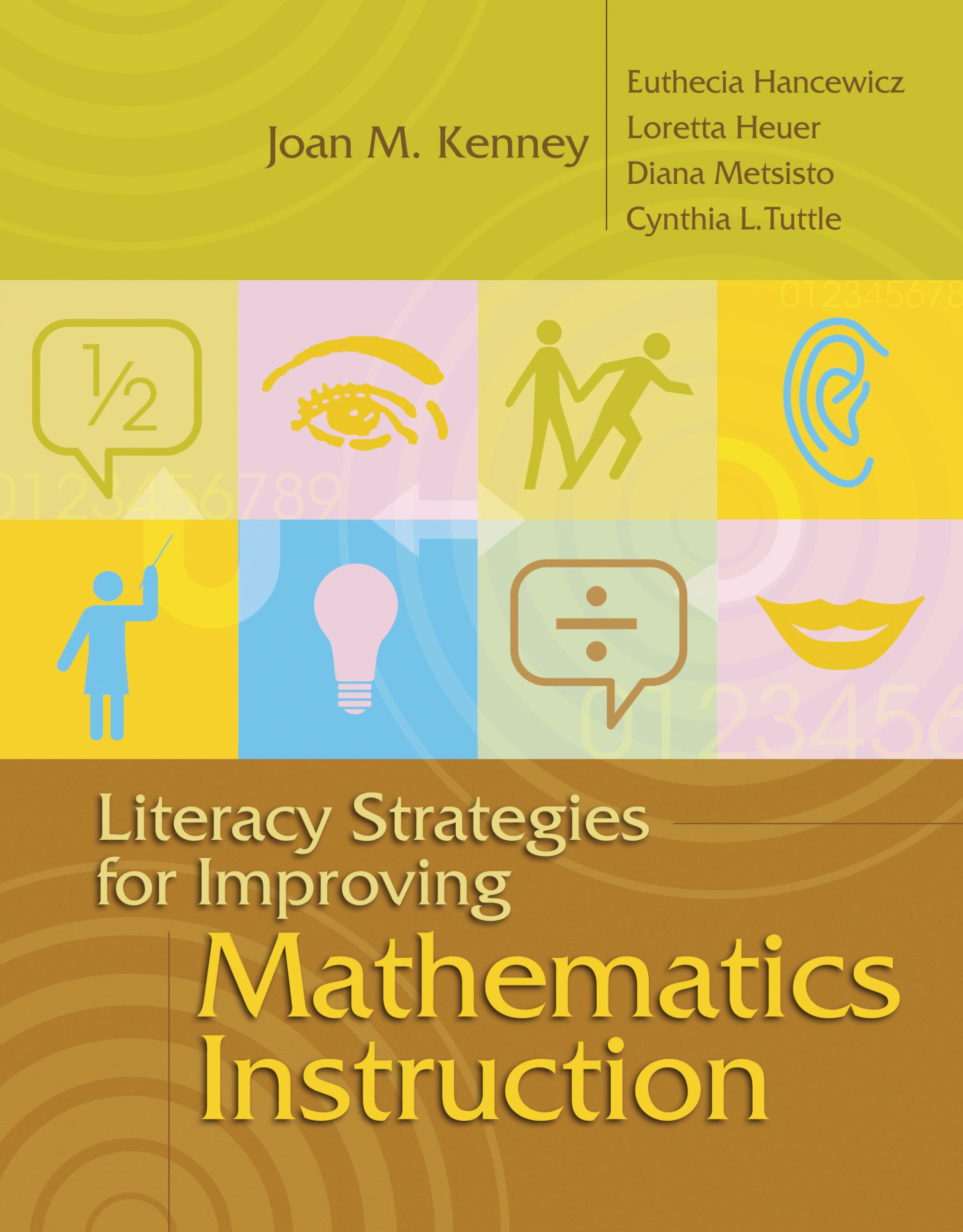
Title
Literacy Strategies for Improving Mathematics Instruction,Used
Sold by Ergodebooks, an authorized reseller.
Returns accepted within 30 days | support@ergodebooks.com
Shipping Information
- Free Standard Shipping — United States only
- Processing Time: 3–5 business days
- Estimated Delivery: 6–10 business days after dispatch
- Double-boxed, fully insured & discreetly packaged
- Tracking number sent via email once dispatched
Returns & Refund
Returns accepted within 30 days of delivery.
Damaged or Defective Item
Free return shipping + replacement or full refund
Wrong Item Received
Free return shipping + replacement or full refund
Change of Mind
Return shipping at customer's expense · 25% restocking fee applies
Payment Option

What makes mathematics so confusing to students? To succeed in the study of arithmetic, geometry, or algebra, students must learn what is effectively a second language of mathematical terms and symbols. In Literacy Strategies for Improving Mathematics Instruction, Joan M. Kenney and her coauthors describe common ways in which students misinterpret the language of mathematics, and show teachers what they can do to ensure that their students become fluent in that language.The authors synthesize the research on what it takes to decode mathematical text, explain how teachers can use guided discourse and graphic representations to help students develop mathematical literacy skills, offer guidance on using action research to enhance mathematics instruction, and discuss the importance of studentcentered learning and conceptbuilding skills in the classroom. Reallife vignettes of student struggles illuminate the profound effect of literacy problems on student achievement in mathematics.This book will help teachers better understand their students' difficulties with mathematics and take the steps necessary to alleviate them. Abundantly researched and filled with helpful strategies and resources, it is an invaluable resource for mathematics teachers at all levels.
⚠️ WARNING (California Proposition 65):
This product may contain chemicals known to the State of California to cause cancer, birth defects, or other reproductive harm.
For more information, please visit www.P65Warnings.ca.gov.
- Q: What is the page count of this book? A: This book contains one hundred thirteen pages. It provides extensive insights into literacy strategies for mathematics instruction.
- Q: What are the dimensions of this book? A: The book measures seven point zero five inches in length, nine point zero two inches in height, and zero point two five inches in width.
- Q: What type of binding does this book have? A: This book has a paperback binding. This allows for easy handling and flexibility during reading.
- Q: Who is the author of this book? A: The author is Joan M. Kenney. She collaborates with coauthors to present effective literacy strategies in mathematics.
- Q: What is the main focus of this book? A: The main focus is on improving mathematics instruction through literacy strategies. It helps teachers address student struggles with math language.
- Q: How can teachers use this book? A: Teachers can use this book to enhance their understanding of students' literacy challenges in math. It offers practical strategies for classroom implementation.
- Q: Is this book suitable for all grade levels? A: Yes, this book is suitable for mathematics teachers at all levels. It addresses common literacy issues faced by students across different grades.
- Q: Can this book help with student-centered learning? A: Yes, it discusses the importance of student-centered learning. The strategies promote engagement and concept-building among students.
- Q: Are real-life examples included in the book? A: Yes, the book includes real-life vignettes of student struggles. These examples illustrate the impact of literacy problems on achievement in mathematics.
- Q: What does the book include for teachers? A: The book includes research synthesis, guidance on using graphic representations, and action research tips. These resources support teachers in improving instruction.
- Q: Is this book appropriate for professional development? A: Yes, this book serves as an invaluable resource for professional development. It equips educators with effective strategies and insights.
- Q: How does this book address the language of mathematics? A: The book explains how students misinterpret mathematical language. It provides strategies for teachers to help students decode these terms and symbols.
- Q: What types of strategies are featured in the book? A: The book features literacy strategies such as guided discourse and graphic representations. These strategies help develop students' mathematical literacy skills.
- Q: What is the publisher of this book? A: The book is published by ASCD. ASCD is known for its focus on education and teaching resources.
- Q: Is this book available in other formats? A: Currently, this book is available only in paperback format. There are no indications of other formats, such as hardcover or digital.
- Q: Does this book address how to improve student achievement? A: Yes, it discusses how literacy problems can affect student achievement in mathematics. It offers strategies to alleviate these issues.