
Title
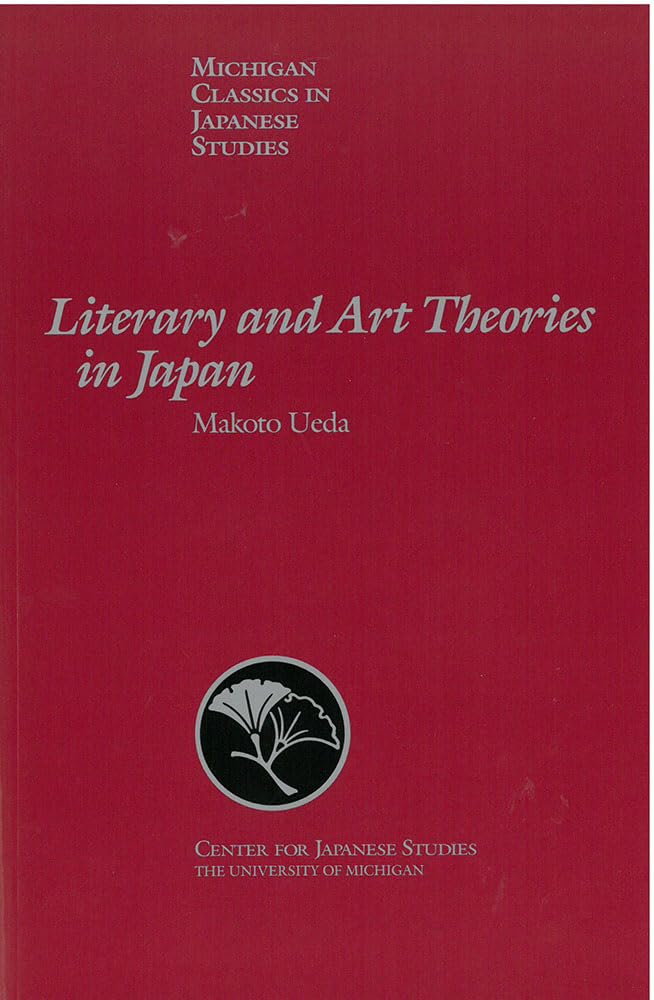
Literary and Art Theories in Japan (Volume 6) (Michigan Classics in Japanese Studies),New
Sold by Ergodebooks, an authorized reseller.
Returns accepted within 30 days | support@ergodebooks.com
Shipping Information
- Free Standard Shipping — United States only
- Processing Time: 3–5 business days
- Estimated Delivery: 6–10 business days after dispatch
- Double-boxed, fully insured & discreetly packaged
- Tracking number sent via email once dispatched
Returns & Refund
Returns accepted within 30 days of delivery.
Damaged or Defective Item
Free return shipping + replacement or full refund
Wrong Item Received
Free return shipping + replacement or full refund
Change of Mind
Return shipping at customer's expense · 25% restocking fee applies
Payment Option

Literary and Art Theories in Japan surveys thirteen major aestheticians to uncover what remained important over the course of Japanese history. Rather than take a comprehensive descriptive approach, Makoto Ueda focuses on views of the essential nature of literature and art, considering how people answered questions such as How does art differ from life? or What is the use of art? or Can art ever become a religion?Literary and Art Theories helps readers gain a deeper understanding of Japanese literature and art. By learning about the philosophies of art in Japan, readers come to know the aims and methods with which the Japanese produced paintings, music, plays, novels and poems. As it happens, many of the major Japanese aestheticians were also great artists, so the person who carefully examines their theories of art will be rewarded with a glimpse into the secret of their creative achievements too.Uedas examination of Japanese aesthetic ideas also contributes to an international definition of art. Attempts to answer the questions What is art? or What is literature? are nearly always formulated within a single cultural tradition, but a definition of art that makes any claim to universality must be applicable to all traditions. Japanese theories of art, which developed independently of Western culture, provide a touchstone by which to test the universal validity of a Western aesthetic concept.
⚠️ WARNING (California Proposition 65):
This product may contain chemicals known to the State of California to cause cancer, birth defects, or other reproductive harm.
For more information, please visit www.P65Warnings.ca.gov.
- Q: What is the page count of this book? A: The book has two hundred eighty-eight pages. It provides an in-depth exploration of literary and art theories in Japan.
- Q: What is the binding type of 'Literary and Art Theories in Japan'? A: This book is paperback bound. The paperback format makes it lightweight and portable for readers.
- Q: What are the dimensions of this book? A: The book measures six inches in length, zero point seventy-one inches in width, and nine point zero two inches in height.
- Q: Who is the author of this book? A: The author is Makoto Ueda. He is known for his extensive work in Japanese literature and art.
- Q: What category does this book belong to? A: This book is categorized under Arts & Photography. It provides insights into Japanese artistic philosophies.
- Q: What themes are explored in the book? A: The book explores themes of literary and artistic value in Japanese culture. It addresses significant questions regarding art and literature.
- Q: How do I use this book for study? A: You can use this book as a primary resource for understanding Japanese aesthetics. It is suitable for students and enthusiasts of art history.
- Q: Is this book suitable for beginners in literary studies? A: Yes, this book is suitable for beginners. It presents complex ideas in an accessible manner for those new to Japanese art theories.
- Q: Can I use this book for a research project? A: Yes, this book is an excellent resource for research projects. It provides critical insights into Japanese aesthetic thought.
- Q: How should I store this book to keep it in good condition? A: Store this book upright in a cool, dry place. Avoid exposure to direct sunlight to prevent fading of the cover.
- Q: What care should I take when handling this paperback book? A: Handle the book gently to avoid bending the cover or pages. Keep it away from moisture to prevent damage.
- Q: What if the book arrives damaged? A: If the book arrives damaged, you should contact the seller for a return or replacement. Most retailers have a customer service policy for such issues.
- Q: Is there a warranty for this book? A: No, books typically do not come with a warranty. However, return policies may apply if the book is defective.
- Q: What should I do if I want to return the book? A: To return the book, follow the seller's return policy. Usually, you will need to provide proof of purchase and the reason for the return.
- Q: Can this book be found in libraries? A: Yes, this book is often available in libraries. Check your local library's catalog or interlibrary loan services.
- Q: How does this book compare to other texts on Japanese art? A: This book offers a unique perspective on Japanese art theories compared to other texts. It focuses specifically on major aestheticians throughout history.