
Title
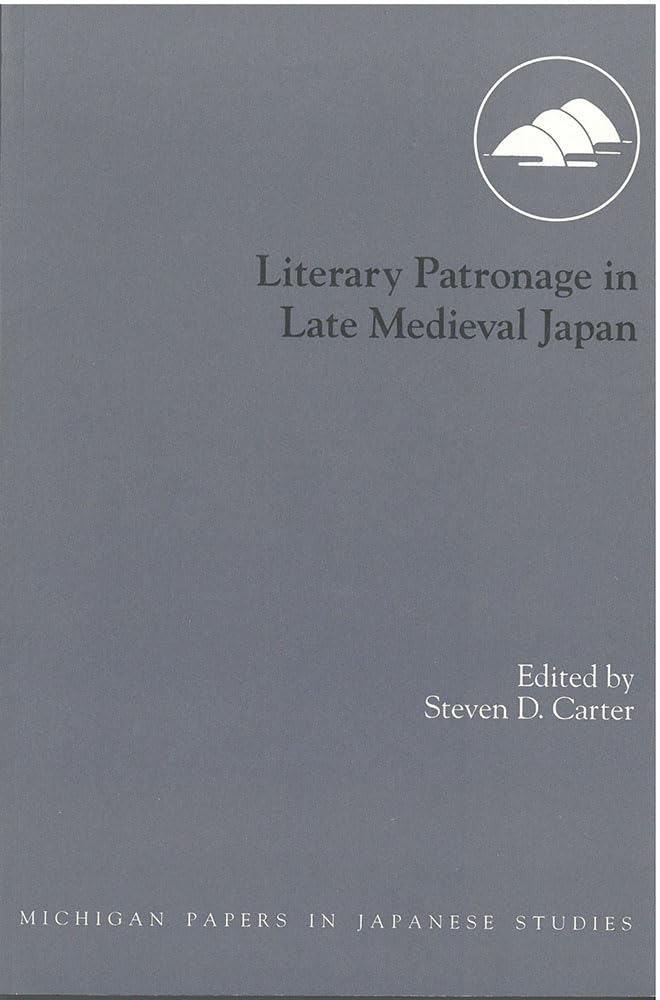
Literary Patronage In Late Medieval Japan (Volume 23) (Michigan Papers In Japanese Studies),New
Sold by Ergodebooks, an authorized reseller.
Returns accepted within 30 days | support@ergodebooks.com
Shipping Information
- Free Standard Shipping — United States only
- Processing Time: 3–5 business days
- Estimated Delivery: 6–10 business days after dispatch
- Double-boxed, fully insured & discreetly packaged
- Tracking number sent via email once dispatched
Returns & Refund
Returns accepted within 30 days of delivery.
Damaged or Defective Item
Free return shipping + replacement or full refund
Wrong Item Received
Free return shipping + replacement or full refund
Change of Mind
Return shipping at customer's expense · 25% restocking fee applies
Payment Option

The late fifteenth and early sixteenth centuries in Japan, which were dominated by social upheavals and political conflicts, were the scene of a fundamental expansion of arts patronage. This was a time of great change in all areas of Japanese life: old centralized political establishments were giving way to new provincial powers, the growth of urban centers was causing changes in trade patterns and financial institutions, and everywhere the economy was creating new centers of wealth and influence. In such an age of vitality all patterns of production and consumption were affected, including those involving the arts.But how and under what specific conditions did these changes take place? The papers in this volume represent an attempt to answer that questions and others like it. The historical figures focused upon range from members of the imperial family and the houses of the regency to tea masters, painters, merchants, provincial daimyo, and especially renga (linkedverse) poets, whose central place in many of the papers speaks for their prominent place in medieval artistic history. But all share a common concern with patron0clinet relations in what many consider to be the most significant watershed in Japanese history. Because the problems dealt with are complex ones involving many levels and kinds of patronage, the essays perhaps pose more questions than they answer, but at the very least they serve the purpose of opening up a new arena of research that is essential to a full understanding of the arts in the late medieval age. In this respect they may best be understood as case studies, presented in the anticipation of further work in a longoverlooked area of cultural history. [34]
⚠️ WARNING (California Proposition 65):
This product may contain chemicals known to the State of California to cause cancer, birth defects, or other reproductive harm.
For more information, please visit www.P65Warnings.ca.gov.