
Title
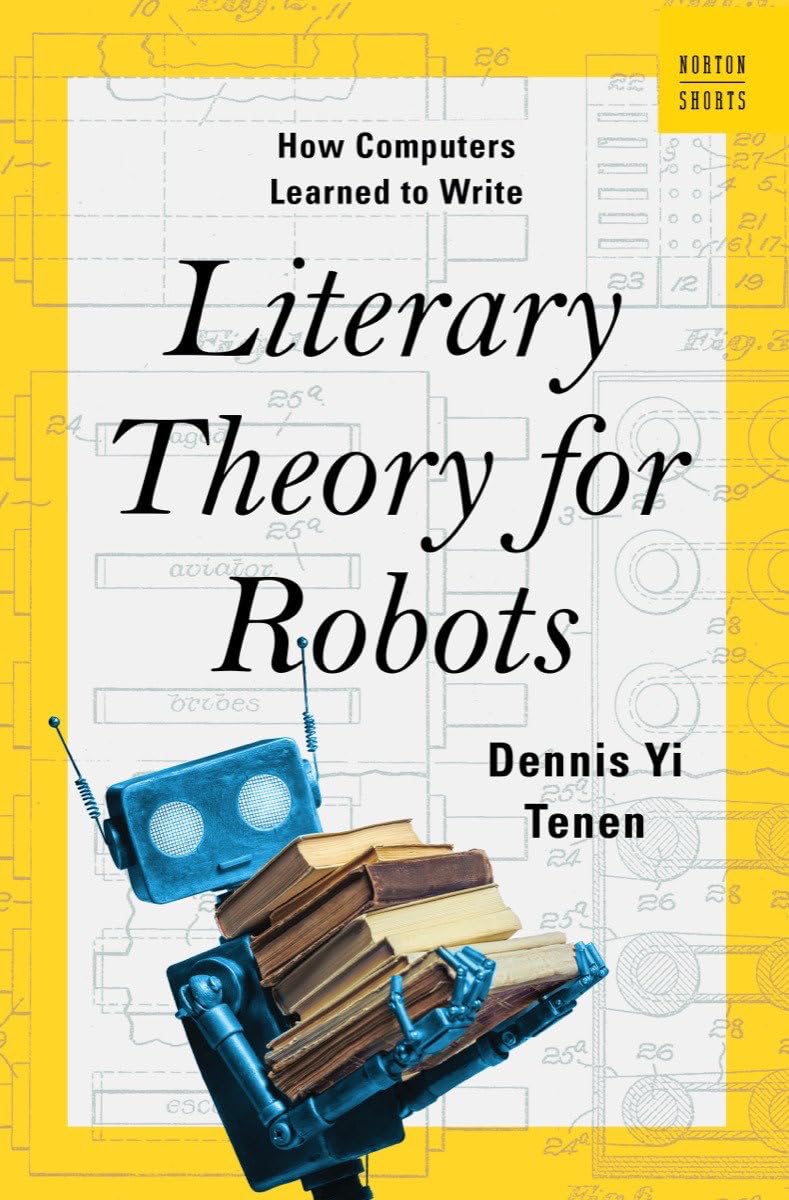
Literary Theory For Robots: How Computers Learned To Write (A Norton Short),New
Sold by Ergodebooks, an authorized reseller.
Returns accepted within 30 days | support@ergodebooks.com
Shipping Information
- Free Standard Shipping — United States only
- Processing Time: 3–5 business days
- Estimated Delivery: 6–10 business days after dispatch
- Double-boxed, fully insured & discreetly packaged
- Tracking number sent via email once dispatched
Returns & Refund
Returns accepted within 30 days of delivery.
Damaged or Defective Item
Free return shipping + replacement or full refund
Wrong Item Received
Free return shipping + replacement or full refund
Change of Mind
Return shipping at customer's expense · 25% restocking fee applies
Payment Option

In the industrial age, automation came for the shoemaker and the seamstress. Today, it has come for the writer, physician, programmer, and attorney.Literary Theory for Robots reveals the hidden history of modern machine intelligence, taking readers on a spellbinding journey from medieval Arabic philosophy to visions of a universal language, past Hollywood fiction factories and missile defense systems trained on Russian folktales. In this provocative reflection on the shared pasts of literature and computer science, former Microsoft engineer and professor of comparative literature Dennis Yi Tenen provides crucial context for recent developments in AI, which holds important lessons for the future of humans living with smart technology.Intelligence expressed through technology should not be mistaken for a magical genie, capable of selfdirected thought or action. Rather, in highly original and effervescent prose with a generous dose of wit, Yi Tenen asks us to read past the artificeto better perceive the mechanics of collaborative work. Something as simple as a spellchecker or a grammarcorrection tool, embedded in every wordprocessor, represents the culmination of a shared human effort, spanning centuries.Smart tools, like dictionaries and grammar books, have always accompanied the act of writing, thinking, and communicating. That these paper machines are now automated does not bring them to life. Nor can we cede agency over the creative process. With its masterful blend of history, technology, and philosophy, Yi Tenens work ultimately urges us to view AI as a matter of labor history, celebrating the longstanding cooperation between authors and engineers.
⚠️ WARNING (California Proposition 65):
This product may contain chemicals known to the State of California to cause cancer, birth defects, or other reproductive harm.
For more information, please visit www.P65Warnings.ca.gov.