
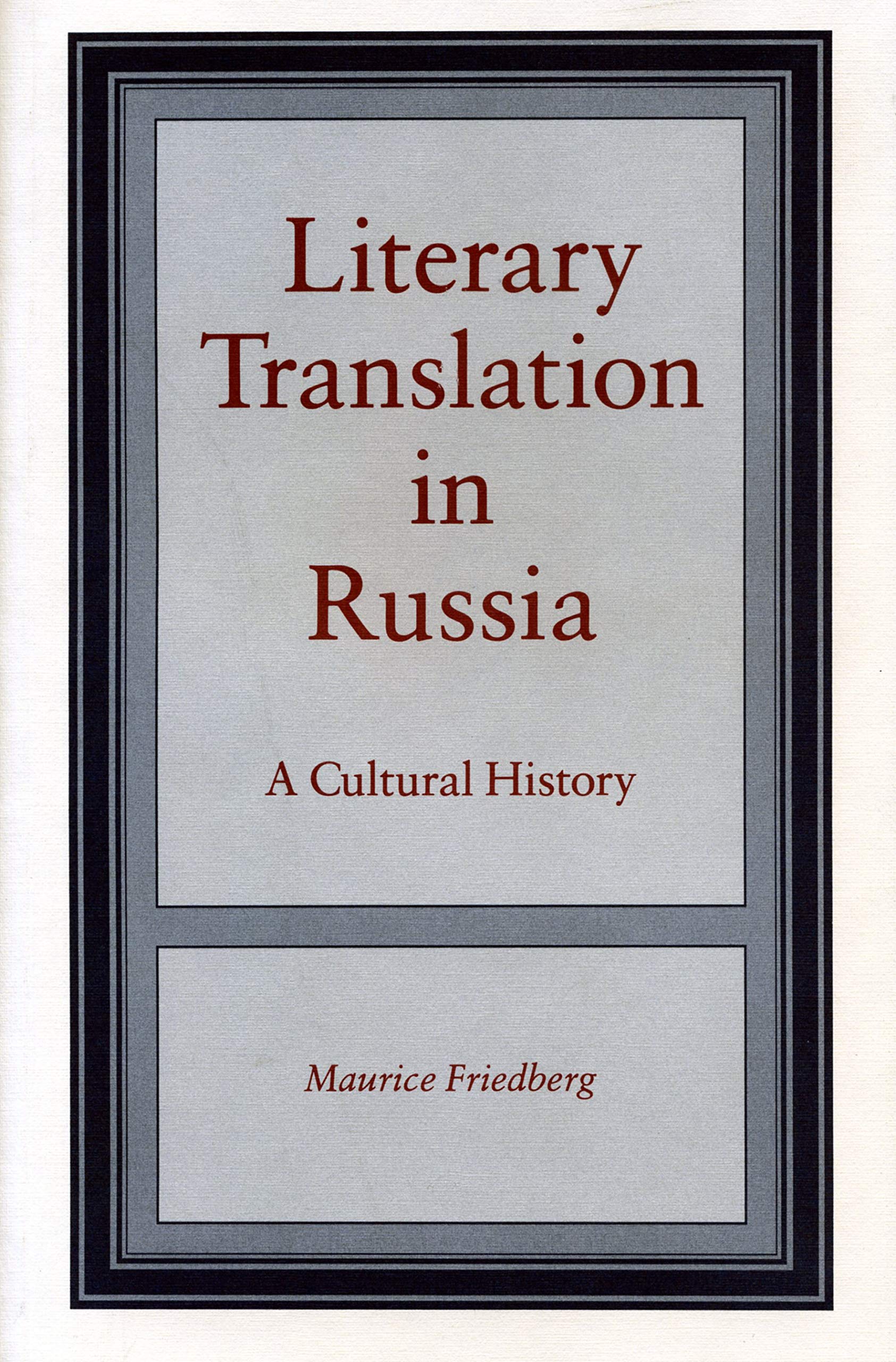
Title
Literary Translation In Russia: A Cultural History,Used
Sold by Ergodebooks, an authorized reseller.
Returns accepted within 30 days | support@ergodebooks.com
Shipping Information
- Free Standard Shipping — United States only
- Processing Time: 3–5 business days
- Estimated Delivery: 6–10 business days after dispatch
- Double-boxed, fully insured & discreetly packaged
- Tracking number sent via email once dispatched
Returns & Refund
Returns accepted within 30 days of delivery.
Damaged or Defective Item
Free return shipping + replacement or full refund
Wrong Item Received
Free return shipping + replacement or full refund
Change of Mind
Return shipping at customer's expense · 25% restocking fee applies
Payment Option

In this rich historical study, Maurice Friedberg recounts the impact of translation on the Russian literary process. In tracing the explosion of literary translation in nineteenthcentury Russia, Friedberg determines that it introduced new issues of cultural, aesthetic, and political values.Beginning with Pushkin in the early nineteenth century, Friedberg traces the history of translation throughout the lives of Dostoevsky, Tolstoy, and, more recently, Pasternak. His analysis includes two translators who became Russia's leading literary figures: Zhukovsky, whose renditions of German poetry became famous, and Vvedensky, who introduced Charles Dickens to Russia. In the twentieth century, Friedberg points to Pasternak's Faust to show how apolitical authors welcomed free translation, which offered them an alternative to the original writing from which they had been banned by Soviet authorities.By introducing Western literary works, Russian translators provided new models for Russian literature. Friedberg discusses the usual battles fought between partisans of literalism and of free translation, the influence of Stalinist Soviet government on literary translation, and the political implications of aesthetic clashes. He also considers the impetus of translated Western fiction, poetry, and drama as remaining links to Western civilization during the decades of Russia's isolation from the West. Friedberg argues that literary translation had a profound effect on Russia by helping to erode the Soviet Union's isolation, which ultimately came to an end with the dissolution of the Soviet Union in 1991.
⚠️ WARNING (California Proposition 65):
This product may contain chemicals known to the State of California to cause cancer, birth defects, or other reproductive harm.
For more information, please visit www.P65Warnings.ca.gov.