
Title
Literature and the Law of Nations, 15801680,Used
Sold by Ergodebooks, an authorized reseller.
Returns accepted within 30 days | support@ergodebooks.com
Shipping Information
- Free Standard Shipping — United States only
- Processing Time: 3–5 business days
- Estimated Delivery: 6–10 business days after dispatch
- Double-boxed, fully insured & discreetly packaged
- Tracking number sent via email once dispatched
Returns & Refund
Returns accepted within 30 days of delivery.
Damaged or Defective Item
Free return shipping + replacement or full refund
Wrong Item Received
Free return shipping + replacement or full refund
Change of Mind
Return shipping at customer's expense · 25% restocking fee applies
Payment Option

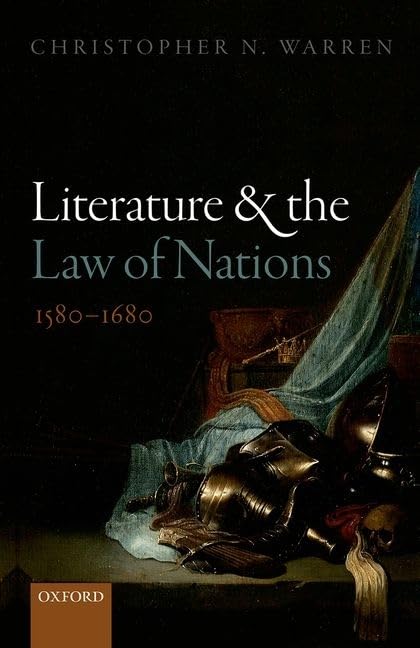
In this groundbreaking study, Christopher Warren argues that early modern literary genres were deeply tied to debates about global legal order and that today's international law owes many of its most basic suppositions to early modern literary culture. Literature and the Law of Nations shows how the separation of scholarship on law from scholarship on literature has limited the understanding of international law on both sides. Warren suggests that both literary and legal scholars have tacitly accepted tendentious but politically consequential assumptions about whether international law is "real" law. Literature and the Law of Nations recognizes the specific nature of early modern international law by showing how major writers of the English Renaissanceincluding Shakespeare, Milton, and Hobbesdeployed genres like epic, tragedy, comedy, tragicomedy, and history to shore up the canonical subjects and objects of modern international law. Warren demonstrates how Renaissance literary genres informed modern categories like public international law, private international law, international legal personality, and human rights. Students and scholars of Renaissance literature, intellectual history, the history of international law, and the history of political thought will find in Literature and the Law of Nations a rich interdisciplinary argument that challenges the usual accounts by charting a new literary history of international law.
⚠️ WARNING (California Proposition 65):
This product may contain chemicals known to the State of California to cause cancer, birth defects, or other reproductive harm.
For more information, please visit www.P65Warnings.ca.gov.