
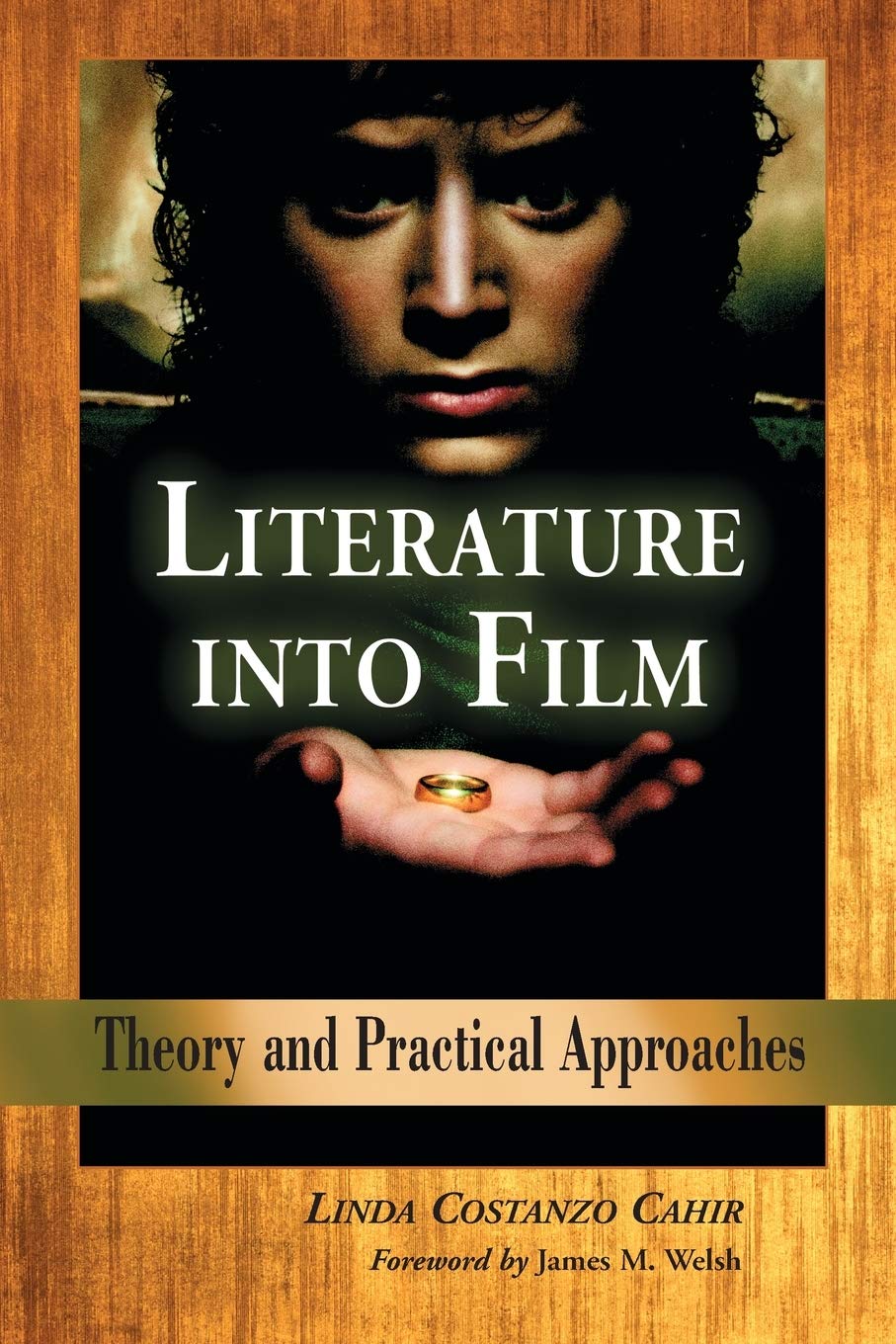
Title
Literature Into Film: Theory And Practical Approaches
Sold by Ergodebooks, an authorized reseller.
Returns accepted within 30 days | support@ergodebooks.com
Shipping Information
- Free Standard Shipping — United States only
- Processing Time: 3–5 business days
- Estimated Delivery: 6–10 business days after dispatch
- Double-boxed, fully insured & discreetly packaged
- Tracking number sent via email once dispatched
Returns & Refund
Returns accepted within 30 days of delivery.
Damaged or Defective Item
Free return shipping + replacement or full refund
Wrong Item Received
Free return shipping + replacement or full refund
Change of Mind
Return shipping at customer's expense · 25% restocking fee applies
Payment Option

For Most People, Film Adaptation Of Literature Can Be Summed Up In One Sentence: The Movie Wasn'T As Good As The Book. This Volume Undertakes To Show The Reader That Not Only Is This Evaluation Not Always True But Sometimes It Is Intrinsically Unfair. Movies Based On Literary Works, While Often Billed As Adaptations, Are More Correctly Termed Translations. A Director And His Actors Translate The Story From The Written Page Into A Visual Presentation. Depending On The Form Of The Original Text And The Chosen Method Of Translation, Certain Inherent Difficulties And Pitfalls Are Associated With This Change Of Medium. So Often Our Reception Of A Bookbased Movie Has More To Do With Our Expectations And Reading Of The Literature Than With The Job That The Movie Production Did Or Did Not Do. Avoiding These Biases And Fairly Evaluating Any Particular Literarybased Film Takes An Awareness Of Certain Factors.Written With A Formalistic Rather Than Historical Approach, This Work Presents A Comprehensive Guide To Literaturebased Films, Establishing A Contextual And Theoretical Basis To Help The Reader Understand The Relationships Between Such Movies And The Original Texts As Well As The Reader'S Own Individual Responses To These Productions. To This End, It Focuses On Recognizing And Appreciating The Inherent Difficulties Encountered When Basing A Film On A Literary Work, Be It A Novel, Novella, Play Or Short Story. Individual Chapters Deal With The Specific Issues And Difficulties Raised By Each Of These Genres, Providing An Overview Backed Up By Case Studies Of Specific Film Translations. Films And Literary Works Receiving This Treatment Include The Unbearable Lightness Of Being, The Manchurian Candidate (1962), Lady Windemere'S Fan By Oscar Wilde And Shakespeare'S Henry V. Interspersed Throughout The Text Are Suggestions For Activities The Film Student Or Buff Can Use To Enhance His Or Her Appreciation And Understanding Of The Films.Instructors Considering This Book For Use In A Course May Request An Examination Copy Here.
⚠️ WARNING (California Proposition 65):
This product may contain chemicals known to the State of California to cause cancer, birth defects, or other reproductive harm.
For more information, please visit www.P65Warnings.ca.gov.
- Q: What is the page count of this book? A: This book has three hundred fifteen pages. It provides an in-depth analysis of literature-based films.
- Q: What is the binding type of 'Literature into Film'? A: This book is a paperback edition. Paperback bindings are flexible and lightweight, making them easy to carry.
- Q: Who is the author of 'Literature into Film'? A: The author is Linda Costanzo Cahir. She provides a comprehensive understanding of film adaptations of literary works.
- Q: What genre does 'Literature into Film' fall under? A: This book falls under the Performing Arts genre. It focuses on the relationship between literature and film adaptations.
- Q: What are the dimensions of 'Literature into Film'? A: The dimensions are six inches in length, zero point six three inches in width, and nine point zero two inches in height. These measurements make it a convenient size for reading.
- Q: How can I use 'Literature into Film' in a course? A: You can request an examination copy for course consideration. This book serves as a valuable resource for understanding film adaptations.
- Q: Is 'Literature into Film' suitable for beginners? A: Yes, it is suitable for beginners. The book presents concepts in a formalistic manner, making it accessible for newcomers to the subject.
- Q: Can I use this book for film studies? A: Yes, this book is ideal for film studies. It provides insights into the challenges of adapting literature into film.
- Q: What activities are suggested in 'Literature into Film'? A: The book includes suggestions for activities that enhance appreciation and understanding of film adaptations. These activities are geared toward film students and enthusiasts.
- Q: How should I care for my copy of 'Literature into Film'? A: To keep it in good condition, store it in a cool, dry place. Avoid exposing it to direct sunlight to prevent fading.
- Q: What if my copy of 'Literature into Film' arrives damaged? A: If your copy arrives damaged, you should contact the seller for a return or replacement. Ensure to keep the packaging for a smoother return process.
- Q: Does 'Literature into Film' cover specific films? A: Yes, it covers films like 'The Unbearable Lightness of Being' and 'The Manchurian Candidate'. These case studies illustrate the translation of literature to film.
- Q: Is this book suitable for academic research? A: Yes, it is suitable for academic research. It provides theoretical frameworks and case studies relevant to literature and film studies.
- Q: What makes 'Literature into Film' unique? A: Its unique contribution lies in addressing the translation of stories from written texts to visual media. It challenges common perceptions of adaptations.
- Q: Are there any prerequisites for reading 'Literature into Film'? A: No specific prerequisites are required. However, a basic understanding of literary and film concepts may enhance your reading experience.
- Q: Can I find reviews for 'Literature into Film'? A: Yes, you can find reviews online. Many readers appreciate its insightful analysis of film adaptations of literary works.