
Title
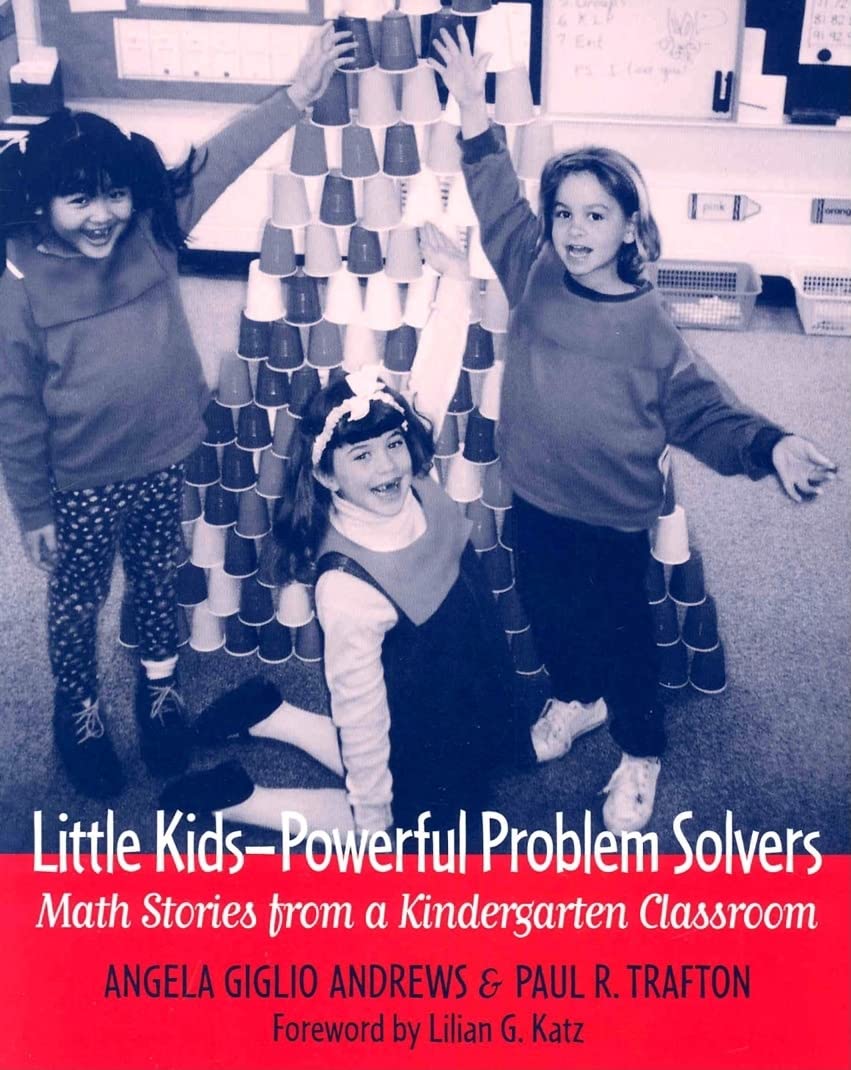
Little KidsPowerful Problem Solvers: Math Stories from a Kindergarten Classroom,Used
Sold by Ergodebooks, an authorized reseller.
Returns accepted within 30 days | support@ergodebooks.com
Shipping Information
- Free Standard Shipping — United States only
- Processing Time: 3–5 business days
- Estimated Delivery: 6–10 business days after dispatch
- Double-boxed, fully insured & discreetly packaged
- Tracking number sent via email once dispatched
Returns & Refund
Returns accepted within 30 days of delivery.
Damaged or Defective Item
Free return shipping + replacement or full refund
Wrong Item Received
Free return shipping + replacement or full refund
Change of Mind
Return shipping at customer's expense · 25% restocking fee applies
Payment Option

Angela Andrews and Paul Trafton know from experience that kindergartners can do great mathespecially if they are engaged and challenged from the start. This collection of stories from Angela's classroom highlights the problemsolving potential of very young students. Arranged by month of the school year, each of these ten stories is an inspiration for a classroom lesson. Together the stories provide a comprehensive picture of what can be accomplished with little kids: making sense of math is the focus of the teaching; respecting children's thinking makes it possible.Several major themes recur throughout the stories: the distinction between academic and intellectual goalsthe intellectual dispositions in action in this classroom reveal how children can make sense of experience and observations, how they can estimate, predict, hypothesize, analyze, and apply mathematical concepts in practical and visible ways.the real meaning of a 'community of learners'how children can help, occasionally hinder, but ultimately challenge each other.perseverancethe ability of even very young children to persist until they have resolved problems. To see the deep satisfaction kindergartners gain from hard work, or what they call 'hard fun,' is what makes Angela's daytoday life in the classroom so wonderful and rewarding.accountabilityhow teachers can satisfy NCTM principles and standards in math while addressing children's needs and capabilities.With every story, Angela provides not only a narrative, but also a thoughtful appraisal of her own decisions, dilemmas, and choices in the teaching of math. At the end of each story, Paul Trafton focuses on the math involved and the mathematical reasoning of the children. Clearly evident throughout is the authors' conviction that teachers not only need to understand the math in the problems the children are tackling, but also to listen respectfully and to question them honestly about their thinking. In this way, teachers can support their young students and capitalize on the opportunities at hand, the many 'teachable moments' this book so successfully captures.
⚠️ WARNING (California Proposition 65):
This product may contain chemicals known to the State of California to cause cancer, birth defects, or other reproductive harm.
For more information, please visit www.P65Warnings.ca.gov.
- Q: What age group is 'Little Kids--Powerful Problem Solvers' suitable for? A: This book is suitable for kindergarten students, typically aged 5 to 6 years old.
- Q: How many pages does the book contain? A: The book contains 128 pages.
- Q: Who are the authors of this book? A: The authors of the book are Angela Andrews and Paul Trafton.
- Q: What is the publication date of the book? A: The book was published on February 15, 2002.
- Q: Is this book intended for teachers or parents? A: This book is primarily intended for teachers, but parents can also find valuable insights into teaching math to young children.
- Q: What is the main focus of the stories in this book? A: The main focus of the stories is on problem-solving and making sense of math concepts in a kindergarten classroom setting.
- Q: Does the book provide lesson plans or teaching strategies? A: Yes, each story includes a thoughtful appraisal of teaching decisions, dilemmas, and choices, which can serve as inspiration for classroom lessons.
- Q: What themes are explored in the book? A: The book explores themes such as perseverance, community of learners, accountability in teaching, and the distinction between academic and intellectual goals.
- Q: Is the book available in different formats? A: The book is available in paperback format.
- Q: How can this book benefit kindergarten teachers? A: This book can benefit kindergarten teachers by providing real classroom stories that illustrate how young students can engage with math, along with insights into effective teaching practices.