
Title


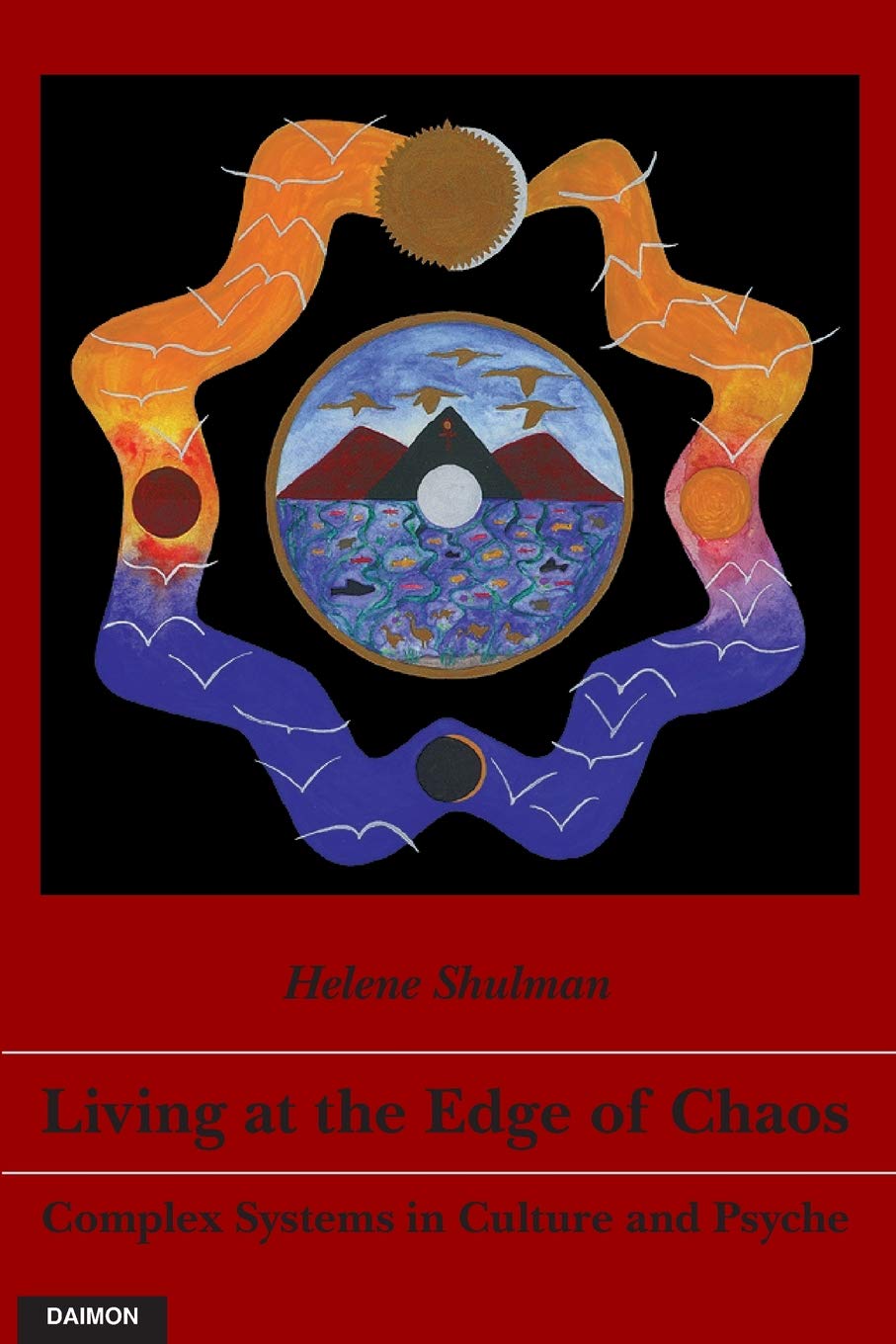
Living At The Edge Of Chaos: Complex Systems In Culture And Psyche
Sold by Ergodebooks, an authorized reseller.
Returns accepted within 30 days | support@ergodebooks.com
Shipping Information
- Free Standard Shipping — United States only
- Processing Time: 3–5 business days
- Estimated Delivery: 6–10 business days after dispatch
- Double-boxed, fully insured & discreetly packaged
- Tracking number sent via email once dispatched
Returns & Refund
Returns accepted within 30 days of delivery.
Damaged or Defective Item
Free return shipping + replacement or full refund
Wrong Item Received
Free return shipping + replacement or full refund
Change of Mind
Return shipping at customer's expense · 25% restocking fee applies
Payment Option

Helene Shulman Lorenz Integrates Experiences Of Synchronicity, Altered States Of Consciousness, Trance, Ritual, Buddhist Meditation Practice And Creativity Into A Broad Perspective On Crosscultural Psychology. What Emerges Is A Comprehensive Way To Understand Psychological Illness And Healing As A Perpetual Workinprogress Near The Edge Of Chaos, Where The Seeds For New Models Of Reality Lie. With Mental Illness As The Focus, She Leads Us On A Fascinating Interdisciplinary Exploration, Linking Such Areas As Cultural Studies, Anthropology, Evolutionary Science And New Work In Mathematics And Computer Science Known As Complexity Theory To Jungian Psychology.A New Paradigm For Postmodern Psychology Emerges As The Author Presents A Dynamic Theoretical Model Containing Rational And Irrational Aspects Of Individual And Collective Life. The Relevance Of This Work Extends Well Beyond The Field Of Psychology, For The Author Is Describing The Life Experience Of Each Of Us In Our Personal And Cultural Milieu. The Current States Of Our Environmental, Political And Economic Realities Are Presented As An Urgent Challenge To Enter Consciously Into Individual And Community Restoration Work. Living At The Edge Of Chaos, For All Its Apparent Destruction, Is Nonetheless A Source Of Spontaneity, Creativity And Hope. Tuula Haukioja, Jungian Analyst, Toronto
⚠️ WARNING (California Proposition 65):
This product may contain chemicals known to the State of California to cause cancer, birth defects, or other reproductive harm.
For more information, please visit www.P65Warnings.ca.gov.
- Q: What is the title of the book? A: The title of the book is 'Living at the Edge of Chaos: Complex Systems in Culture and Psyche'.
- Q: Who is the author of this book? A: The author is Helene Shulman Lorenz, who integrates various psychological and cultural concepts in her writing.
- Q: How many pages does this book have? A: This book contains two hundred fifty-eight pages, providing a comprehensive exploration of its themes.
- Q: What type of binding does this book have? A: This book is a paperback, making it lightweight and easy to handle.
- Q: What are the dimensions of the book? A: The book measures six inches in length, zero point fifty-nine inches in width, and nine point zero two inches in height.
- Q: What category does this book belong to? A: This book is categorized under Psychology & Counseling, focusing on complex systems and cultural psychology.
- Q: Is this book suitable for beginners in psychology? A: Yes, this book is suitable for beginners as it introduces complex psychological concepts in an accessible manner.
- Q: What themes are explored in this book? A: The book explores themes like synchronicity, altered states of consciousness, cultural studies, and complexity theory in psychology.
- Q: How can I apply the concepts from this book? A: You can apply the concepts by reflecting on personal and cultural experiences related to psychological illness and healing.
- Q: Is there any adult content in this book? A: No, there is no explicit adult content in this book; it focuses on psychological themes.
- Q: How should I care for this book? A: To care for the book, keep it in a dry place and avoid exposure to direct sunlight to preserve its quality.
- Q: Can I return the book if I am not satisfied? A: Yes, you can return the book if you are not satisfied, following the retailer's return policy.
- Q: What if the book arrives damaged? A: If the book arrives damaged, you should contact the seller for a replacement or refund.
- Q: Is this book suitable for a community study group? A: Yes, this book is suitable for a community study group due to its interdisciplinary exploration of psychology.
- Q: What makes this book different from others in psychology? A: This book combines various disciplines such as anthropology and complexity theory, offering a unique perspective on psychology.
- Q: How does this book address current societal issues? A: The book addresses societal issues by linking psychological concepts to environmental, political, and economic realities.