
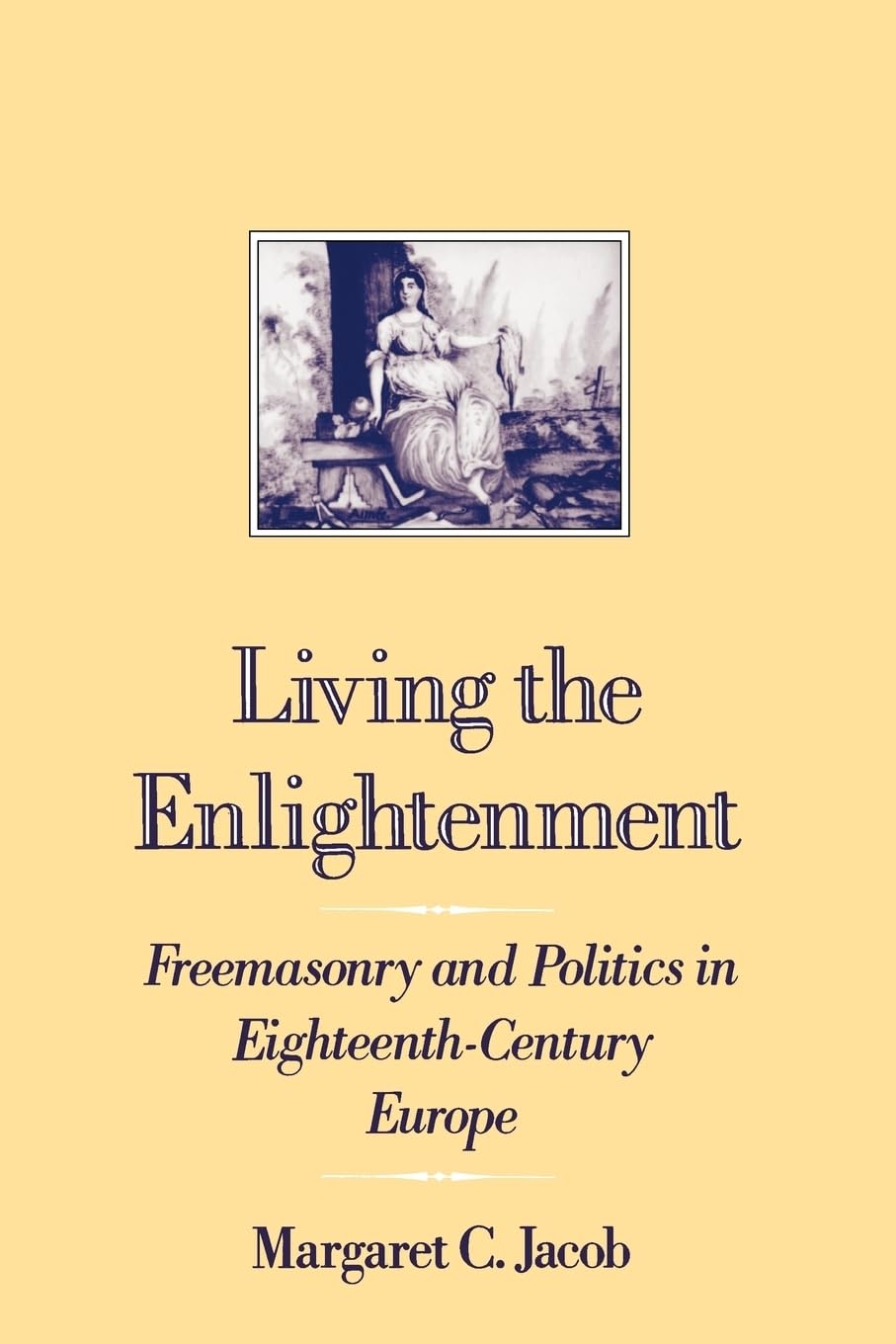
Title
Living the Enlightenment: Freemasonry and Politics in EighteenthCentury Europe (Society),New
Processing time: 1-3 days
US Orders Ships in: 3-5 days
International Orders Ships in: 8-12 days
Return Policy: 15-days return on defective items
Payment Option

Long recognized as more than the writings of a dozen or so philosophes, the Enlightenment created a new secular culture populated by the literate and the affluent. Enamoured of British institutions, Continental Europeans turned to the imported masonic lodges and found in them a new forum that was constitutionally constructed and logically egalitarian. Originating in the Middle Ages, when stonemasons joined together to preserve their professional secrets and to protect their wages, the English and Scottish lodges had by the eighteenth century discarded their guild origins and become an international phenomenon that gave men and eventually some women a place to vote, speak, discuss and debate. Margaret Jacob argues that the hundreds of masonic lodges founded in eighteenthcentury Europe were among the most important enclaves in which modern civil society was formed. In France, the Netherlands, Belgium, and Britain men and women freemasons sought to create a moral and social order based upon reason and virtue, and dedicated to the principles of liberty and equality. A forum where philosophers met with men of commerce, government, and the professions, the masonic lodge created new forms of selfgovernment in microcosm, complete with constitutions and laws, elections, and representatives. This is the first comprehensive history of Enlightenment freemasonry, from the roots of the society's political philosophy and evolution in seventeenthcentury England and Scotland to the French Revolution. Based on neverbeforeused archival sources, it will appeal to anyone interested in the birth of modernity in Europe or in the cultural milieu of the European Enlightenment.
⚠️ WARNING (California Proposition 65):
This product may contain chemicals known to the State of California to cause cancer, birth defects, or other reproductive harm.
For more information, please visit www.P65Warnings.ca.gov.
- Q: What is the main focus of 'Living the Enlightenment'? A: The book explores the role of Freemasonry in shaping political and social discourse during the Enlightenment era in Europe, emphasizing its impact on civil society and the principles of liberty and equality.
- Q: Who is the author of the book? A: The author of 'Living the Enlightenment' is Margaret C. Jacob, a scholar known for her work on the history of Freemasonry and its cultural significance.
- Q: What are the key themes discussed in the book? A: Key themes include the historical development of Freemasonry, its influence on Enlightenment thought, and the formation of modern civil society through masonic lodges.
- Q: Is this book suitable for someone new to the topic? A: Yes, the book provides a comprehensive history that is accessible to readers unfamiliar with Freemasonry or Enlightenment philosophy, making it suitable for both scholars and general readers.
- Q: How many pages does the book have? A: The book has a total of 320 pages, providing an in-depth analysis of its subject matter.
- Q: What is the publication date of 'Living the Enlightenment'? A: The book was published on December 26, 1991.
- Q: In what format is the book available? A: The book is available in paperback format, making it easy for readers to handle and read.
- Q: Does the book include any archival sources? A: Yes, 'Living the Enlightenment' is based on never-before-used archival sources, adding unique insights into the history of Freemasonry.
- Q: What audience would benefit from reading this book? A: The book is ideal for historians, students of political science, and anyone interested in the cultural history of the Enlightenment and the evolution of modern democratic principles.
- Q: Can this book help in understanding the origins of modern civil society? A: Yes, it details how masonic lodges contributed to the development of civil society, offering readers a foundation for understanding modern democratic institutions.