
Title


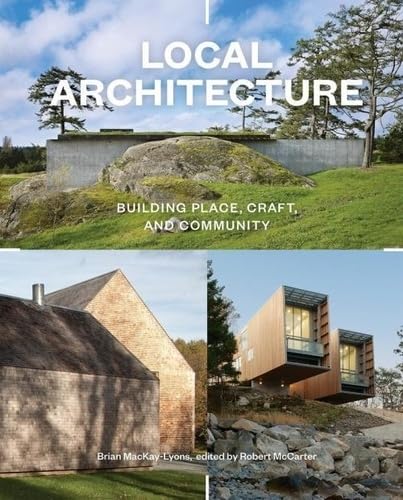
Local Architecture: Building Place, Craft, And Community
Sold by Ergodebooks, an authorized reseller.
Returns accepted within 30 days | support@ergodebooks.com
Shipping Information
- Free Standard Shipping — United States only
- Processing Time: 3–5 business days
- Estimated Delivery: 6–10 business days after dispatch
- Double-boxed, fully insured & discreetly packaged
- Tracking number sent via email once dispatched
Returns & Refund
Returns accepted within 30 days of delivery.
Damaged or Defective Item
Free return shipping + replacement or full refund
Wrong Item Received
Free return shipping + replacement or full refund
Change of Mind
Return shipping at customer's expense · 25% restocking fee applies
Payment Option

In Architecture, As In Food, Local Is An Idea Whose Time Has Come. Of Course, The Idea Of An Architecture That Responds To Site; Draws On Local Building Traditions, Materials, And Crafts; And Strives To Create A Sense Of Community Is Not Recent. Yet, The Way It Has Evolved In The Past Few Years In The Hands Of Some Of The World'S Most Accomplished Architects Is Indeed Defining A New Movement. From The Rammedearth Houses Of Rick Joy And Pacific Northwest Timber Houses Of Tom Kundig, To The Communitybuilt Structures Of Rural Studio And Francis Kr, Designers Everywhere Are Championing An Architecture That Exists From, In, And For A Specific Place. The Stunning Projects, Presented Here In The First Book To Examine This Global Shift, Were Featured At The Thirteenth And Final Ghost Conference Held In 2011, Organized By Nova Scotia Architect, Educator, And Local Practitioner Brian Mackaylyons. The Result Is The Most Complete Collection Of Contemporary Regionalist Architecture Available, With Essays By Early Proponents Of The Movement, Including Kenneth Frampton, Juhani Pallasmaa, And Pritzker Prizewinning Architect Glenn Murcutt.
⚠️ WARNING (California Proposition 65):
This product may contain chemicals known to the State of California to cause cancer, birth defects, or other reproductive harm.
For more information, please visit www.P65Warnings.ca.gov.
- Q: What are the dimensions of the book? A: The book measures eight point two seven inches in length, zero point eight eight inches in width, and ten point two five inches in height.
- Q: How many pages does this book have? A: This book contains two hundred twenty-four pages, providing a comprehensive look at contemporary regionalist architecture.
- Q: What type of binding does this book have? A: The book is bound in hardcover, ensuring durability and a premium feel.
- Q: Who is the author of this book? A: The author of this book is Brian Mackay-Lyons, a noted architect and educator.
- Q: What genre does this book belong to? A: This book falls under the genre of architecture, specifically focusing on regionalism.
- Q: What themes are explored in this book? A: The book explores themes of local architecture, community engagement, and the use of traditional materials.
- Q: How can I use this book effectively? A: You can use this book as a reference for understanding contemporary architecture or as inspiration for design projects.
- Q: Is this book suitable for beginners in architecture? A: Yes, this book is suitable for beginners as it introduces key concepts in regional architecture.
- Q: What audience is this book intended for? A: This book is intended for architecture students, professionals, and enthusiasts interested in regionalism.
- Q: How should I store this book? A: Store this book in a cool, dry place, upright on a shelf to maintain its condition.
- Q: Can I clean the book if it gets dirty? A: Yes, you can clean the book by gently wiping the cover with a soft, dry cloth.
- Q: Is this book safe for children? A: Yes, this book contains no hazardous materials and is safe for older children with an interest in architecture.
- Q: What if the book arrives damaged? A: If the book arrives damaged, contact the seller for information on their return or replacement policy.
- Q: Does this book have any special features? A: While there are no specific features listed, the essays included provide valuable insights into the architecture discussed.
- Q: How is this book different from other architecture books? A: This book uniquely focuses on regional architecture, showcasing global examples and emphasizing local context.