
Title


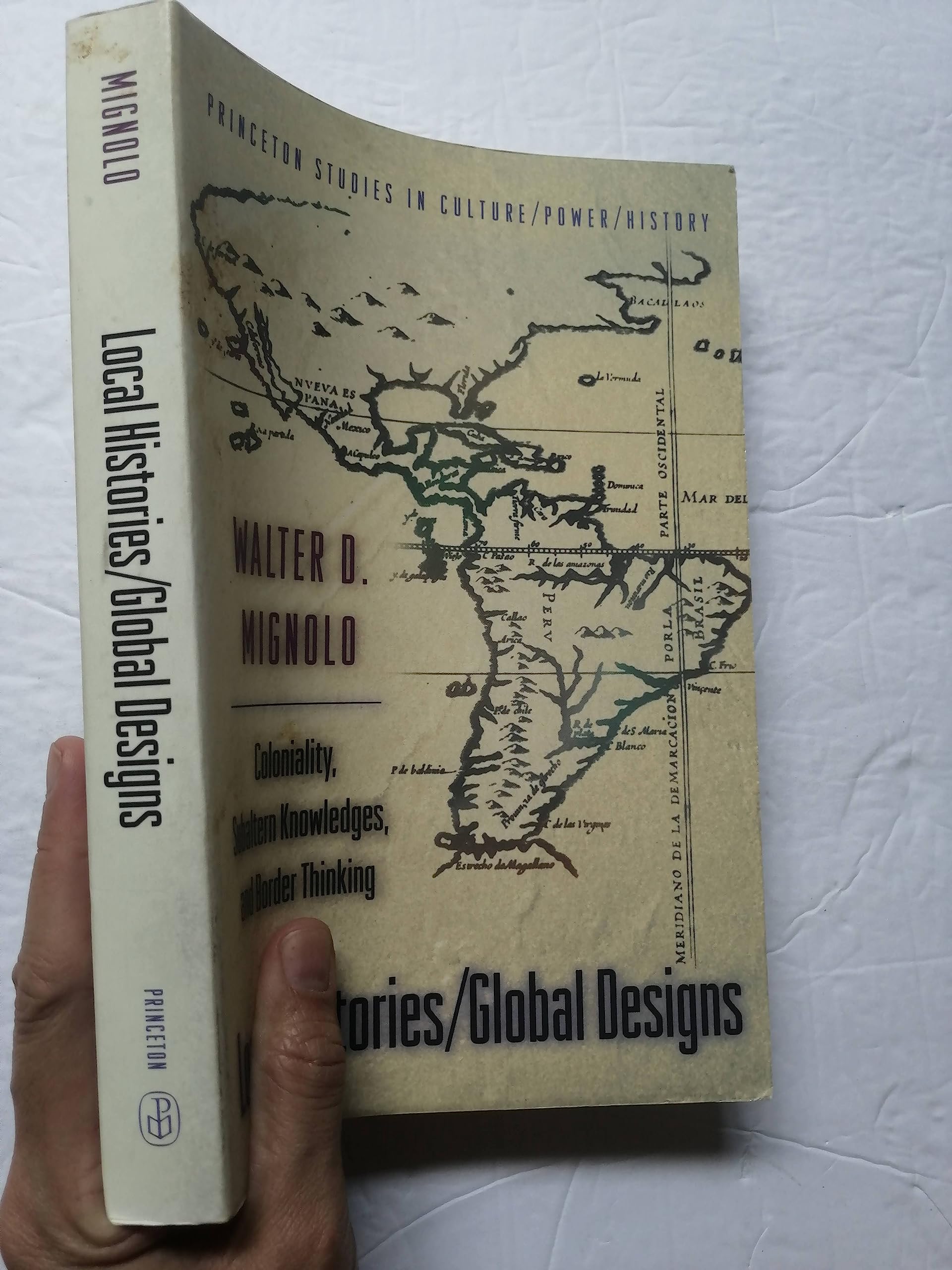
Local Histories/Global Designs,New
Sold by Ergodebooks, an authorized reseller.
Returns accepted within 30 days | support@ergodebooks.com
Shipping Information
- Free Standard Shipping — United States only
- Processing Time: 3–5 business days
- Estimated Delivery: 6–10 business days after dispatch
- Double-boxed, fully insured & discreetly packaged
- Tracking number sent via email once dispatched
Returns & Refund
Returns accepted within 30 days of delivery.
Damaged or Defective Item
Free return shipping + replacement or full refund
Wrong Item Received
Free return shipping + replacement or full refund
Change of Mind
Return shipping at customer's expense · 25% restocking fee applies
Payment Option

This book is an extended argument on the 'coloniality' of power by one of the most innovative scholars of Latin American studies. In a shrinking world where sharp dichotomies, such as East/West and developing/developed, blur and shift, Walter Mignolo points to the inadequacy of current practice in the social sciences and area studies. He introduces the crucial notion of 'colonial difference' into study of the modern colonial world. He also traces the emergence of new forms of knowledge, which he calls 'border thinking.'Further, he expands the horizons of those debates already under way in postcolonial studies of Asia and Africa by dwelling in the genealogy of thoughts of South/Central America, the Caribbean, and Latino/as in the United States. His concept of 'border gnosis,' or what is known from the perspective of an empire's borderlands, counters the tendency of occidentalist perspectives to dominate, and thus limit, understanding.The book is divided into three parts: the first chapter deals with epistemology and postcoloniality; the next three chapters deal with the geopolitics of knowledge; the last three deal with the languages and cultures of scholarship. Here the author reintroduces the analysis of civilization from the perspective of globalization and argues that, rather than one 'civilizing' process dominated by the West, the continually emerging subaltern voices break down the dichotomies characteristic of any cultural imperialism. By underscoring the fractures between globalization and mundializacion, Mignolo shows the locations of emerging border epistemologies, and of postoccidental reason.In a new preface that discusses Local Histories/Global Designs as a dialogue with Hegel's Philosophy of History, Mignolo connects his argument with the unfolding of history in the first decade of the twentyfirst century.
⚠️ WARNING (California Proposition 65):
This product may contain chemicals known to the State of California to cause cancer, birth defects, or other reproductive harm.
For more information, please visit www.P65Warnings.ca.gov.