If you have any questions, you are always welcome to contact us. We'll get back to you as soon as possible, withing 24 hours on weekdays.
Customer service
All questions about your order, return and delivery must be sent to our customer service team by e-mail at yourstore@yourdomain.com
Sale & Press
If you are interested in selling our products, need more information about our brand or wish to make a collaboration, please contact us at press@yourdomain.com
Help
If you have any questions, you are always welcome to contact us. We'll get back to you as soon as possible, withing 24 hours on weekdays.
Customer service
All questions about your order, return and delivery must be sent to our customer service team by e-mail at yourstore@yourdomain.com
Sale & Press
If you are interested in selling our products, need more information about our brand or wish to make a collaboration, please contact us at press@yourdomain.com
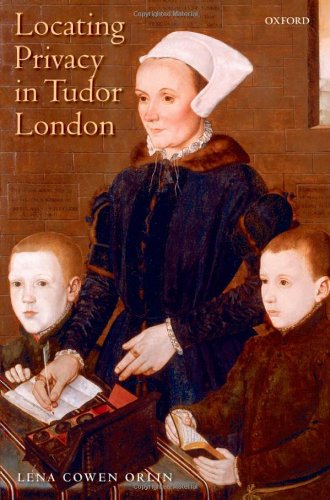
Locating Privacy in Tudor London asks new questions about where private life was lived in the early modern period, about where evidence of it has been preserved, and about how progressive and coherent its history can be said to have been. The Renaissance and the Reformation are generally taken to have produced significant advances in individuality, subjectivity, and interiority, especially among the elite, but this study of middlingsort culture shows privacy to have been an object of suspicion, of competing priorities, and of compulsory betrayals. The institutional archives of civic governance, livery companies, parish churches, and ecclesiastical courts reveal the degree to which society organized itself around principles of preventing privacy, as a condition of order. Also represented in the discussion are such material artifacts as domestic buildings and household furnishings, which were routinely experienced as collective and monitory agents rather than spheres of exclusivity and selfexpression. In 'everyday' life, it is argued, economic motivations were of more urgent concern than the political paradigms that have usually informed our understanding of the Renaissance. Locating Privacy pursues the case study of Alice Barnham (15231604), a previously unknown merchantclass woman, subject of one of the earliest family group paintings from England. Her story is touched by many of the changesin social structure, religion, the built environment, the spread of literacy, and the history of privacythat define the sixteenth century.
⚠️ WARNING (California Proposition 65):
This product may contain chemicals known to the State of California to cause cancer,
birth defects, or other reproductive harm.
For MAP (Minimum Advertised Price) violations and Intellectual Property (IP) or Trademark concerns, please contact:
support@ergodebooks.com
⚠️ California Proposition 65 Warning: Some products sold on this website may expose you to chemicals known to the State of California to cause cancer, birth defects, or other reproductive harm. For more information, visit www.P65Warnings.ca.gov.