If you have any questions, you are always welcome to contact us. We'll get back to you as soon as possible, withing 24 hours on weekdays.
Customer service
All questions about your order, return and delivery must be sent to our customer service team by e-mail at yourstore@yourdomain.com
Sale & Press
If you are interested in selling our products, need more information about our brand or wish to make a collaboration, please contact us at press@yourdomain.com
Help
If you have any questions, you are always welcome to contact us. We'll get back to you as soon as possible, withing 24 hours on weekdays.
Customer service
All questions about your order, return and delivery must be sent to our customer service team by e-mail at yourstore@yourdomain.com
Sale & Press
If you are interested in selling our products, need more information about our brand or wish to make a collaboration, please contact us at press@yourdomain.com
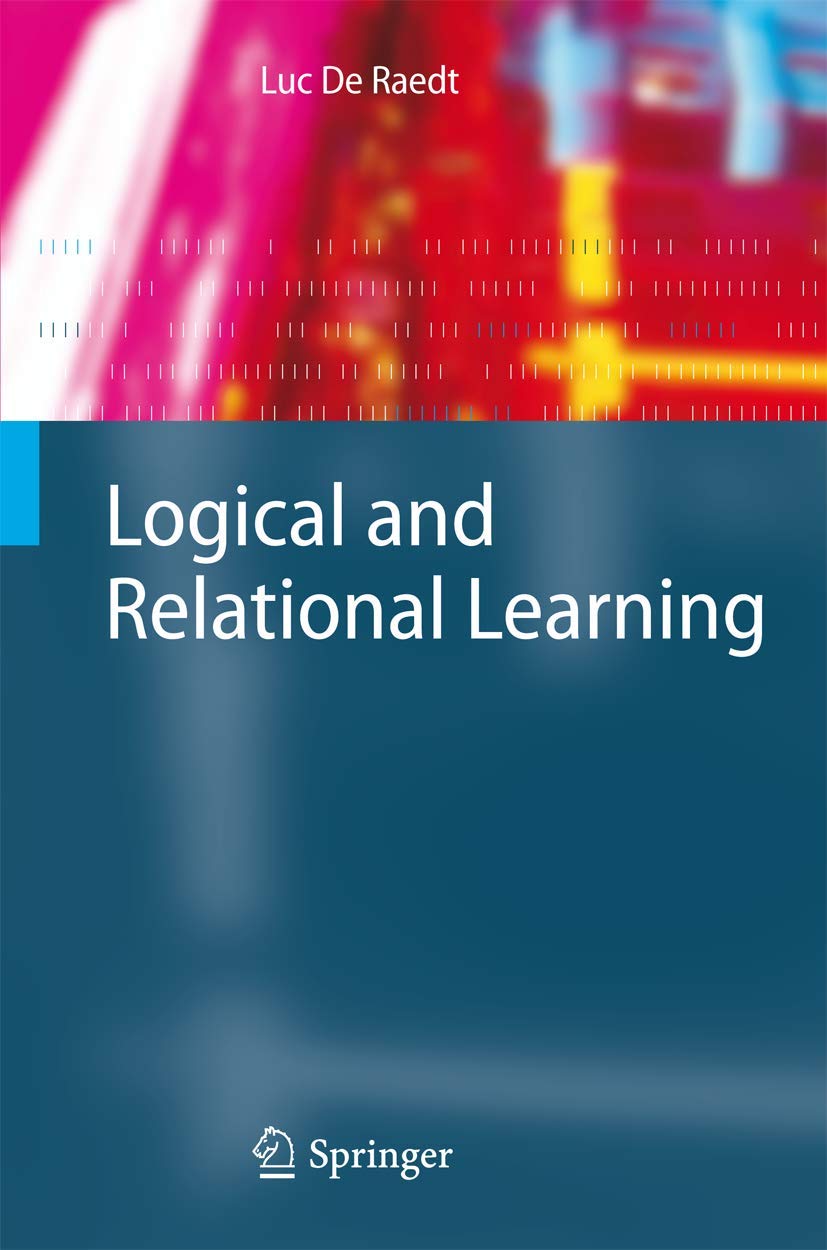
Iusethetermlogicalandrelationallearning torefertothesub?eldofarti?cial intelligence,machinelearninganddataminingthatisconcernedwithlearning in expressive logical or relational representations. It is the union of inductive logic programming, (statistical) relational learning and multirelational data mining, which all have contributed techniques for learning from data in re tional form. Even though some early contributions to logical and relational learning are about forty years old now, it was only with the advent of ductive logic programming in the early 1990s that the ?eld became popular. Whereas initial work was often concerned with logical (or logic programming) issues,thefocushasrapidlychangedtothediscoveryofnewandinterpretable knowledge from structured data, often in the form of rules, and soon imp tant successes in applications in domains such as bio and chemoinformatics and computational linguistics were realized. Today, the challenges and opp tunities of dealing with structured data and knowledge have been taken up by the arti?cial intelligence community at large and form the motivation for a lot of ongoing research. Indeed, graph, network and multirelational data mining are now popular themes in data mining, and statistical relational learning is receiving a lot of attention in the machine learning and uncertainty in art cial intelligence communities. In addition, the range of tasks for which logical and relational techniques have been developed now covers almost all machine learning and data mining tasks.
⚠️ WARNING (California Proposition 65):
This product may contain chemicals known to the State of California to cause cancer,
birth defects, or other reproductive harm.
For MAP (Minimum Advertised Price) violations and Intellectual Property (IP) or Trademark concerns, please contact:
support@ergodebooks.com
⚠️ California Proposition 65 Warning: Some products sold on this website may expose you to chemicals known to the State of California to cause cancer, birth defects, or other reproductive harm. For more information, visit www.P65Warnings.ca.gov.