If you have any questions, you are always welcome to contact us. We'll get back to you as soon as possible, withing 24 hours on weekdays.
Customer service
All questions about your order, return and delivery must be sent to our customer service team by e-mail at yourstore@yourdomain.com
Sale & Press
If you are interested in selling our products, need more information about our brand or wish to make a collaboration, please contact us at press@yourdomain.com
Help
If you have any questions, you are always welcome to contact us. We'll get back to you as soon as possible, withing 24 hours on weekdays.
Customer service
All questions about your order, return and delivery must be sent to our customer service team by e-mail at yourstore@yourdomain.com
Sale & Press
If you are interested in selling our products, need more information about our brand or wish to make a collaboration, please contact us at press@yourdomain.com
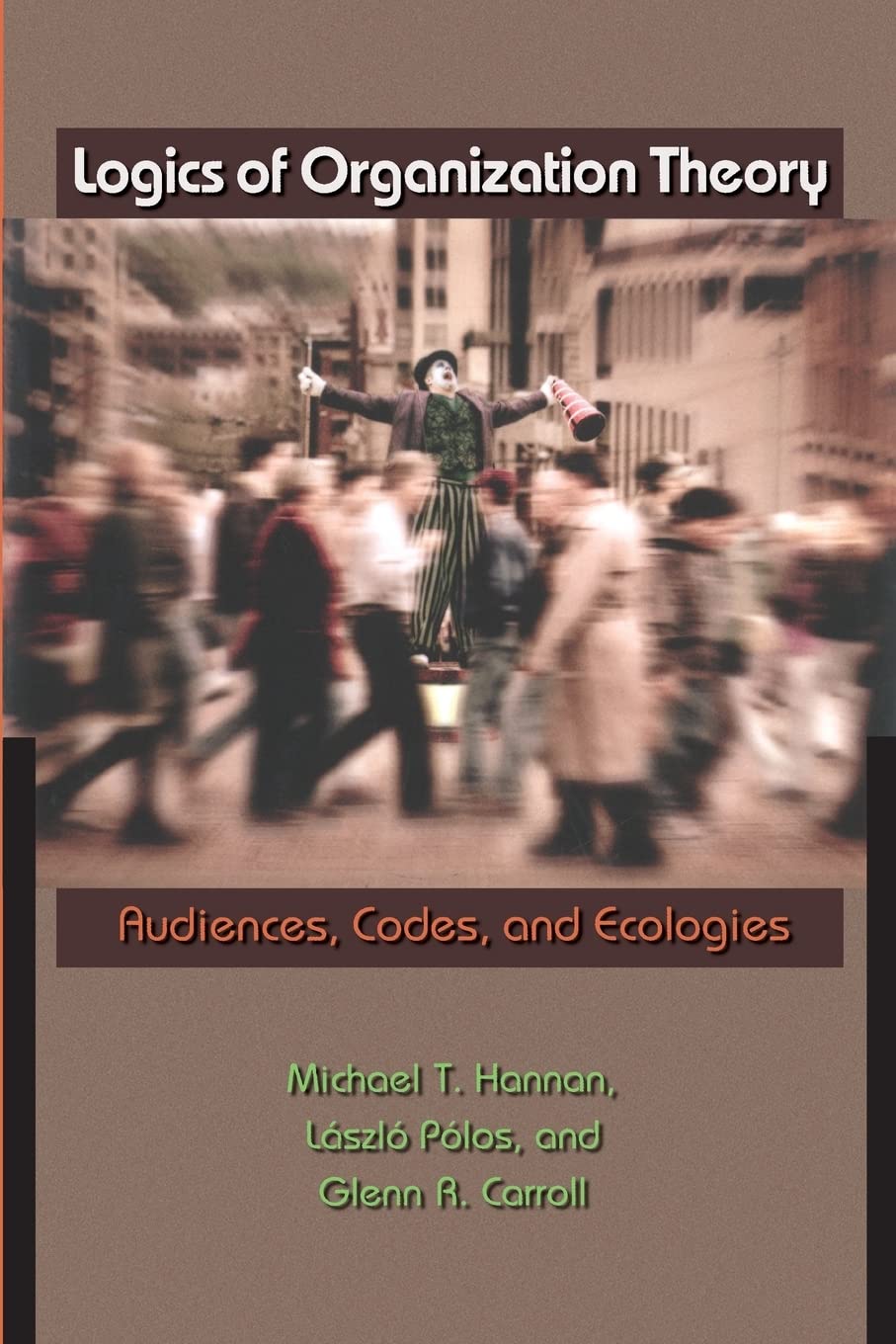
Building theories of organizations is challenging: theories are partial and 'folk' categories are fuzzy. The commonly used toolsfirstorder logic and its foundational set theoryare illsuited for handling these complications. Here, three leading authorities rethink organization theory. Logics of Organization Theory sets forth and applies a new language for theory building based on a nonmonotonic logic and fuzzy set theory. In doing so, not only does it mark a major advance in organizational theory, but it also draws lessons for theory building elsewhere in the social sciences.Organizational research typically analyzes organizations in categories such as 'bank,' 'hospital,' or 'university.' These categories have been treated as crisp analytical constructs designed by researchers. But sociologists increasingly view categories as constructed by audiences. This book builds on cognitive psychology and anthropology to develop an audiencebased theory of organizational categories. It applies this framework and the new language of theory building to organizational ecology. It reconstructs and integrates four central theory fragments, and in so doing reveals unexpected connections and new insights.
⚠️ WARNING (California Proposition 65):
This product may contain chemicals known to the State of California to cause cancer,
birth defects, or other reproductive harm.
For MAP (Minimum Advertised Price) violations and Intellectual Property (IP) or Trademark concerns, please contact:
support@ergodebooks.com
⚠️ California Proposition 65 Warning: Some products sold on this website may expose you to chemicals known to the State of California to cause cancer, birth defects, or other reproductive harm. For more information, visit www.P65Warnings.ca.gov.